<img height="1" width="1" src="https://www.facebook.com/tr?id=3900557156680409&amp;ev=PageView &amp;noscript=1">
Skip to content
HoG_Additive_Manufacturing_RGB_box-1

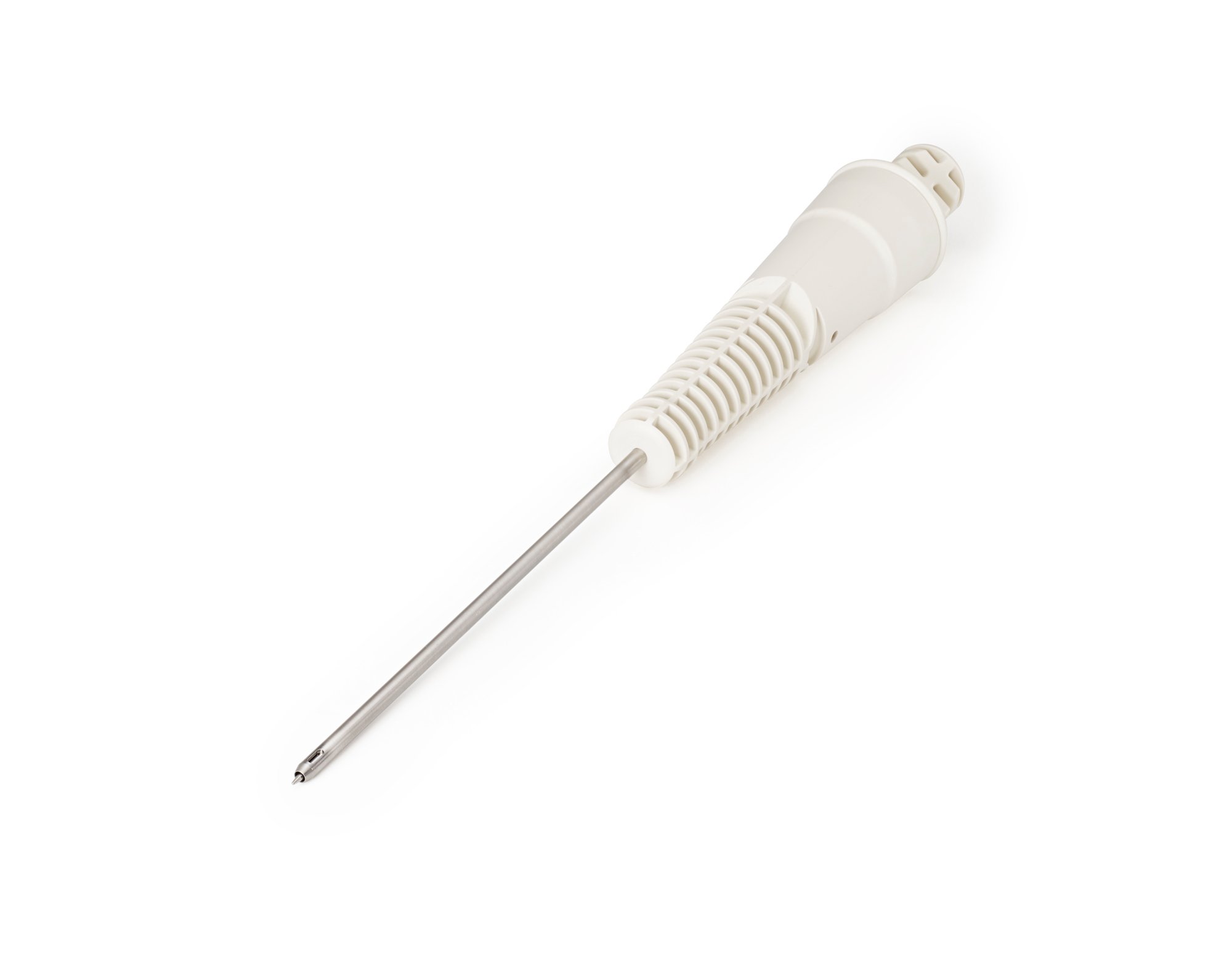
Handle for a 3D-printed drill guide

A plastic handle for a drill guide used in medical technology. Manufactured from PA 2200 using selective laser sintering and then chemically smoothed.

When the handle is needed before the tool

A customer in the medical technology industry needed plastic handles for a drill guide. The drill guide consists of a metal tube and a handle used to hold and align the instrument.

The request was for ten handles as functional prototypes. An injection-molding tool isn’t cost-effective for this quantity. And as long as the geometry is still being adjusted, any change would also affect the tool.

This is exactly where a 3D-printed handle comes in handy.

3D-printed plastic handle made of PA 2200 with a metal tube serving as a drill guide

The solution: Handle made of PA 2200, chemically smoothed

The handle was manufactured using selective laser sintering (SLS) from PA 2200, a polyamide 12. The process does not require support structures. The ribs in the handle area, the mounting for the metal tube, and the connection at the rear end are therefore formed in a single component.

After printing, the handles were chemically smoothed. This process seals and smooths the rough, slightly porous surface resulting from laser sintering. As a result, the handles feel smoother and look more like injection-molded parts.

If the geometry changes during the development process, the CAD file is adjusted and the next batch is printed.

Manufacturing Overview

Ten handles were manufactured and finished for the functional prototypes.

Manufacturing Data

Material
PA 2200 (polyamide 12)


Process
Selective Laser Sintering (SLS)


Quantity
10 handles (prototypes)


Industry
Medical Technology

Post-processing

  1. Dust removal and blasting
  2. Chemical surface smoothing

Note: The handles were manufactured as functional prototypes. The manufacturer is responsible for the approval and use of an instrument as a medical device.

Price upon request.
The price depends on the component size, material, quantity, and post-processing. You can get an initial estimate using the online calculator.

What the 3D-printed handle makes possible

Without an injection molding tool

Ten handles are created directly from the CAD data. For prototypes and small production runs, there is no need to invest in a mold.

Adjust Geometry

Ribs, mounting holes, and connections are all formed in a single component. Changes are incorporated directly into the next production run.

Smooth surface

Chemical smoothing seals the surface. It feels similar to an injection-molded part.

Are you developing a medical device or component?

In addition to handles, we manufacture plastic and metal components for functional prototypes, test equipment, and small production runs. Our production facility is ISO 13485 certified. Please send us a customized inquiry and let us know which certificates and documentation you require. We’d be happy to assess whether your project can be realized using 3D printing.

Learn more: 3D Printing for Medical Technology

Onur Yildirim, Head of Sales for Additive Manufacturing at Hoffmann AM
Ready for your first prototype? Talk to us.

Onur Yildirim

Head of Sales, Additive Manufacturing

 +49 89 83 919 898 

  3d@hoffmann-am.com 

 Fislisbach, Switzerland