Additive manufacturing supports the automotive industry in the development of prototypes, the production of assembly aids, and the fabrication of functional components in small quantities. Hoffmann AM works with you to determine which 3D printing process and material are best suited for your application.
Where is 3D printing used in the automotive industry?
Prototypes and Design Models 3D-printed prototypes help evaluate shape, installation space, and component concepts early on. Changes can be quickly incorporated into new models during development.
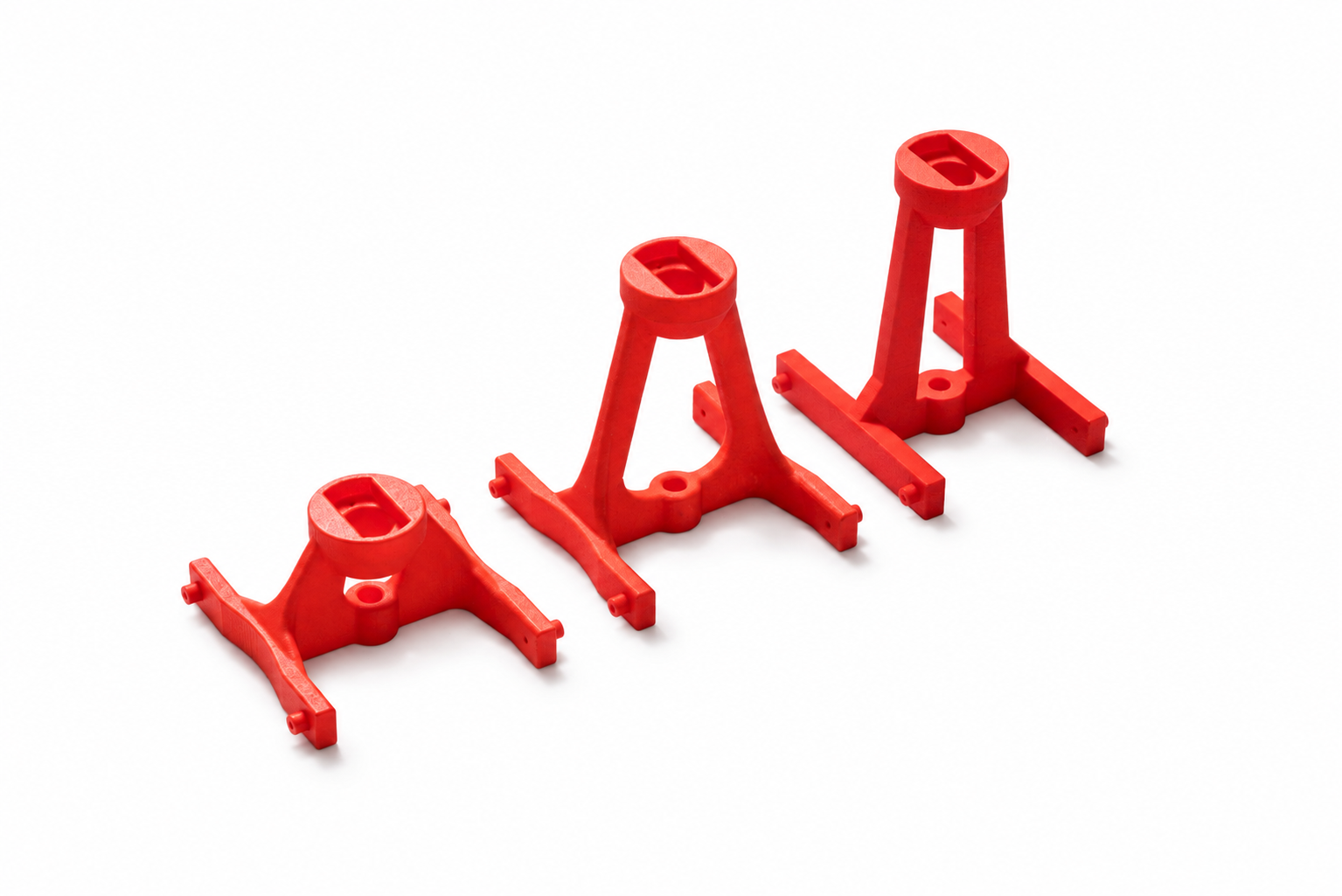
Assembly aids and fixtures Custom holders, gauges, and fixtures support recurring work steps in assembly and quality assurance. Their geometry can be tailored to the specific component and workstation.
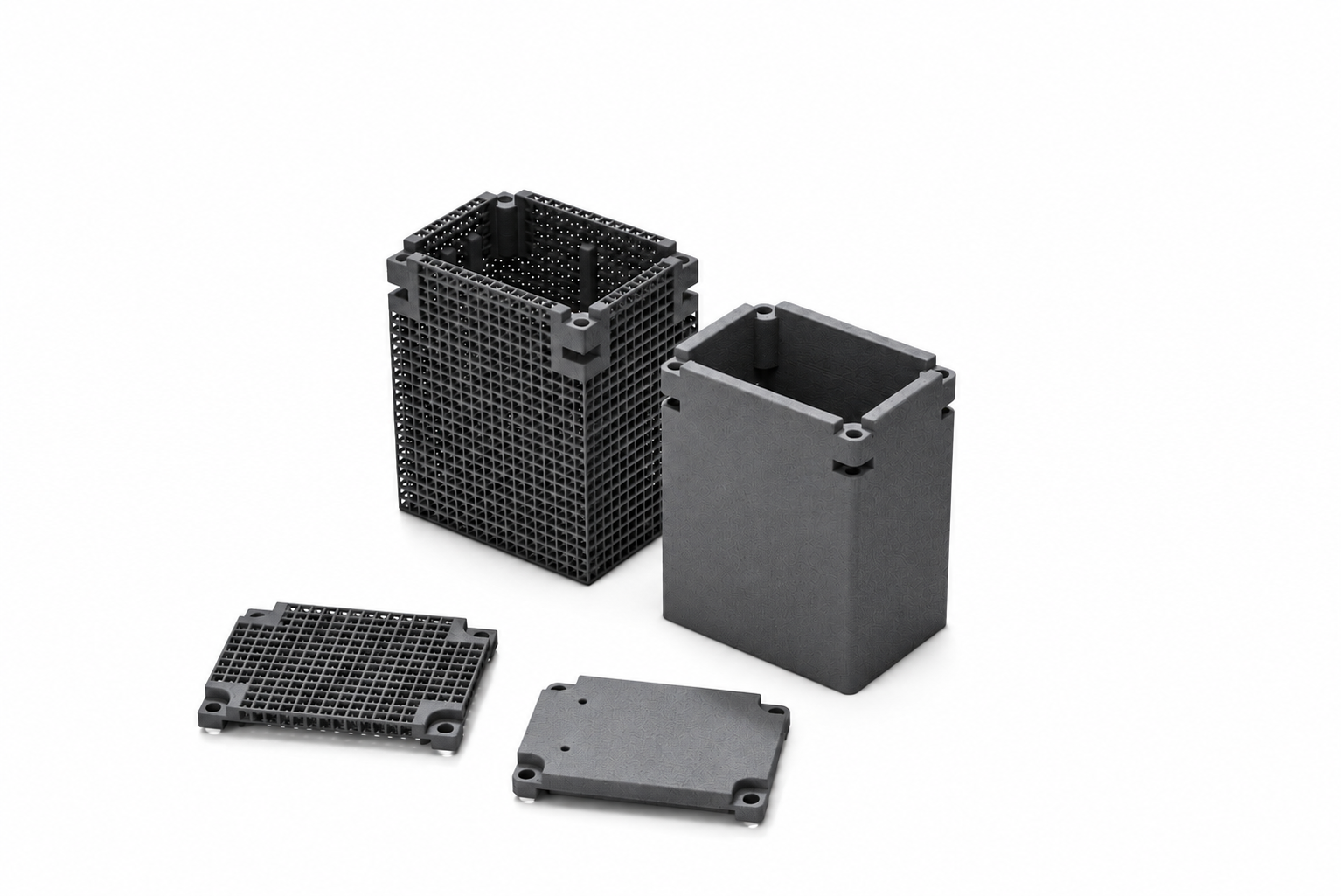
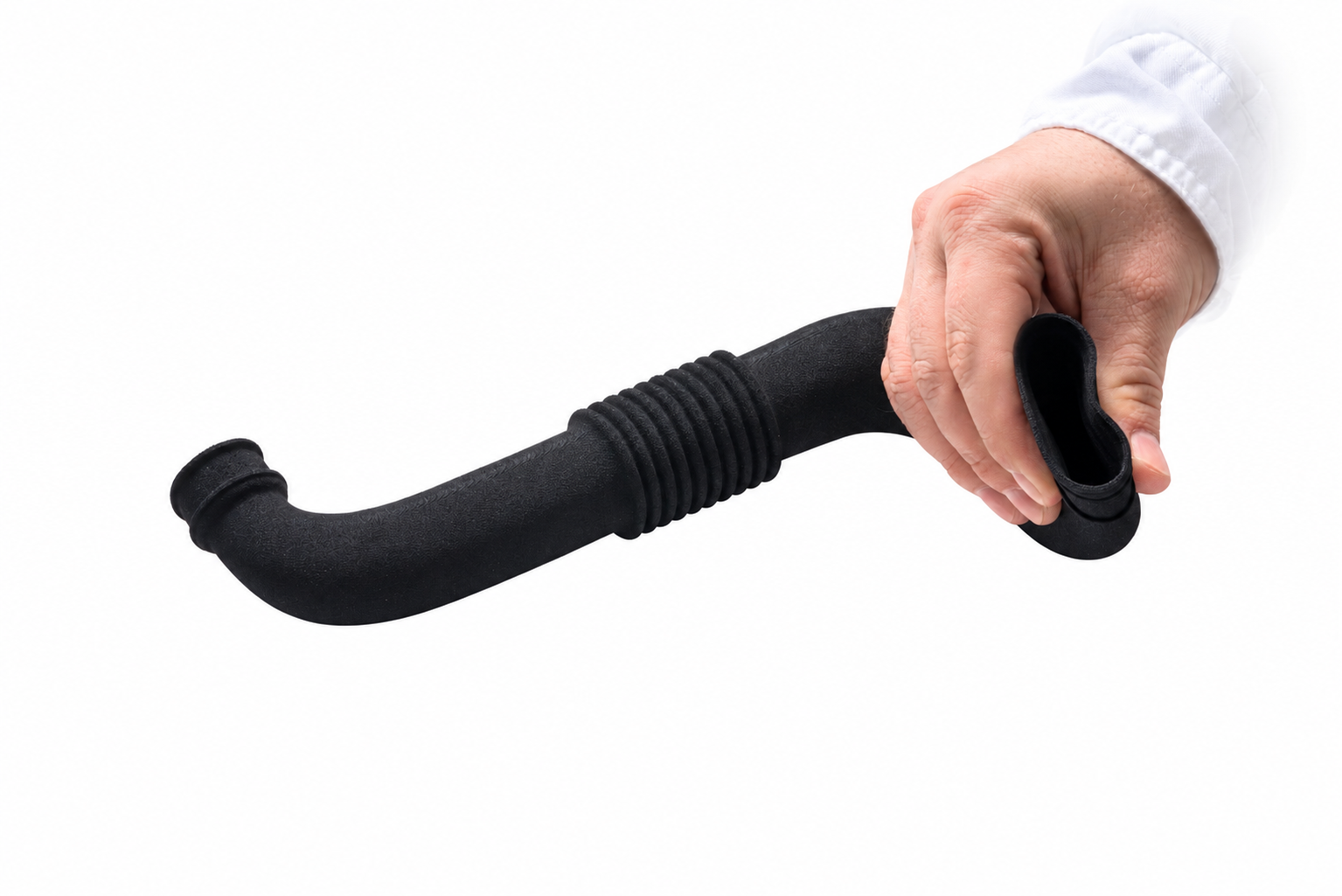
Functional Components and Small-Volume Production For specialized applications or small production runs, additively manufactured components can offer a flexible solution. Examples include holders, housings, covers, or conduit elements. Whether a component is suitable depends on its function and operating conditions.
What are the benefits of 3D printing in automotive development?
Shorten the development cycle
Quickly turn design and component changes into prototypes. This allows you to evaluate designs earlier and refine them in a targeted manner during development.
Customize Components
Adapt geometries to the installation space, function, and design. This is particularly helpful for complex shapes and specific vehicle components.
Check Functions Early
Check the dimensions, connections, and selected features directly on the printed part. The material and process are selected to suit the intended application.
Which material is best suited for this application?
The choice of material depends on what the component must do in the vehicle:
be lightweight and flexible, withstand stress, or be used at higher temperatures. Hoffmann AM offers a variety of plastics, metals, and resins for 3D printing to meet these needs.
Thermoplastics
PA 12
PA 11
ABS
PP
TPU
Typical Applications:
Suitable for lightweight functional prototypes, housings, mounts, and flexible components. PA 12 is particularly suitable for robust parts with complex geometries. TPU is a good choice when the part needs to be elastic.
Fiber-Reinforced Plastics
PA-GF
PA-CF
Onyx
Typical Applications:
For rigid and durable components, as well as fixtures, tools, and assembly aids in automotive production. The glass or carbon fibers make the parts stiffer than unreinforced plastics, and they remain lighter than comparable metal parts.
High-Performance Plastics
ULTEM 1010 (PEI)
PPSF/PPSU
Typical Applications:
For prototypes and test parts that must withstand high temperatures or specific mechanical requirements, such as in the engine compartment. ULTEM 1010 has a heat deflection temperature of up to 216 °C. Whether a material is suitable depends on the specific operating conditions.
Metals
Aluminum (AlSi10Mg)
Stainless steel (1.4404 / 316L)
Titanium (TiAl6V4)
Inconel (625 and 718)
Typical applications:
For durable, lightweight, or complex-shaped metal components. Aluminum is suitable when low weight is important. Stainless steel offers corrosion resistance, while titanium and Inconel are suitable for specific high-performance or high-temperature requirements.
Resins
ACCURA 25
ClearVue
Typical Applications:
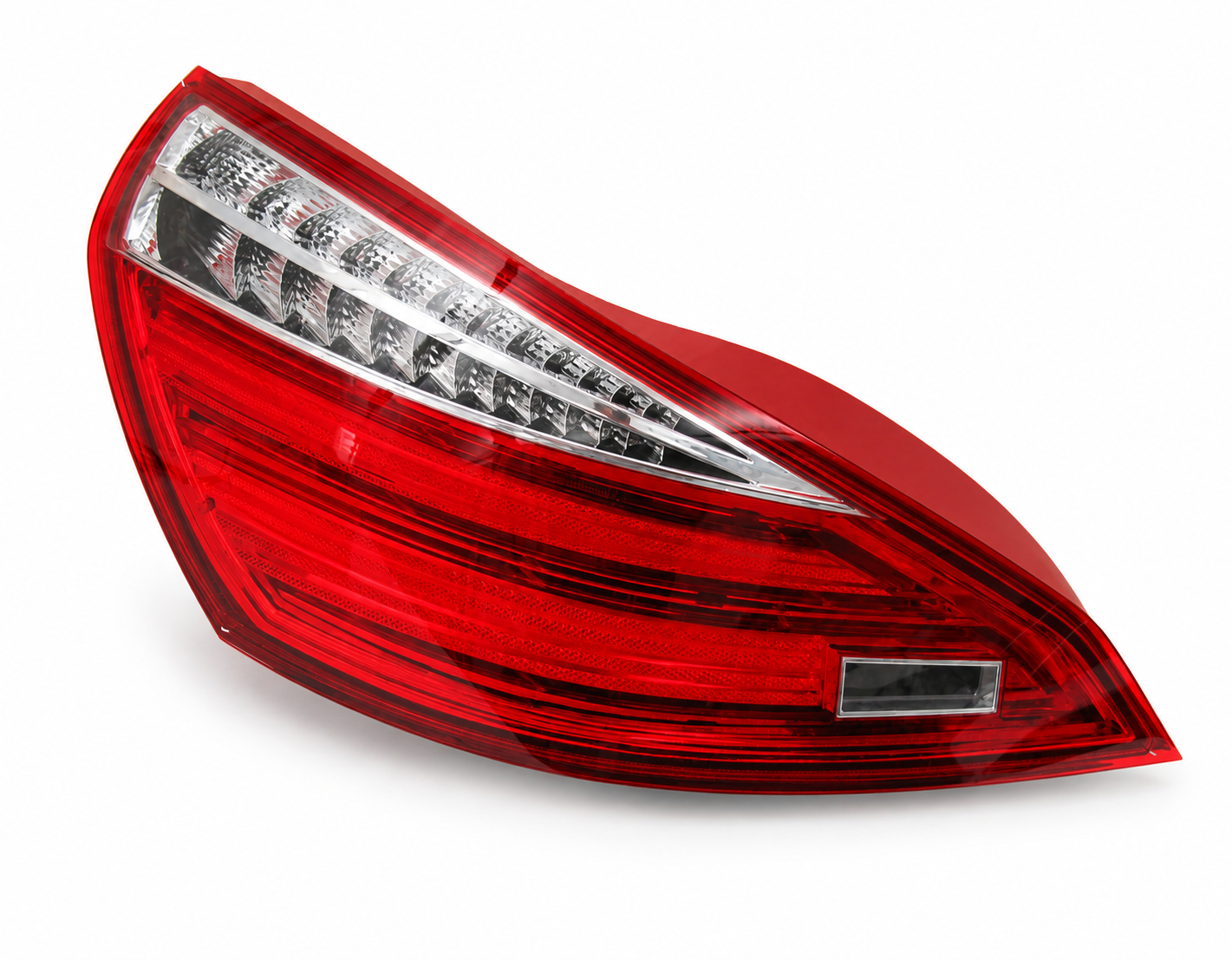
For highly detailed design and trim prototypes. ClearVue is ideal when transparent components or transparent areas are required, such as in lighting models.
Frequently Asked Questions About 3D Printing in the Automotive Industry
Are 3D-printed plastic parts as strong as injection-molded parts?
In terms of tensile strength, parts produced using SLS and MJF come close to those made by injection molding from comparable materials, but they are slightly more brittle. In addition, their properties depend slightly on the direction of build. This is usually sufficient for functional prototypes and fixtures; however, parts critical to safety must be tested.
Can 3D-printed parts withstand the temperatures and fluids in the engine compartment?
Yes, with the right material. The key factors are continuous operating temperature, temperature spikes, and contact with oil, fuel, or coolant. For high temperatures, high-performance plastics such as ULTEM 1010 or metals are suitable options; PA 12 is better suited for moderate temperatures. Tell us the operating conditions, and we’ll recommend a material.
What tolerances are realistic in plastic 3D printing?
As a guideline, allow for a tolerance of approximately ±0.3 mm or ±0.3% of the dimension for SLS and MJF. Tighter fits, holes, or sealing surfaces will be reworked. Mark such areas on a drawing so they can be taken into account during manufacturing.
Can I use a printed prototype to validate the injection molding production run?
As far as shape, installation, and assembly are concerned, yes: If the printed prototype fits, the production part will usually fit as well. However, the material properties differ—for example, in terms of stiffness and fatigue strength. For tests that require material close to that used in production, vacuum casting or prototype molds are more suitable.
How quickly will I receive my printed parts?
The online calculator displays the delivery date immediately after you upload your CAD file. It depends primarily on the manufacturing process, quantity, and post-processing. For comparison: A valve housing that would have taken 1.5 months to produce using conventional methods was completed in just one week using 3D printing.
What documents do you need to get a quote?
To get started, all you need is a 3D model in STEP format. It’s also helpful to provide the quantity, material, or component specifications, tolerances, surface finish, and your desired delivery date. For standard parts, you’ll receive a price quote directly from the online calculator.
Are you planning a 3D printing project for the automotive industry?
Let us know the function, installation space, quantity, and operating conditions of your component. We’ll work with you to determine which material, manufacturing process, and post-processing steps are best suited for your project.
Plastic Prototypes
For demonstration models, housings, assembly trials, and a wide range of functional tests. Depending on your requirements, you can choose from a variety of properties in terms of stiffness, flexibility, and temperature resistance.
Metal Prototypes
For applications that require metallic properties—such as components subject to mechanical or thermal stress and complex functional parts.