
Complex Geometries
Internal channels, lightweight structures, and integrated features can be printed, but are difficult or nearly impossible to mill without significant effort.
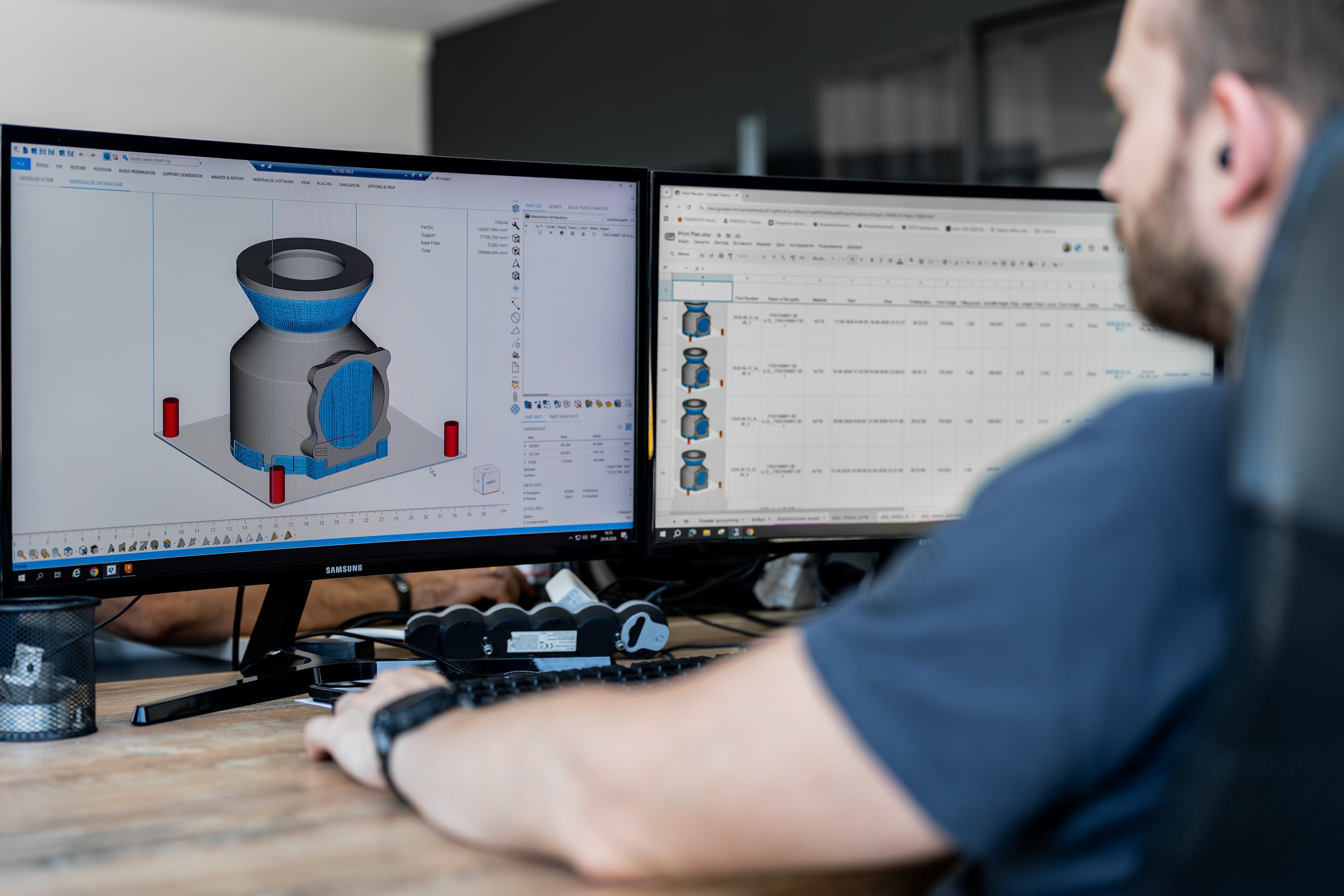
A valve housing that would typically have taken 1.5 months to manufacture was completed in just one week using 3D printing.
Only the material contained within the part is printed. When milling from solid stock, a large portion of the blank is turned into chips.
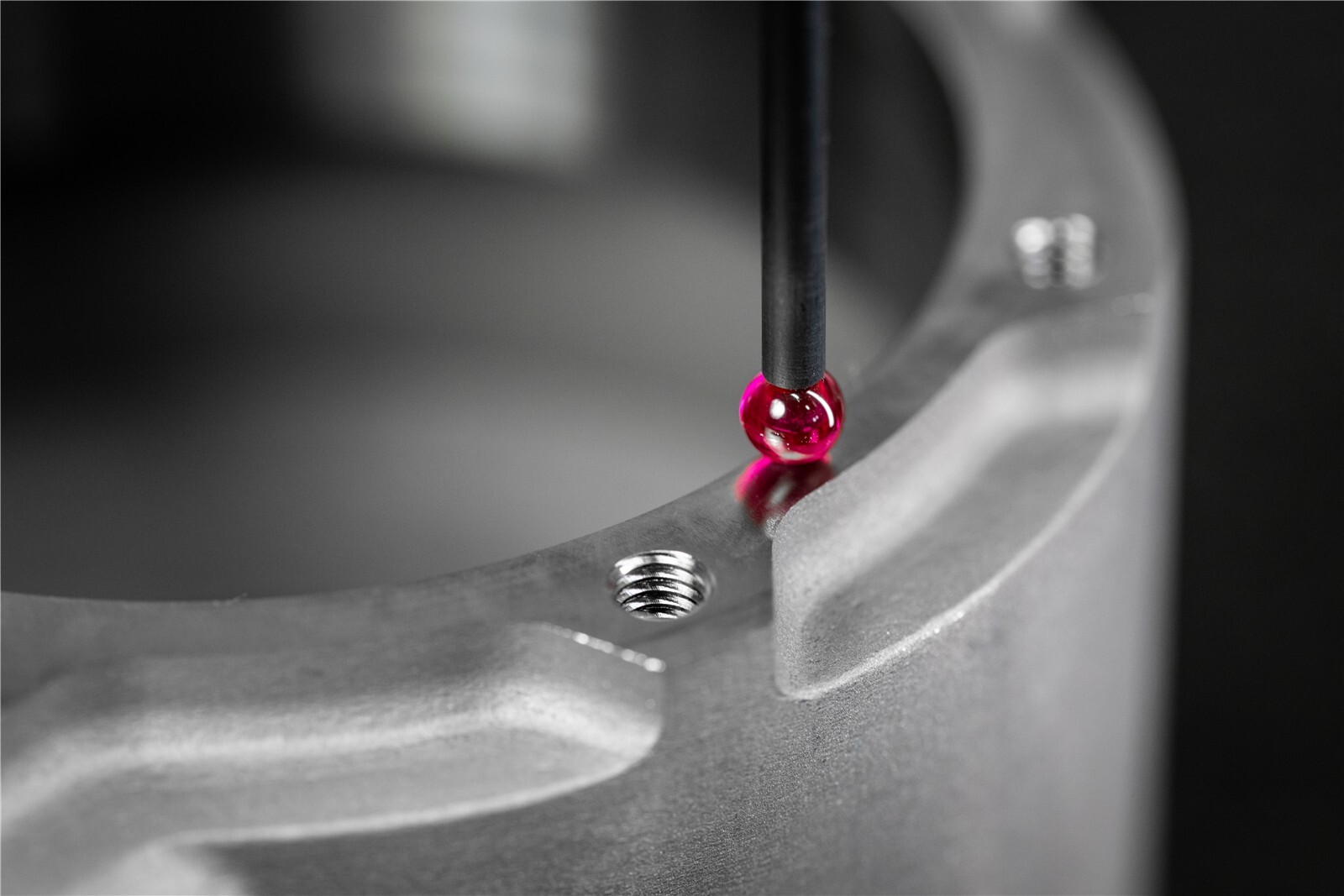
Fits, bores, and sealing surfaces can be milled or turned with a precision of ±0.01 to 0.05 mm. Printed surfaces are reworked for this purpose.
If the geometry is simple and the production volume is high, machining is usually more cost-effective per part.
If a material cannot be 3D-printed or if the entire surface must be very smooth without any post-processing, the solution is to use a CNC machine.
| Criterion | CNC Milling | 3D Printing |
|---|---|---|
| Tools and Fixtures | Milling tools and clamping devices; special fixtures depending on the part | None |
| Design changes | New CAM program; new fixture may be required | Adapt the CAD file and reprint |
| Geometry | Limited by tool access; internal channels are rarely possible | High design freedom, including internal channels and lightweight structures |
| Tolerances | ±0.01 to 0.05 mm on functional surfaces | Depends on the process; tight fits require post-processing |
| Material usage | Material removal from the blank, extensive machining | Material is present only where the component requires it |
| Lead time | Depends on clamping setups and manufacturing steps | Production starts immediately based on the CAD data |
| Quantity | Cost-effective even for larger production runs | Ideal for prototypes, small production runs, and replacement parts |
Rule of thumb: The more complex the part and the smaller the production run, the more 3D printing makes sense. The simpler the geometry and the more surfaces that require tight tolerances, the more a CNC machine is the better choice.
Through our Printfactory, we coordinate printing, post-processing, and measurement in a single process chain. You receive a ready-to-install component from a single source.

We review your CAD data, determine the orientation and support structures, and plan which surfaces will be machined later.
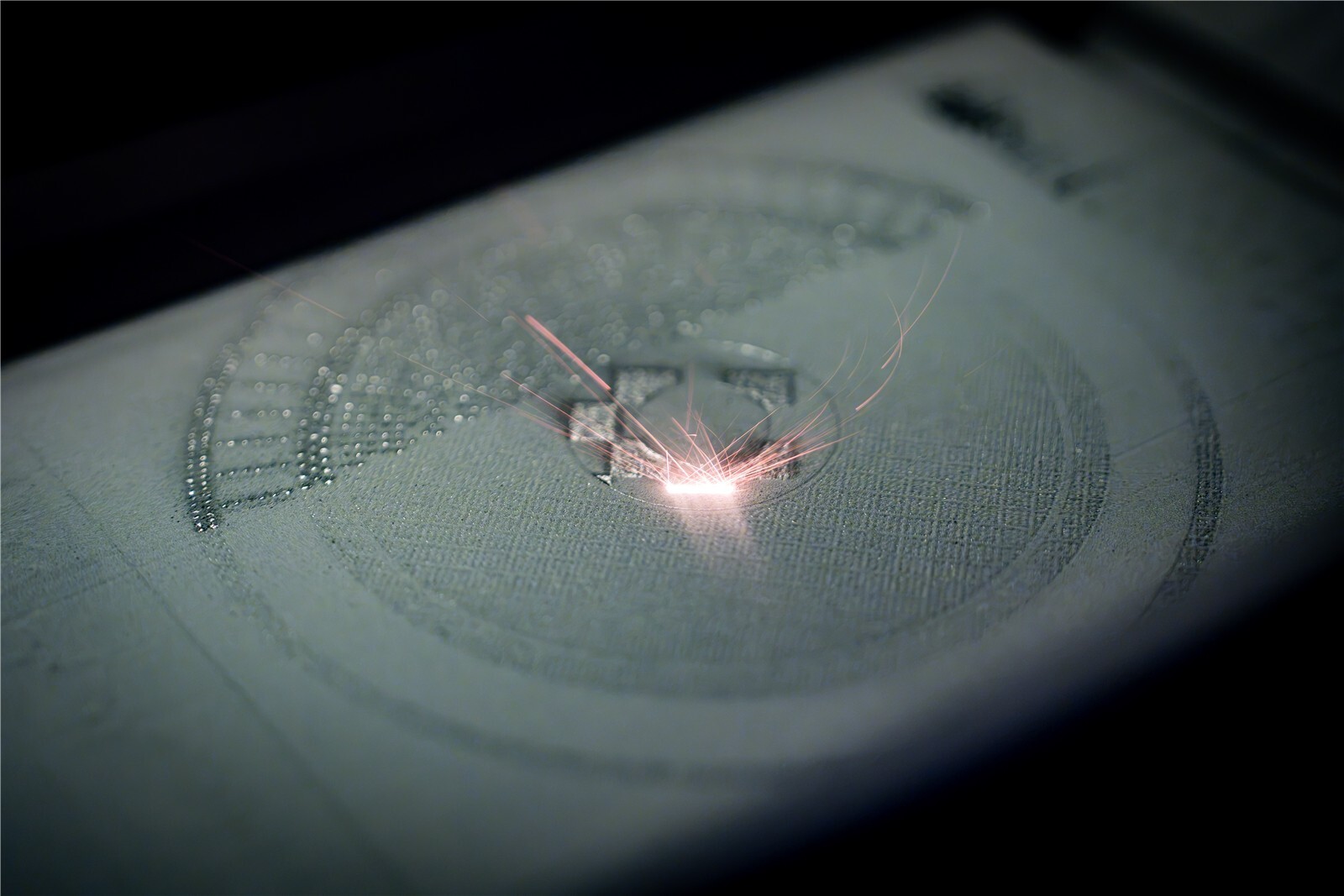
The laser fuses the metal powder layer by layer. Internal channels and complex shapes are created without the use of tools.
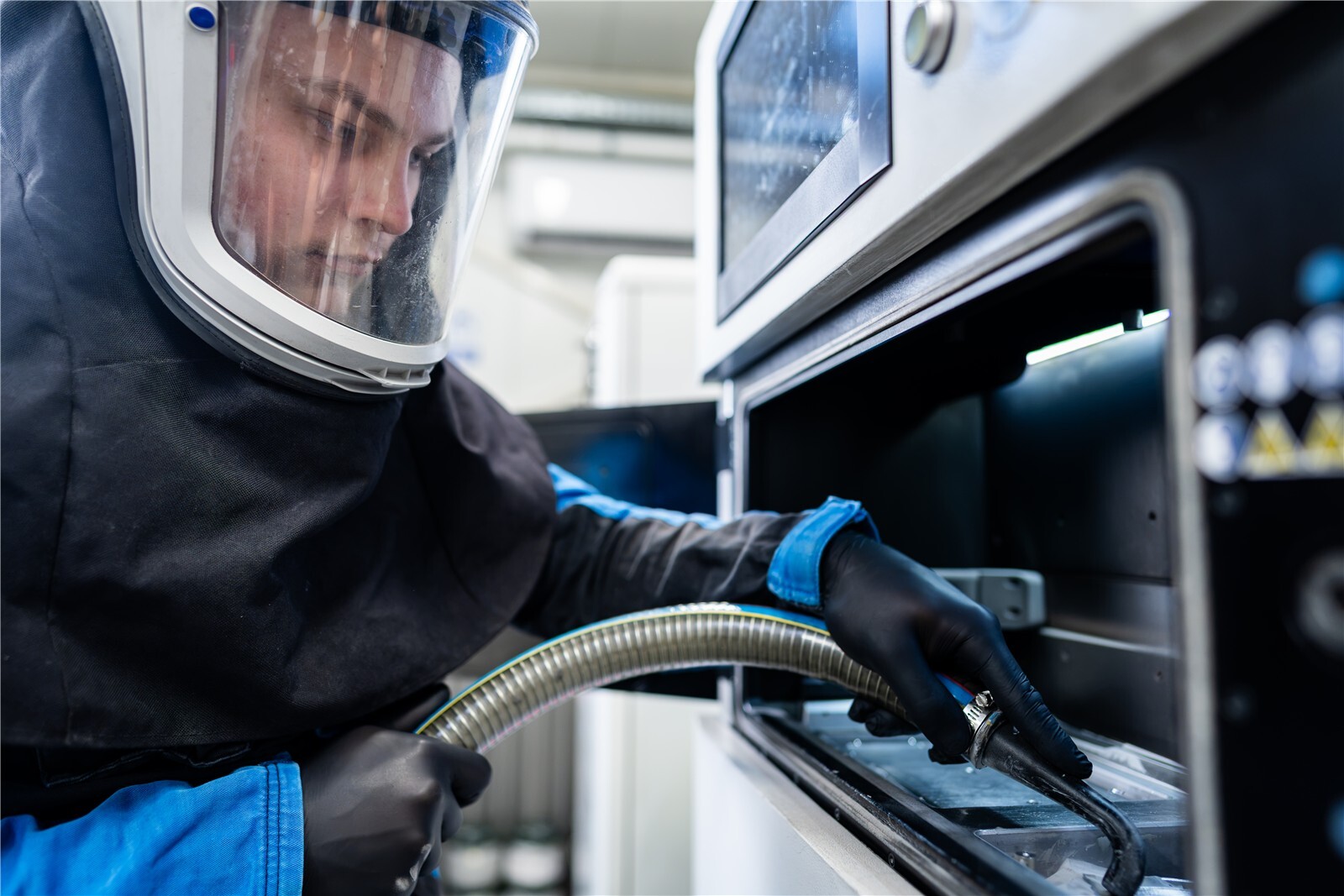
Any remaining powder is removed, after which the component is stress-relief annealed and blasted.
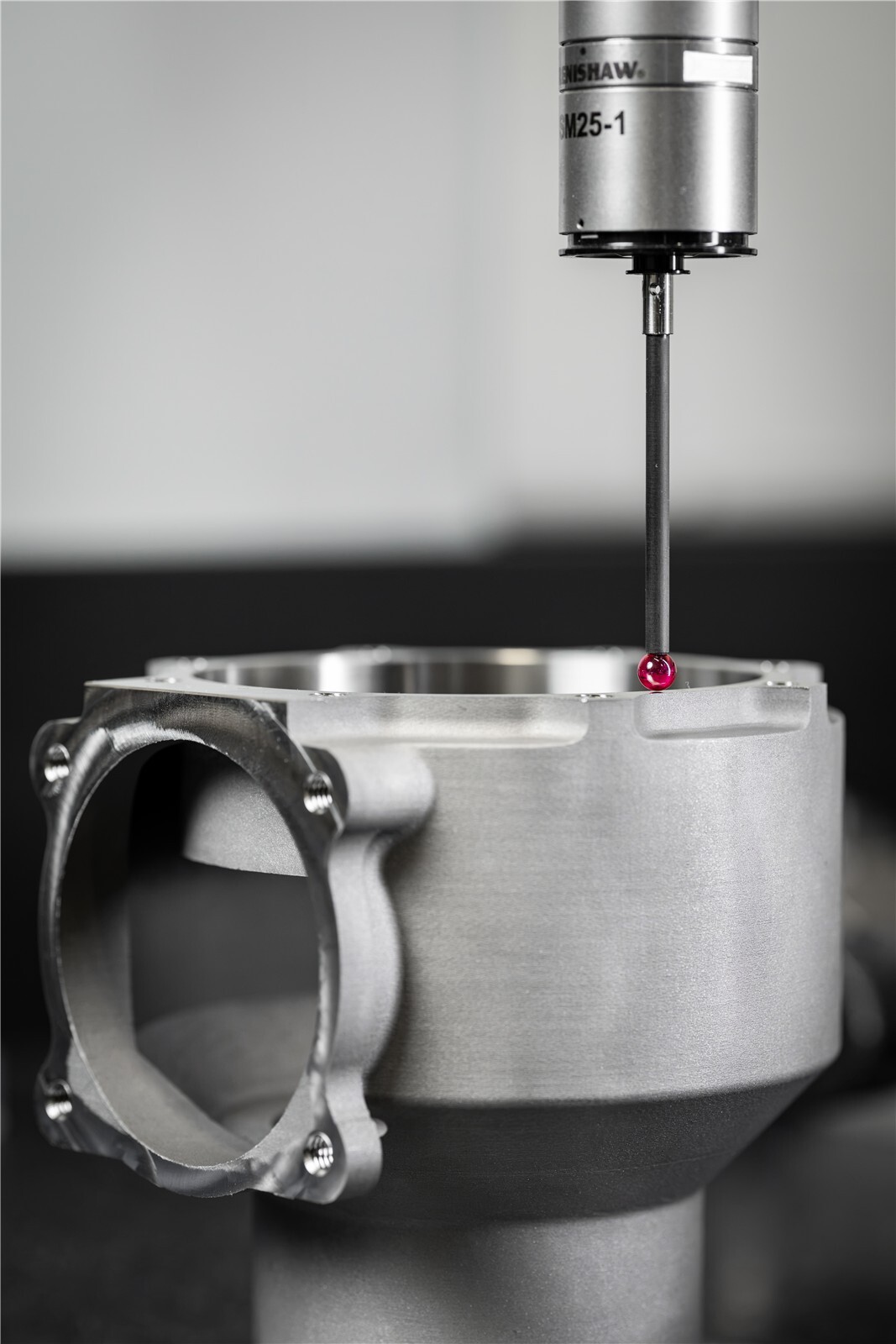
Fits, holes, and sealing surfaces are finished on the CNC machine and then measured.
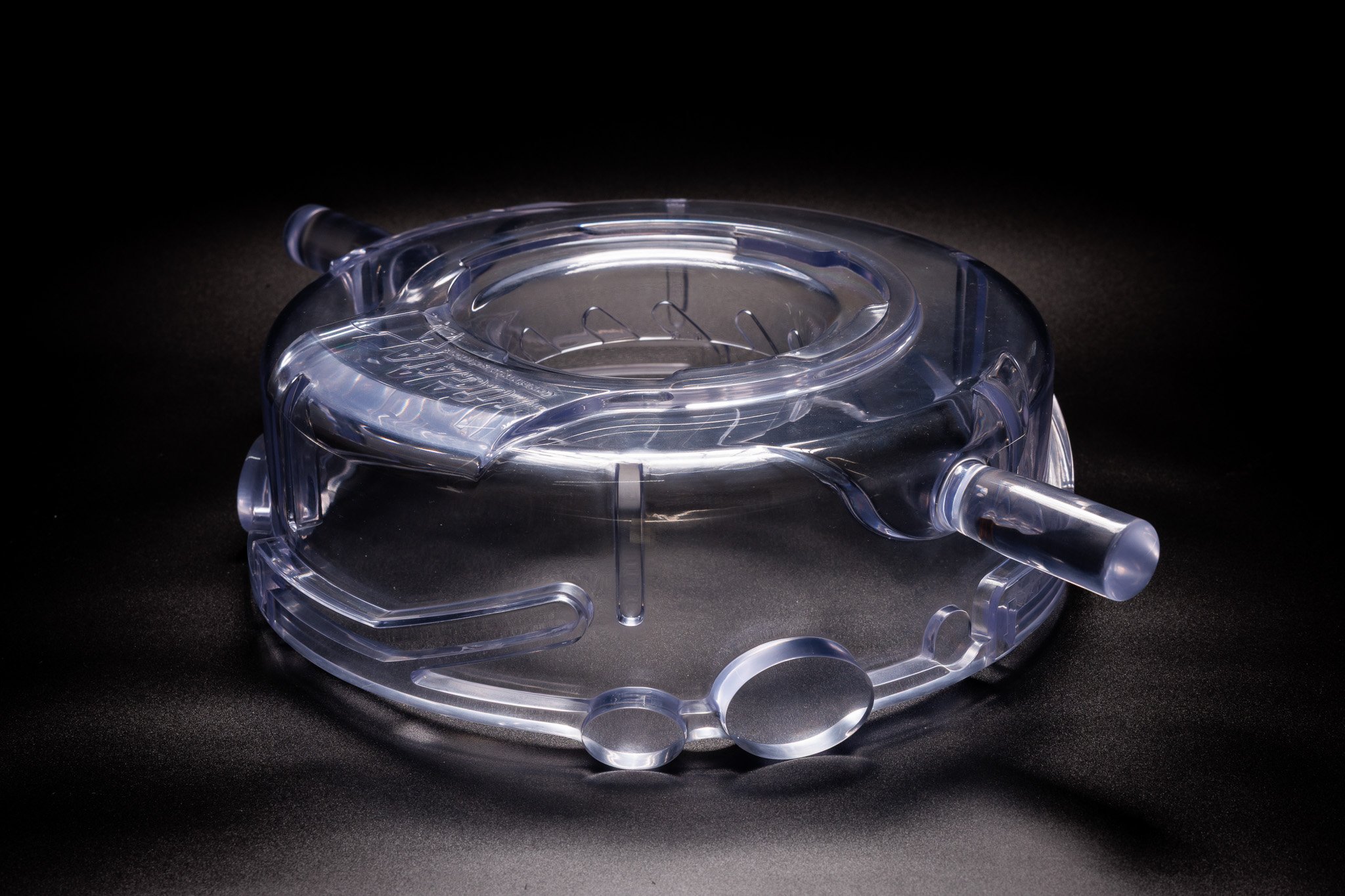
Three components from our projects, three different answers. Do you recognize your component?

A transparent functional component for a machining system. Printed master model, vacuum casting in Hei-Cast, and CNC machining only on fits and holes: ±0.01 to 0.05 mm, where it counts.

A lightweight housing made of AlSi10Mg for an aircraft engine. Printed, stress-relieved, and sandblasted. Only the mating surfaces are CNC-turned and milled.
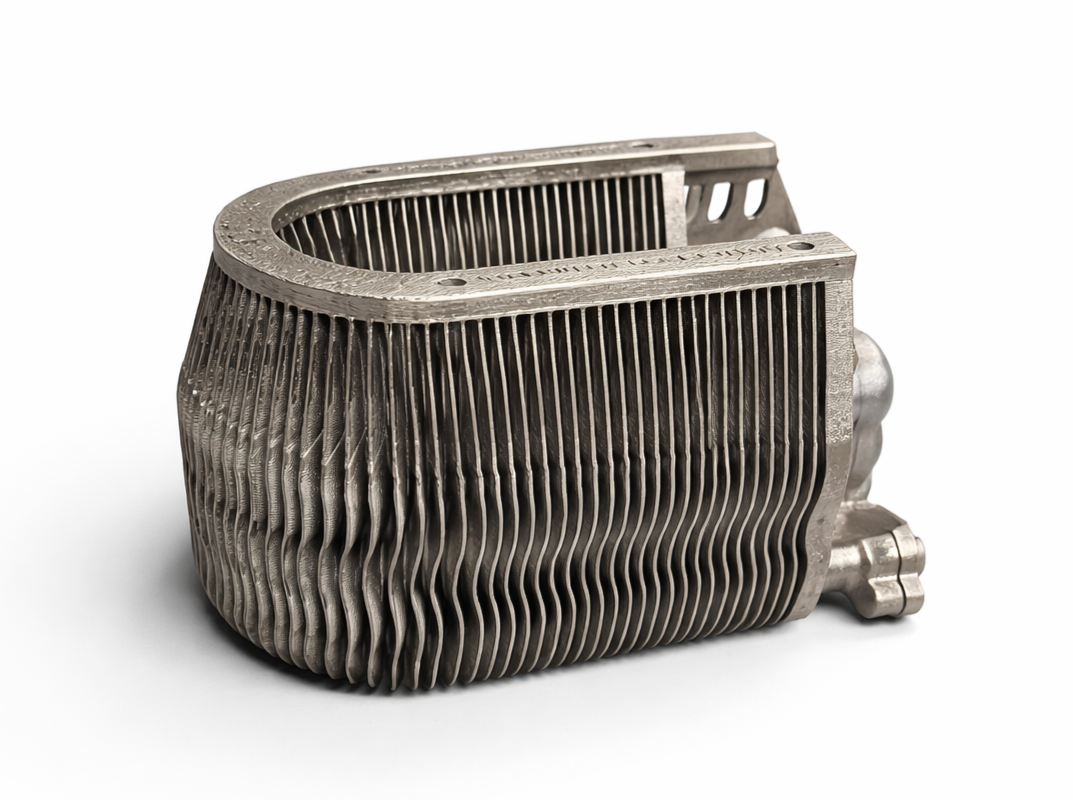
A titanium radiator with thin-walled channels and fine fins, which would be hardly economical to manufacture using traditional machining methods. Printed with a layer thickness of 40 µm in 14 hours.

Get prices and delivery times for prototypes, replacement parts, and small production runs in just a few seconds.
For complex components, series production projects, or special requirements, our experts will advise you personally.
Fislisbach, Switzerland