<img height="1" width="1" src="https://www.facebook.com/tr?id=3900557156680409&amp;ev=PageView &amp;noscript=1">
Skip to content
HoG_Additive_Manufacturing_RGB_box-1

3D Printing for Medical Technology

In medical technology, many components are initially needed as functional prototypes or in small quantities: instrument handles, device housings, mounts, or demonstration models for training. As long as the design is still changing or only a few units are needed, it’s rarely worth investing in a mold for them.

One example is the 4:1-scale dental crown model shown in the picture: Our customer has been using it in their training sessions for quite some time. At four times the actual size, the shape and details of the crown can be clearly demonstrated and explained.

Hoffmann AM manufactures such parts using additive manufacturing from plastic and metal—as prototypes, individual parts, models, or small production runs. We’ll work with you to determine the appropriate process, material, and post-processing based on the component’s function, quantity, and intended use.

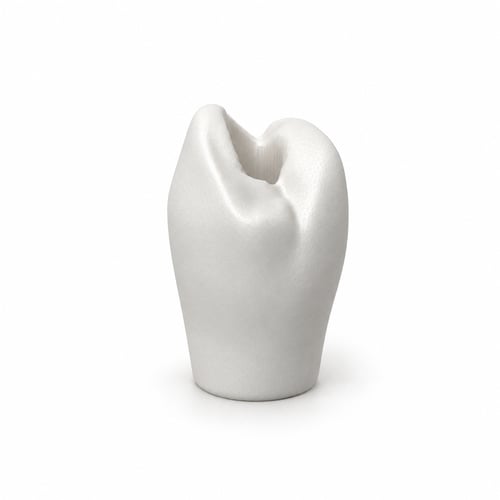
3D-printed dental crown model on a 4:1 scale for educational purposes

What are the advantages of 3D printing in medical technology?

Templates and Patterns That Require No Tools

Handles, housings, mounts, and training models are created directly from CAD data. For functional prototypes, one-off parts, and small production runs, there is no need to invest in an injection-molding tool. Models can also be printed at a larger scale—for example, a dental crown at a 4:1 scale.

Rapid Iterations

If the design changes after a test, the CAD file is updated and the next version is printed. This allows for the ergonomics and fit to be tested over several iterations.

Smooth surfaces

Laser-sintered plastic parts can be chemically smoothed. This process seals the surface, making the part look and feel more like an injection-molded part.

Plastics and Metals for Medical Technology Components

Our production facility is certified to ISO 13485. For medical technology projects, please send us an individual inquiry and let us know which certificates and supporting documentation you require. We’ll be happy to assess whether your part can be produced using 3D printing and discuss the material, process and post-processing options with you.

The appropriate material depends on the component’s function, load, and application. Plastics are often suitable for handles, housings, mounts, and models, while metals are better suited for parts subject to heavy loads or those that need to be sterilized. We will work with you on a case-by-case basis to determine whether a material is suitable for your application, such as when it comes into contact with patients.

USE CASE

Handle for a Drill Guide

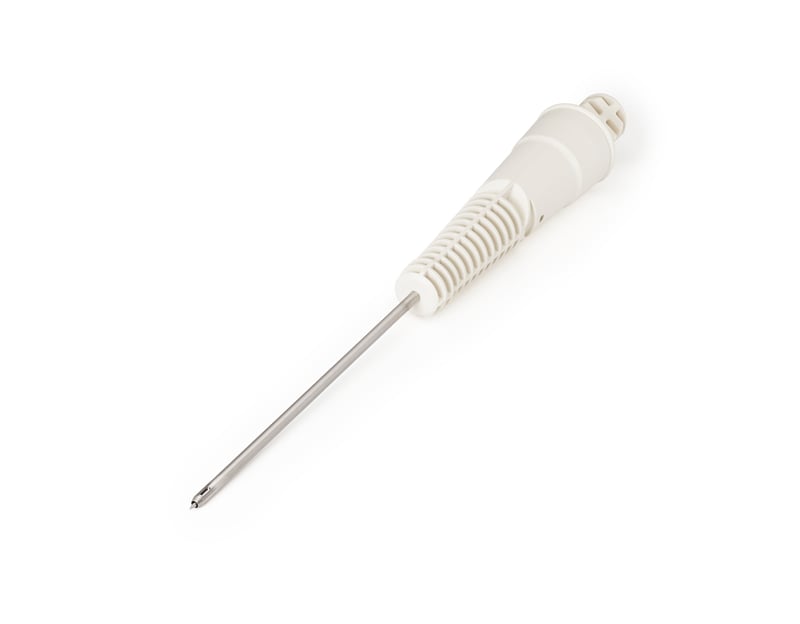
For a customer in the medical technology sector, we manufactured ten handles for a drill guide as functional prototypes: using selective laser sintering (SLS) with PA 2200 (polyamide 12), directly from the CAD data and without the need for tooling.

In this article, we show how the component was created and what steps were required from the data set to the finished handle.

3D-printed plastic handle made of PA 2200 with a metal tube serving as a drill guide

Frequently Asked Questions About 3D Printing in Medical Technology

Which components are 3D-printed in the medical technology sector?

These are often functional prototypes and small production runs: handles for instruments, housings for devices, mounts, and fixtures for assembly and testing. In addition, there are demonstration models for training purposes, such as a dental crown model on a 4:1 scale.

At what quantity does 3D printing become cost-effective?

Since no tools are required, production can begin with as few as one piece—for example, a single training model. For the handle of a drill guide, ten functional prototypes were produced. For large production runs, injection molding is usually more cost-effective.

What materials are suitable?

For plastic parts, PA 2200 (polyamide 12) is often used; for metal parts, for example, 316L stainless steel or titanium. The appropriate material depends on the part’s function, the loads it will bear, and its intended use.

How smooth are printed plastic parts?

Laser-sintered parts initially have a slightly rough surface. Chemical smoothing seals the surface and makes it significantly smoother.

Are 3D-printed parts suitable for patient contact?

That depends on the material, post-processing, and application, and must be evaluated on a case-by-case basis. Our production facility is certified to ISO 13485. Please send us a customized inquiry and specify the certificates you require.

How do I get a quote?

Upload your CAD file to the online calculator or describe your part to us. We'll review the manufacturing process, material, and post-processing options and get back to you with a quote.

Are you planning a medical technology project?

Our production facility is ISO 13485 certified. For medical technology projects, please submit a customized inquiry and let us know which certificates and documentation you require. We’d be happy to assess whether your component can be produced using 3D printing and discuss the material, process, and post-processing with you.

Email us at 3d@hoffmann-am.com or upload your CAD data to our platform.

Onur Yildirim, Head of Sales for Additive Manufacturing at Hoffmann AM
Ready for your first prototype? Talk to us.

Onur Yildirim

Head of Sales, Additive Manufacturing

 +49 89 83 919 898 

  3d@hoffmann-am.com 

 Fislisbach, Switzerland