<img height="1" width="1" src="https://www.facebook.com/tr?id=3900557156680409&amp;ev=PageView &amp;noscript=1">
Skip to content
HoG_Additive_Manufacturing_RGB_box-1

3D Printing for Mechanical and Plant Engineering

In mechanical and plant engineering, many components are required that, due to their complex geometry, cannot be manufactured at all using conventional manufacturing processes or can only be produced with great effort. One example is the 316L stainless steel manifold shown here: The channels branch off internally, and the flanges and threads are machined after printing.

Hoffmann AM manufactures such parts using additive manufacturing with metal and plastic, whether as prototypes, individual parts, or small production runs. The choice of process and material depends on the component’s function, load, quantity, and operating environment.

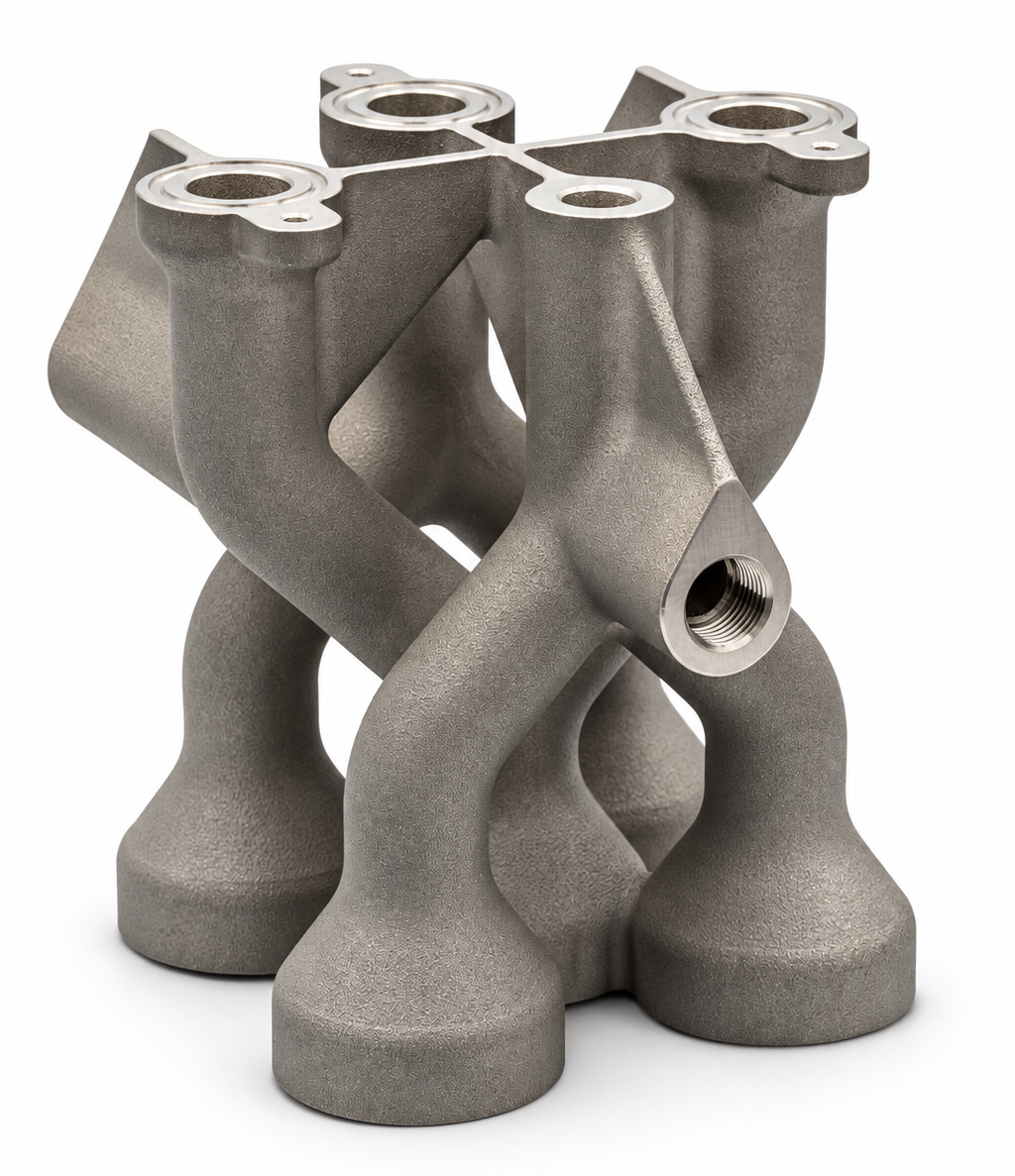
 

3D-printed manifold made of 316L stainless steel with branched channels, milled flanges, and a threaded connection for mechanical engineering

What are the advantages of 3D printing in mechanical and plant engineering?

Replacement Parts and Variants That Require No Tools

Even with just one piece, production is worthwhile without the need for tools. This is helpful for replacement parts for existing systems and for variants that are needed only in small quantities.

Custom-Made Fixtures


Supports, clamping jaws, and stops for assembly and testing fixtures can be customized to fit the exact contours of the workpiece. If the workpiece changes, a new version is simply printed.

Integrate Channels/Features


Manifold blocks with internal channels or adapters with bayonet and threaded connections can be manufactured in a single piece using metal 3D printing. Flanges, threads, and fits are then machined.

Plastics and Metals for Machine and Plant Components

Plastics such as PA12 are often suitable for strips, pads, and covers. We manufacture parts that transmit forces or are exposed to higher temperatures from metal, such as 316L stainless steel, aluminum, or titanium. The following application examples each show one component made of metal and one made of plastic.

Adapters for Fluid-Carrying Systems

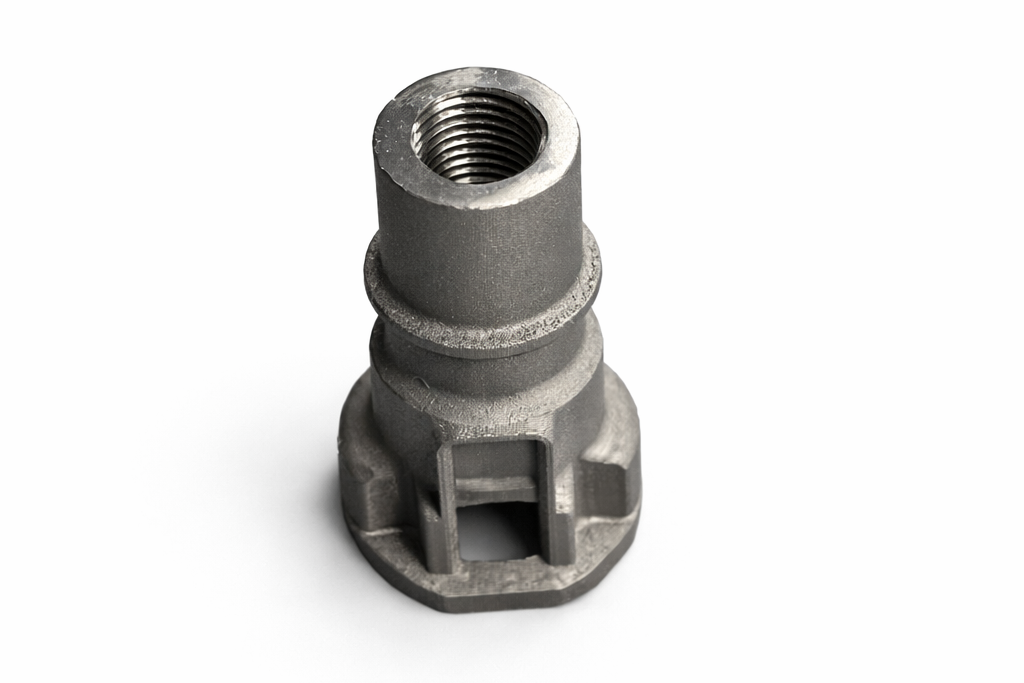
A bayonet adapter made of 1.4404 (316L) stainless steel using metal 3D printing, featuring an internal thread and a bayonet mount

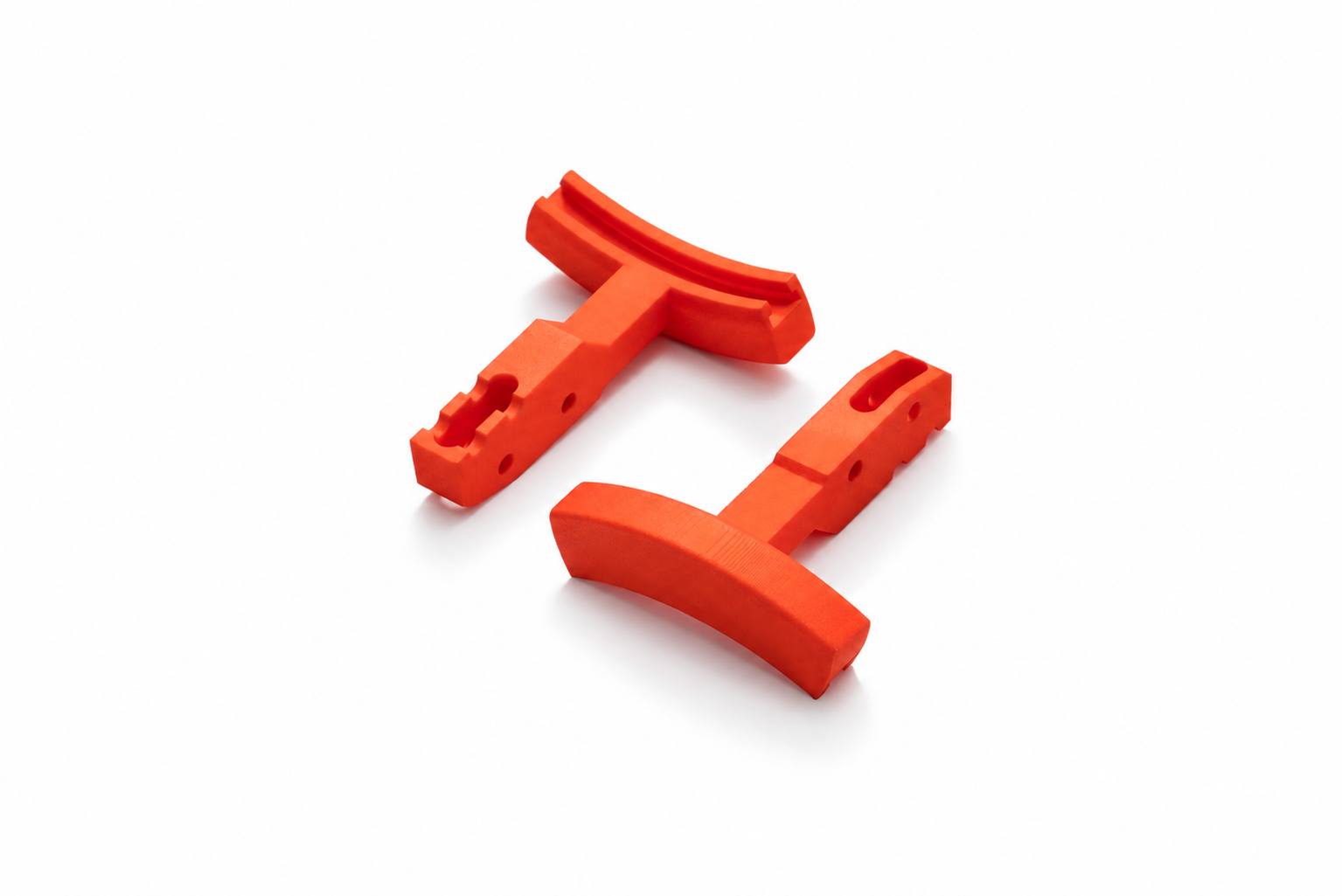
Support for an assembly fixture

Two 3D-printed supports made of orange plastic with a curved contact surface for a mounting fixture

Frequently Asked Questions About 3D Printing in Mechanical and Plant Engineering

Which components are 3D-printed in mechanical engineering?

These often include equipment components such as supports and stops, adapters and connectors for fluid-carrying systems, covers, and replacement parts for existing systems. They also include prototypes of new machine components.

At what quantity does 3D printing become cost-effective?

Since no tools are required, production is possible even for a single piece. For large production runs, injection molding or machining is often more cost-effective. Where the cutoff point lies depends on the size and geometry of the part.

Is 3D printing worth it even for simple parts?

For simple shapes, milling is often more cost-effective. 3D printing is particularly worthwhile for small batch sizes, many variations, short lead times, or shapes that are difficult to produce using traditional machining methods.

Plastic or Metal: Which Material Is Right?

Plastics such as PA12 are suitable for supports, strips, and covers subject to moderate loads. For parts that transmit forces or become hot, metals such as 316L stainless steel, aluminum, or titanium are suitable.

Can 3D-printed parts replace original parts?

Yes, provided that the material and geometry meet the requirements of the original part. We use CAD data or a drawing as a basis. We will work with you to assess suitability based on function and load.

What types of post-processing are possible?

Metal parts are stress-relief annealed and blasted; fits and functional surfaces are CNC-machined as needed. For plastic parts, we offer the following services depending on the material:

  • Painting
  • Vibratory finishing
  • Filling & Painting
  • Coloring
  • Tumble finishing & coloring
  • Chemical Smoothing
  • Compaction blasting
  • Metallization

Are you developing a component for the machine or plant engineering industry?

Please let us know the function, installation space, quantity, and operating conditions of your component. We’ll work with you to determine which material, manufacturing process, and post-processing steps are best suited for your project.

Onur Yildirim, Head of Sales for Additive Manufacturing at Hoffmann AM
Would you like to get in touch with us?

Onur Yildirim

Head of Sales, Additive Manufacturing

+49 89 83 919 898

3d@hoffmann-am.com

Fislisbach, Switzerland