From 3D Model to a Transparent Precision Component
How 3D printing, vacuum casting, and CNC machining were strategically combined
The Challenge
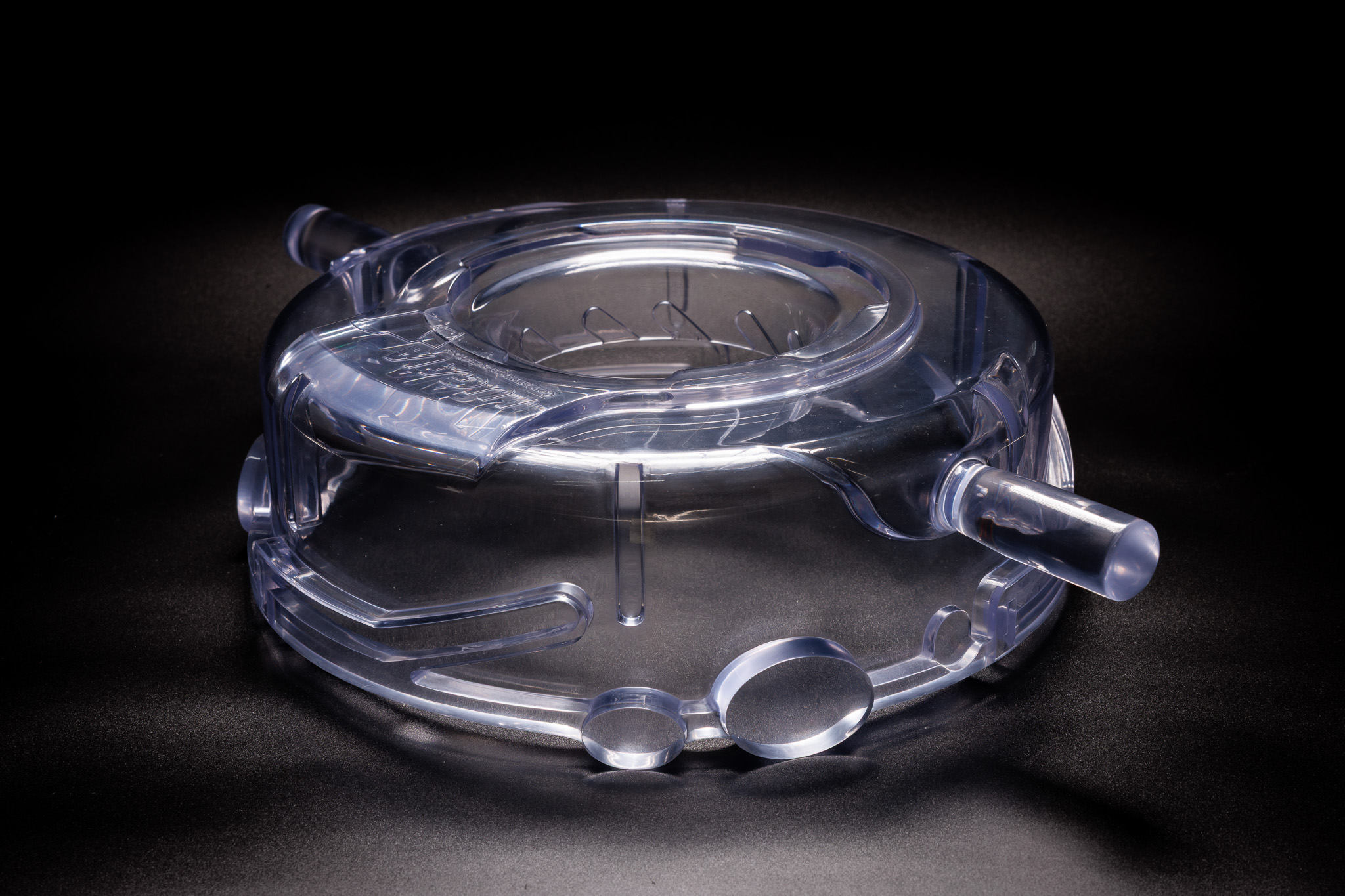
Hoffmann AM manufactured a transparent functional component for a high-precision machining system for a customer in the mechanical engineering industry. The transparent design allows a view of the machining process inside. At the same time, fits, drill holes, and other functional areas had to be executed with precision.
The challenge, therefore, lay not only in the component’s complex geometry. Transparency and the required dimensional accuracy also had to be taken into account during the manufacturing process. Manufacturing the part solely by machining from a solid plastic block would have entailed correspondingly high material and machining costs. For this reason, the component was not manufactured using a single process, but rather through a multi-step process chain.
3D printing, vacuum casting, and CNC machining each handled the manufacturing step for which their respective process was best suited.
From a 3D Model to a Transparent Component
The starting point was the 3D model of the component. Based on this, a master model was first produced using additive manufacturing.
This master model was then used to create a silicone mold for vacuum casting. The actual component was subsequently manufacturedfrom the transparent casting resin Hei-Cast.
Vacuum casting made it possible to reproduce the component’s complex basic geometry while simultaneously achieving the desired transparent finish.
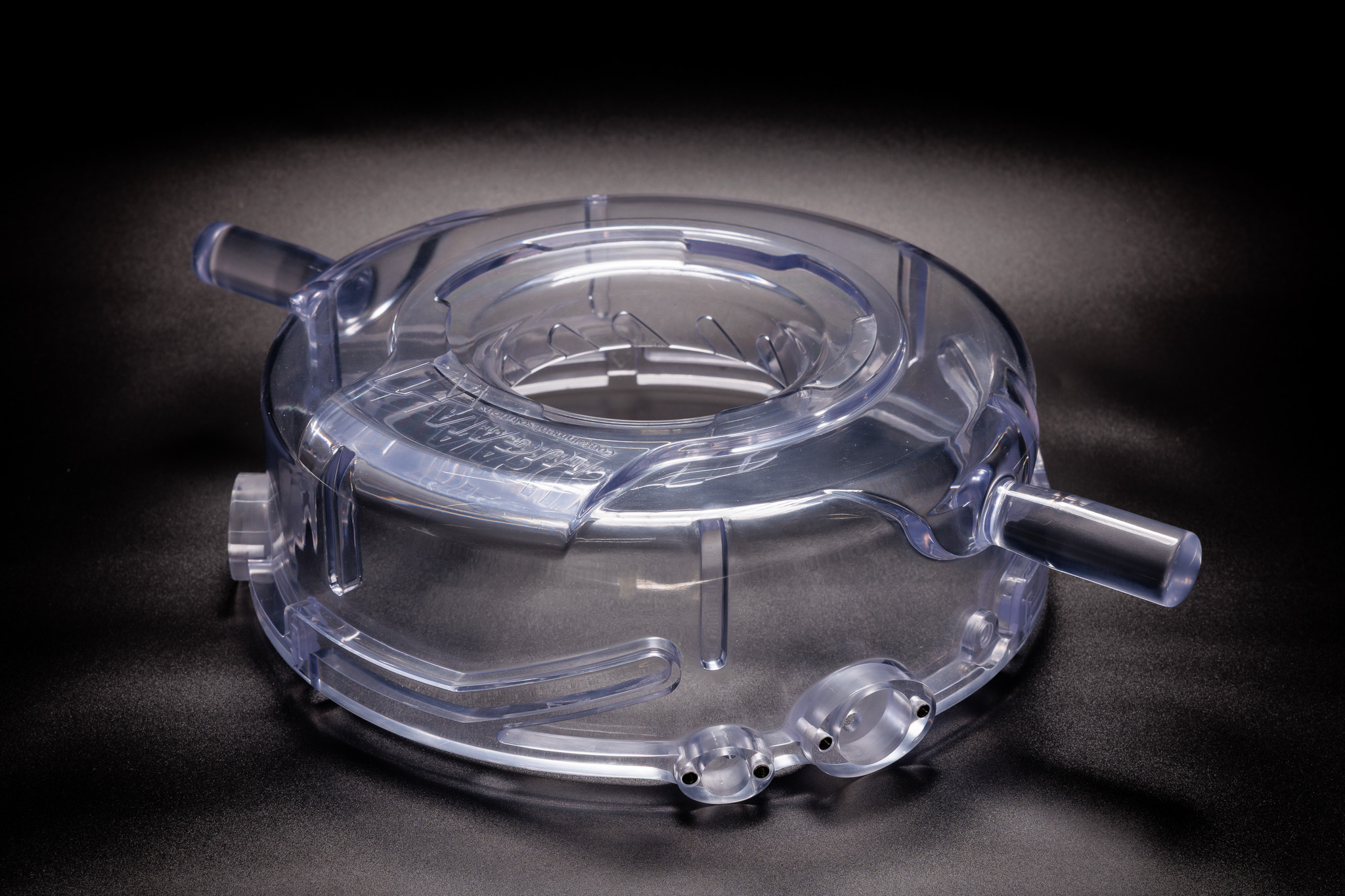
This provided the basic shape. In the next step, the areas requiring particularly high dimensional accuracy were specifically CNC-machined.
Required Precision
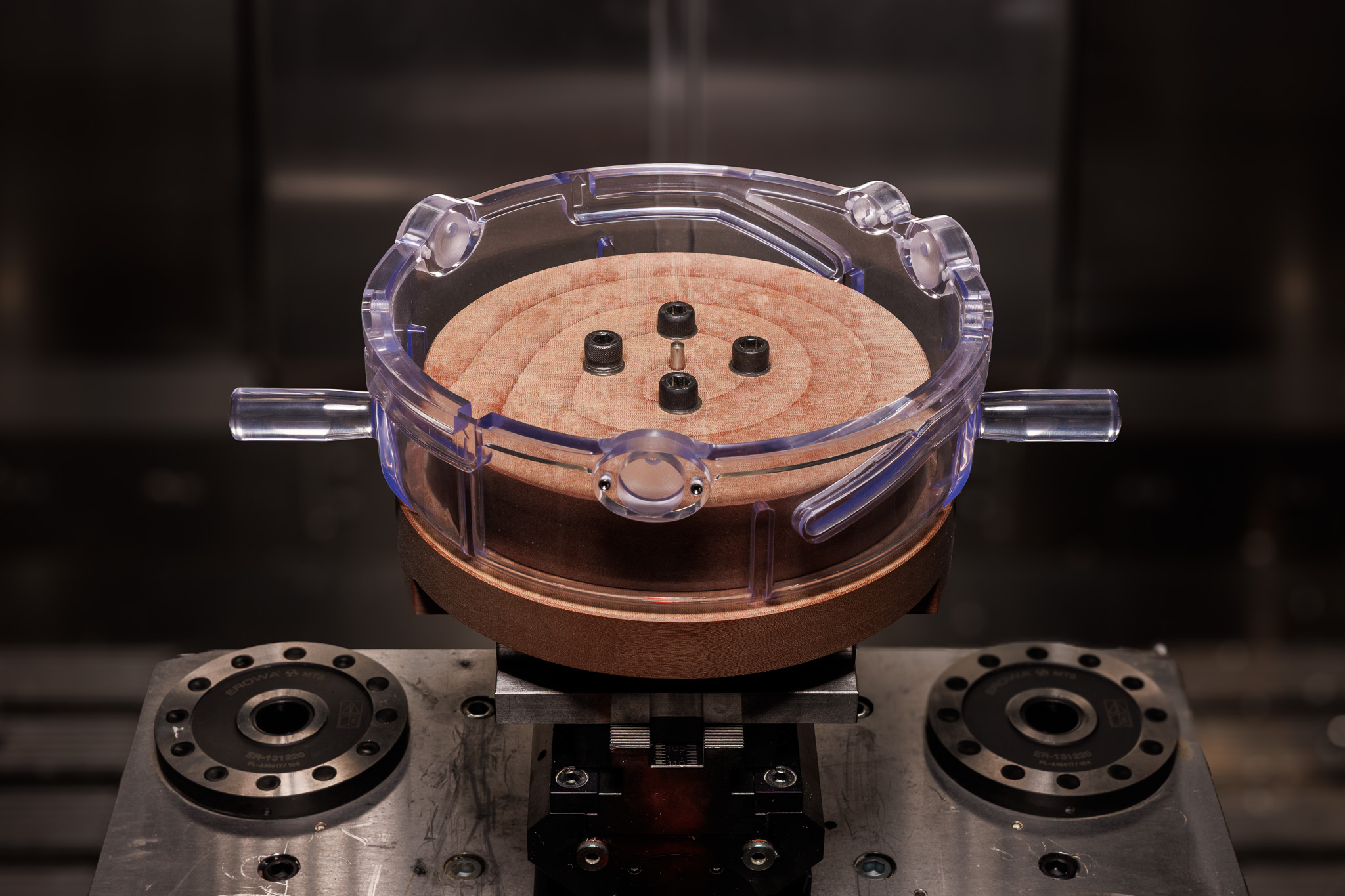
After vacuum casting, the component was aligned and clamped on the CNC machine for machining.
The component could be positioned reproducibly using defined reference surfaces. Subsequently, the areas critical to its later function—including fits, bores, and other functionally critical surfaces—were machined with precision.
Through CNC machining, dimensional accuracies of ± 0.01–0.05 mm were achievedin these areas .
The key point: It was not necessary to machine the entire component. CNC machining was used specifically where the required precision could not be achieved by the upstream manufacturing process alone.
The Result
The result is a transparent functional component in which three different manufacturing processes were specifically coordinated with one another.
3D printing enabled the rapid production of the master model. Using a silicone mold and vacuum casting, the transparent component was then manufactured from Hei-Cast. The final CNC machining ensured the required precision in the functionally critical areas.
This meant that the complex geometry did not have to be machined entirely from a solid block of plastic. At the same time, precise finishing could be performed exactly where it was necessary for the component’s function.
Project Benefits at a Glance
✓ Complex geometries produced cost-effectively Without having to machine the entire part from a solid block of plastic
✓ Transparent component design Unobstructed view of the machining process inside.
✓ Targeted use of CNC Machining only on fits, bores, and functionally critical surfaces
✓ High dimensional accuracy achieved Through CNC finishing with a tolerance of ± 0.01–0.05 mm in the relevant areas
Conclusion
For this project, the solution was not a single manufacturing process, but rather a targeted combination of 3D printing, vacuum casting, and CNC machining.
This made it possible to economically combine complex geometry, transparency, and high precision in a single component.
Can your part be manufactured more cost-effectively?
Upload your part and get an instant estimate of the price and delivery time.
1️⃣ Online Calculator
Get prices and delivery times for prototypes, replacement parts, and small production runs in just a few seconds.
2️⃣ Custom Inquiry
For complex components, series production projects, or special requirements, our experts will advise you personally.