
ACCURA 25
Features:
- Density [g/cm3] 1.2
- Tensile strength [MPa] 38
- E-modul [Gpa] 1.66
- Flexural strength [MPa] 58
- Flexural modulus [Gpa] 1.66
- Impact resistance (Izod notched) [J/m] 24
- Heat deflection temp @0.45MPa [°C] 58
- Elongation at break [%] 20
Advantages:
- high flexibility with excellent restoring force
- excellent detail resolution and precision
- good bending strength
- high shock resistance
- Temperature resistance
- smooth surface
- very good paintability
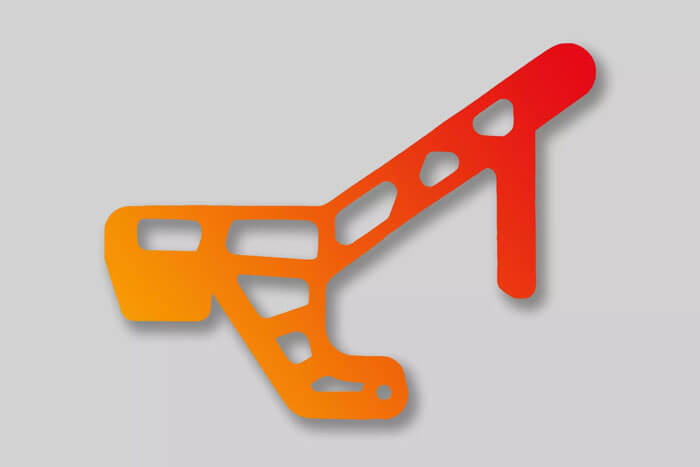
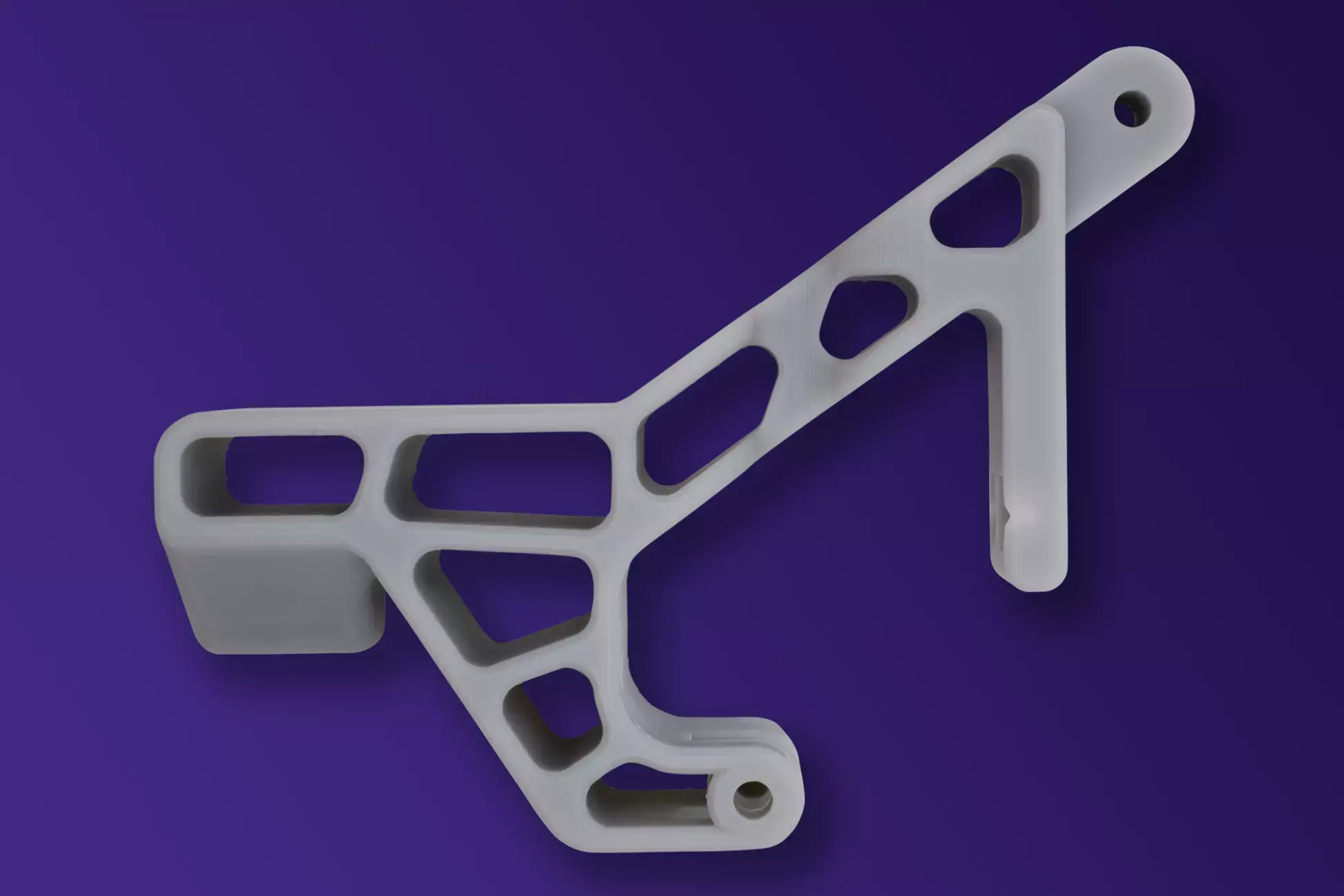
The material ACCUR 25 is convincing due to its high detail resolution and at the same time high bending and impact resistance. In addition, the parts in this material have a smooth surface and can therefore be easily painted.
ClearVue transparent, 3D printed plastic
For applications where transparency is of crucial importance.
Features:
- Density [g/cm3] 1.17
- Tensile strength [MPa] 53
- E-modul [Gpa] 2.5
- Flexural strength [MPa] 83
- Flexural modulus [Gpa] 2.33
- Impact resistance (Izod notched) [J/m] 46
- Heat deflection temp @0.45MPa [°C] 51
- Elongation at break [%] 6
Material color:
- Translucent
Applications:
Advantages:
- Translucent and high clarity
- Excellent moisture resistance
- USP Class VI compliant
- Biocompatible and dental compliant
- Polycarbonate-like properties
ClearVue is a highly clear plastic with excellent moisture resistance. This material is suitable for a wide range of applications where transparency (translucency) is of crucial importance. These would be for example headlights, complex assemblies or fluid flows.
EVOLVE
Features:
- Density [g/cm3] 1.12E-modul [Gpa] 2.96
- Flexural modulus [Gpa] 2.65Impact resistance (Izod notched) [J/m] 38.9
- Heat deflection temp @0.45MPa [°C] 52
- Elongation at break [%] 11Shore hardness 82D
GP PLUS
Features:
- Density [g/cm3] 1.16
- Tensile strength [MPa] 37
- E-modul [Gpa] 2.51
- Flexural strength [MPa] 67.3
- Flexural modulus [Gpa] 2.2
- Impact resistance (Izod notched) [J/m] 26
- Heat deflection temp @0.45MPa [°C] 46
- Elongation at break [%] 7.5Shore hardness 79D
LOCTITE® IND 408, plastic 3D printing
For 3D printed parts with isotropic properties
Features
- Tensile strength: 42 MPa (ASTM D638)
- Modulus of elasticity: 3240 MPa (ASTM D638)
- Elongation at break: 1.3 % (ASTM D638)
- Flexural strength: 144 MPa (ASTM D790)
- Flexural modulus: 3830 MPa (ASTM D790)
- Impact strength (IZOD, notched): 16 J/m (ASTM D256)
- Hardness: Shore 80D (ASTM D2240)
- Heat deflection temp (at 0.46 MPa): 118 °C (ASTM D648)
- Heat deflection temp (at 1.82 MPa): 95°C (ASTM D648)
Material Color
Black
Surface
Excellent surface finish
Advantages
- For parts with isotropic properties
- For parts with high detail accuracy
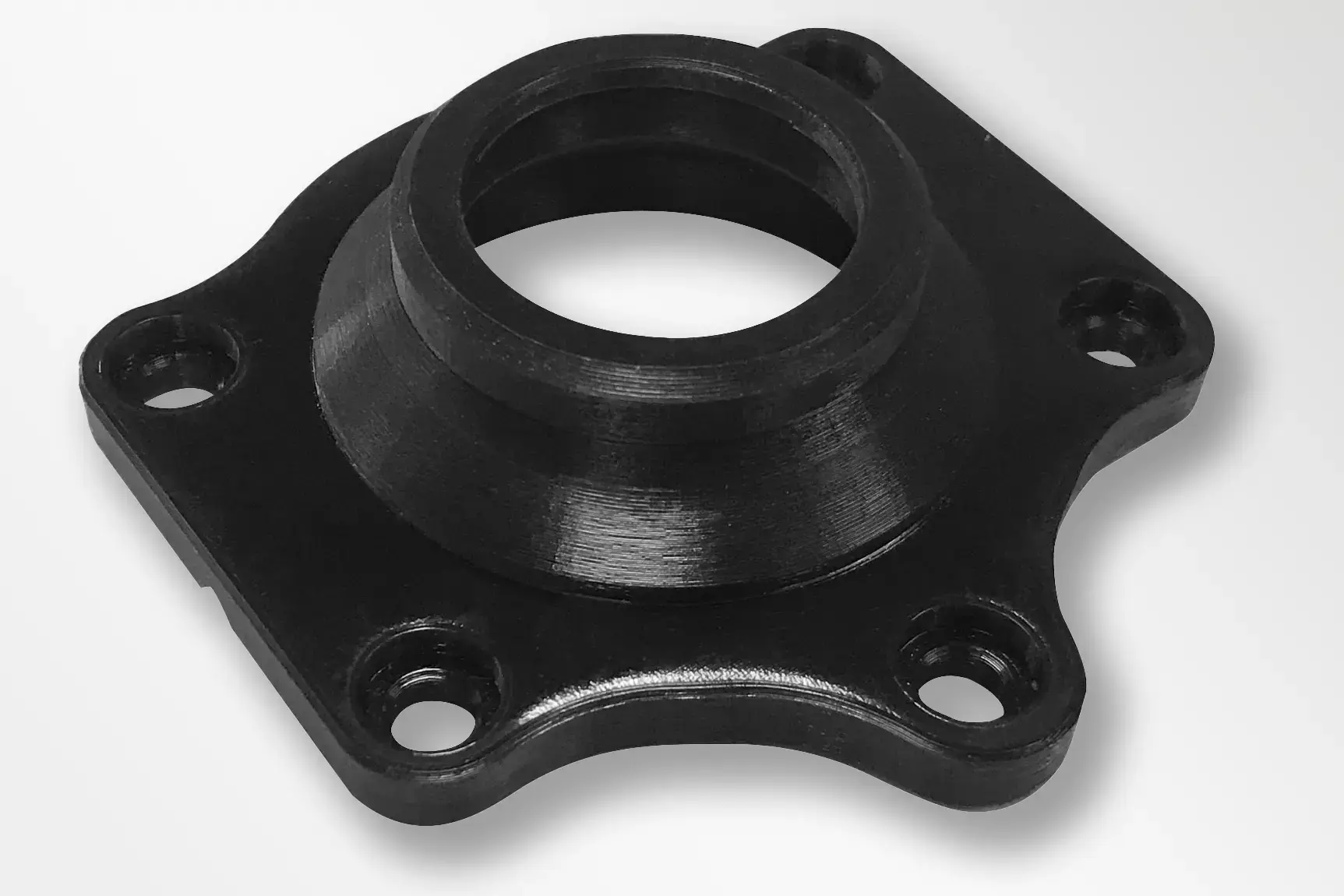
Loctite 3D IND408 is ideally suited for the rapid production of parts with high detail and excellent surface finish for applications ranging from general purpose to end-use parts.
NEXT
Features
- Density [g/cm3] 1.17
- Tensile strength [MPa] 32.8
- E-modul [Gpa] 2.43
- Flexural strength [MPa] 69.3
- Flexural modulus [Gpa] 2.47
- Impact resistance (Izod notched) [J/m] 50
- Heat deflection temp @0.45MPa [°C] 56
- Elongation at break [%] 9Shore hardness 82D
Advantages
- Properties similar to ABS
- high strength
- high hardness
- Appearance and surface of a thermoplastic
This material comes very close to the properties of ABS and therefore has a high strength and hardness.
Resin Flexible
Features
- Density [g/cm3] 1.2
- Tensile strength [MPa] 8.9
- Elongation at break [%] 120Shore hardness 80A
RR60 white, Kunststoff 3D-Druck
Features
- Tensile strength: 54 MPa (ASTM D638)
- Modulus of elasticity: 2920 MPa (ASTM D638)
- Elongation at break: 4-6% (ASTM D638)
- Flexural strength: 85 MPa (ASTM D790)
- Flexural modulus: 2670 MPa (ASTM D790)
- Impact strength: 18.6 J/m (ASTM D256)
- Hardness: Shore 81D (ASTM D2240)
- Heat deflection temp (at 66psi): 54 °C (ASTM D648)
- Heat deflection temp (at 264psi): 50 °C (ASTM D648)
Material Color
White
Applications
Advantages
All-rounder material
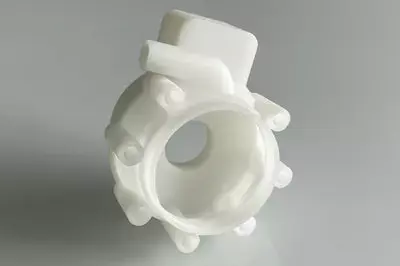
EP-RR 60 WH white is a tough, optically neutral white, dimensionally stable resin with low viscosity. The all-rounder material is suitable for various parts, specifically for parts that require high attention to detail.
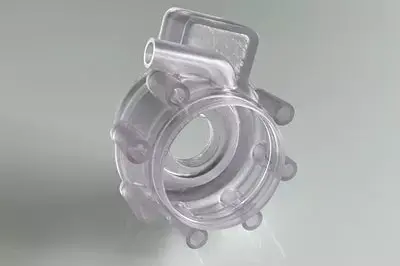
RR60-crystal clear, plastic 3D print
Features
- Tensile strength: 52 MPa (ASTM D638)
- Modulus of elasticity: 2500 MPa (ASTM D638)
- Elongation at break: 6-10% (ASTM D638)
- Flexural strength: 82 MPa (ASTM D790)
- Flexural modulus: 2000 MPa (ASTM D790)
- Impact strength: 21.4 J/m (ASTM D256)
- Hardness: Shore 83D (ASTM D2240)
- Heat deflection temperature (at 66psi): 55 °C (ASTM D648)
- Heat deflection temperature (at 264psi): 50 °C (ASTM D648)
Material Color
Translucent
Applications
Advantages
- Tough
- Dimensionally stable
RR 60 CR is a crystal clear, tough, dimensionally stable resin made from an ABS-like material. For applications that require translucency and have dimensionally demanding construction.
Taurus
High stability and temperature resistance
Features
- Density [g/cm3] 1.13
- Tensile strength [MPa] 46.9
- E-modul [Gpa] 2.31
- Flexural strength [MPa] 73.8
- Flexural modulus [Gpa] 2.05
- Impact resistance (Izod notched) [J/m] 47.5
- Heat deflection temp @0.45MPa [°C] 62
- Elongation at break [%] 17Shore hardness 83D
Advantages
- High stability
- Temperature resistant
- Heat resistant up to 90°C
- Good surfaces
When it comes to components with high stability and temperature resistance, the Taurus material is perfect for these applications.
Xtreme
Sehr zähes Material mit ausgezeichneter Oberflächenqualität
Features
- Density [g/cm3] 1.18
- Tensile strength [MPa] 38-44
- E-modul [Gpa] 1.98
- Flexural modulus [Gpa] 2.07
- Impact resistance (Izod notched) [J/m] 52
- Heat deflection temp @0.45MPa [°C] 62
- Elongation at break [%] 22
Applications
Advantages
- Excellent surface quality
- Good elongation at break properties
- High shock resistance
- High stability
- Similar properties to cast plastic
Accura's Xtreme material is particularly impressive with its excellent surface quality, good elongation properties, high impact resistance and high stability. In terms of appearance and surface finish, Xtreme corresponds to a durable cast plastic.