
<img height="1" width="1" src="https://www.facebook.com/tr?id=3900557156680409&amp;ev=PageView &amp;noscript=1">
Skip to content
HoG_Additive_Manufacturing_RGB_box-1
hoffmann-group-photo-07437 hoffmann-group-photo-07437 hoffmann-group-photo-07437
Technology

Selective Laser Melting (SLM)

In selective laser melting (SLM), metals such as steel, aluminium, titanium are processed by means of powder coating

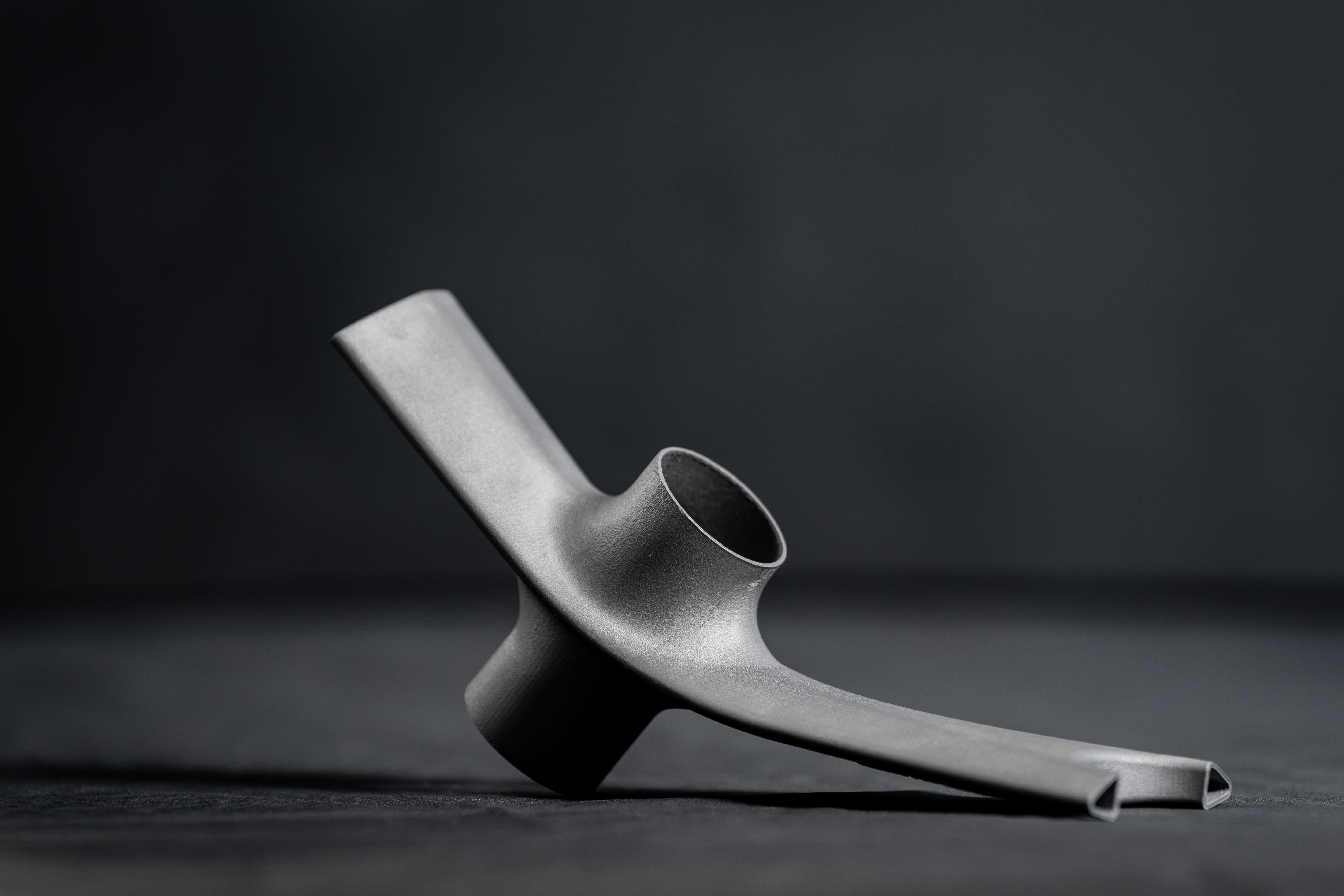
In Selective Laser Melting (SLM), metal powder is applied layer by layer and fused with a laser at the defined points. This produces components made of metals such as steel, aluminium, titanium or copper.

The process produces almost pore-free components and enables complex geometries, filigree shapes and lightweight structures. Conventionally manufactured metal parts can be optimised for 3D printing, saving weight, costs and production time.

Suitable materials

Aluminium AlSi10Mg, Metal 3D Printing

Aluminium

Aluminium AlSi10Mg, Metal 3D Printing

Features

  • Density [g/cm3] 2.3
  • Tensile strength [MPa] 250
  • E-modul [Gpa] 70
  • Elongation at break [%] 1

Applications

For applications in aerospace industry

Advantages

  • High strength
  • Low weight
  • High dynamic load capacity


This aluminium alloy combines high strength with low weight. In addition, this material scores with a high dynamic load capacity. It is used especially in the aerospace industry.

Stainless steel 1.4404, metal 3D printing

Stainless steel
3D-Druck-Materialien-Jellypipe-Platzhalter-Bild

Features

  • Density [g/cm3] 7.9
  • Tensile strength [MPa] 510
  • E-modul [Gpa] 180
  • Elongation at break [%] 45

Advantages

  • Good corrosion resistance
  • High conductivity


The stainless steel alloy 1.4404 impresses with good corrosion resistance in combination with high conductivity.

Stainless steel 1.4542, metal 3D printing

Stainless steel

3D-Druck-Materialien-Jellypipe-Platzhalter-Bild

Features

  • Density [g/cm3] 7.8
  • Tensile strength [MPa] 900
  • E-modul [Gpa] 140
  • Elongation at break [%] 25

Advantages

  • High corrosion resistance
  • Sterilizable
  • High strength
  • High ductility


The steel 1.4542 is characterised by high strength and ductility. At the same time, this steel has a high resistance to corrosion and can be sterilised.

Copper CuCr1Zr, metal 3D printing

3D-Druck-Materialien-Jellypipe-Platzhalter-Bild

Features:

  • Density [g/cm3] 8.9
  • Tensile strength [MPa] 340
  • E-modul [Gpa] 110
  • Elongation at break [%] 25

Martensitic nickel steel 1.2709, metal 3D printing

Martensitic nickel steel, tool steel

3D-Druck-Materialien-Jellypipe-Platzhalter-Bild

Features:

  • Density [g/cm3] 8
  • Tensile strength [MPa] 1050
  • E-modul [Gpa] 160
  • Elongation at break [%] 11

Advantages:

  • Excellent tensile strength & toughness
  • Particularly low distortion

1.2709 tool steel is a high strength martensitic nickel steel with excellent tensile strength and toughness. In addition, this steel is particularly low in distortion.


Tool Steel Corrax, Metal 3D Printing

Corrosion-resistant tool steel

3D-Druck-Materialien-Jellypipe-Platzhalter-Bild

Features:

  • Density [g/cm3] 7.7
  • Tensile strength [MPa] 1100
  • E-modul [Gpa] 170

Advantages:

  • High corrosion resistance
  • High strength
  • Food certified
  • Good post-processing possibilities

The corrosion-resistant tool steel Corrax (CL91RW) offers a high level of corrosion resistance while maintaining high strength. At the same time, Corrax is food-certified and allows good reworking possibilities.


Titanium TiAl6V4, Metal 3D Printing

Titanium alloy

3D-Druck-Materialien-Jellypipe-Platzhalter-Bild

Features:

  • Density [g/cm3] 4.5
  • Tensile strength [MPa] 900
  • E-modul [Gpa] 110
  • Elongation at break [%] 10

Advantages:

  • High strength
  • Corrosion resistant
  • Low weight

Titanium (TiAl6V4) is a metal alloy for highest demands. It convinces by high strength and corrosion resistance. A further advantage is the low density of the material.

Frequently asked questions about SLM 3D printing

What is Selective Laser Melting (SLM)?

SLM is an additive manufacturing process for metals. A laser fuses metal powder layer by layer at defined points to create almost pore-free components.

What is SLM suitable for?

SLM is suitable for components and small series in mechanical and plant engineering and the automotive industry, for spare parts, and for design objects and jewellery made of titanium.

Which metals are available for SLM?

The options are aluminium AlSi10Mg, stainless steel 1.4404 and 1.4542, copper CuCr1Zr, martensitic nickel steel 1.2709, the corrosion-resistant tool steel Corrax and titanium TiAl6V4.

How large can SLM components be?

The maximum build space is 300 x 300 x 350 mm, with a minimum wall thickness of 1 mm.

Does SLM require support structures?

Yes. The metal powder cannot be compacted as much during printing as in SLS. Support structures are therefore printed for overhanging structures and removed during finishing.

How are SLM components post-processed?

After the support structures have been removed, the workpiece is blasted or ground. Vibratory finishing often follows to achieve an evenly smooth surface.

Why manufacture metal parts additively?

Components can be optimised for 3D printing to reduce weight, costs and production time. Lightweight structures and complex geometries that are difficult to produce conventionally also become possible.

Note about material properties

Note: Please note that the listed values of the properties (e.g. tensile strength) refer to the properties of the material in an unprocessed state. Hoffmann AM can not guarantee the information below. In the printed state, the values may deviate from the specifications.

If a material in practice is pushed to the limits of the stated values, the component itself should be tested. If you have any questions, please do not hesitate to contact us.