
3DM Impact, Plastic 3D Printing
For tough and at the same time flexible parts
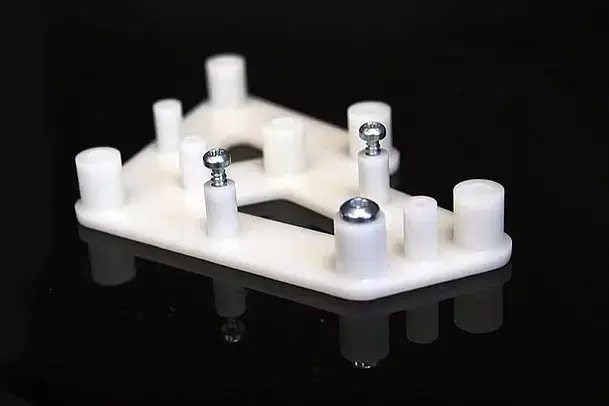
Features:
- Tensile strength: 58 MPa (ISO 527-2/93)
- Modulus of elasticity: 2700 MPa (ISO 527-2/93)
- Elongation at break: 22% (ISO 527-2/93)
- Flexural strength: 70 MPa (ISO 178/01)
- Flexural modulus: 2300 MPa (ISO 178/01)
- Hardness: Shore 78-82D (ISO 868)
- Heat deflection temp (at 0.45 MPa): 55 °C (ISO75-2/04)
Material color:
- Opaque
Applications:
High performance parts such as::
Advantages:
- Tough and flexible at the same time
- Shape memory effect (depending on temperature)
The material 3DM-IMPACT is especially suitable for parts that require high toughness combined with good flexibility. Due to its high impact strength, the material is particularly resistant to shocks and impacts. Thus, this material is ideally used for high-performance parts such as snap-fits, electrical housings, fixtures and tools. In addition, the 3D printing material has the ability of the shape memory effect, depending on the temperature.
3DM-Tough, plastic 3D printing (resin)
The great feature of 3DM-Tough resin is its toughness, clarity and translucency that does not yellow.
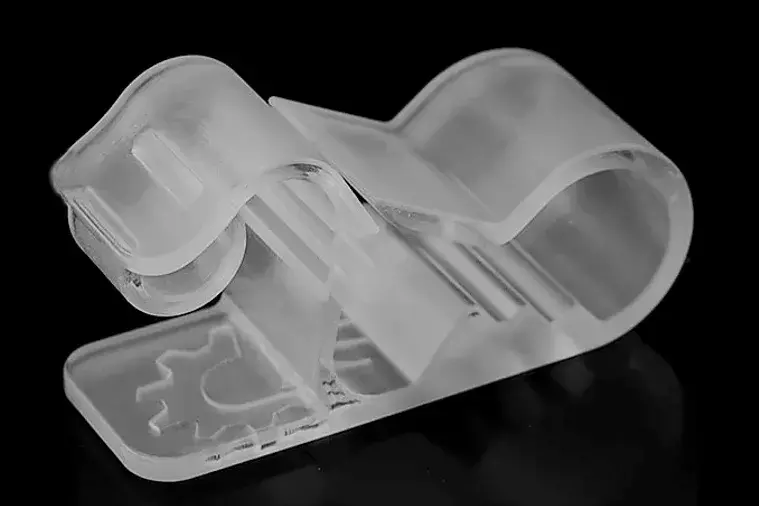
Features:
- Hardness: Shore 88-90D (ASTM D2240)
Material color:
- Transparent, non-yellowing
Applications:
The great feature of 3DM-Tough resin is its toughness, clarity and translucency that does not yellow. The 3D printing material is particularly suitable for applications in the automotive, medical and electronics industries, including functional prototypes.
BASF ST45 B, plastic 3D printing
BASF ST45 B offers an excellent combination of strength, toughness and impact resistance.
Features:
- Tensile strength: 52.5 MPa (ASTM D638)
- Modulus of elasticity: 2040 MPa (ASTM D638)
- Elongation at break: 21.4 % (ASTM D638)
- Flexural strength: 93.9 MPa (ASTM D790)
- Flexural modulus: 2140 MPa (ASTM D790)
- Impact strength (IZOD, notched): 20.56 J/m (ASTM D256)
- Hardness: Shore 81D (ASTM D2240)
- Heat deflection temp (at 0.46 MPa): 63 °C (ASTM D648)
- Heat deflection temp (at 1.82 MPa): 52 °C (ASTM D648)
- Flammability: HB (UV 94 1.5 mm)
Material color:
- Black
Applications:
Advantages:
- Fixed
- Tough
- Impact resistant
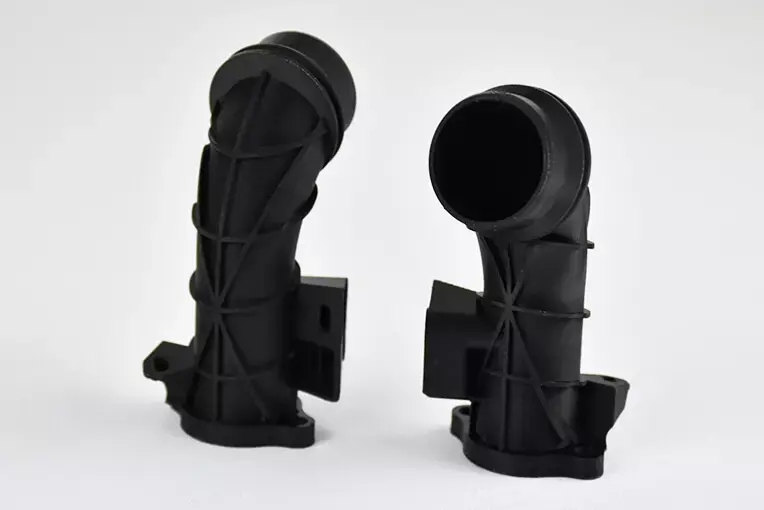
BASF ST45 B plastic (resin) offers an excellent combination of strength, toughness and impact resistance. The material is very well suited for 3D printing of high performance functional parts that require high accuracy and mechanical strength.
Application: for automotive airbags, ventilation covers and fittings. The resin is also suitable for items such as housing covers, connectors, brackets and fixtures, as well as design prototypes, due to the high surface quality.
KeyGuide
Features:
- Flexural strength [MPa] 106
- Flexural modulus [Gpa] 2.4
- Elongation at break [%] 6.3Shore hardness 95D
- Transluzent
Applications:
Advantages:
- Dental technology
- Biocompatible
- Polishing possible
- Sterilisation in autoclave possible
KeyTray
Features:
- Tensile strength [MPa] 62.1
- E-modul [Gpa] 2.056
- Flexural strength [MPa] 84.7
- Flexural modulus [Gpa] 1.913
- Elongation at break [%] 26.4Shore hardness 86.5D
- Violet Transluzent
Applications:
Advantages:
- Dental technology
- Biocompatible
Plastic XPEEK147, 3D printing technology DLP
Properties:
- Density [g/cm3] 1.26
- Tensile strength [MPa] 75
- E-modul [Gpa] 3.192
- Flexural strength [MPa] 128
- Flexural modulus [Gpa] 3.168
- Impact resistance (Izod notched) [J/m] 14.6
- Heat deflection temp @0.45MPa [°C] 238
- Heat deflection temp @1.81MPa [°C] 107
- Elongation at break [%] 3Shore hardness 94D
- Black
Applications:
Advantages:
- High temperature resistance up to 230°C
- High dimensional stability
- Good surface quality
xPEEK147 is a material that meets high demands in terms of temperature, stability and surface quality. The parts produced with the additive manufacturing technology Digital Light Processing (DLP) are suitable for a wide range of applications such as spare parts and prototypes, injection moulding deep-drawing moulds or also for series components in the range of 100 to 1000+ pieces.
The 3D printer manufacturer Nexa calls the DLP process LSPc, Lubricant-Sublayer-Photo-curing.
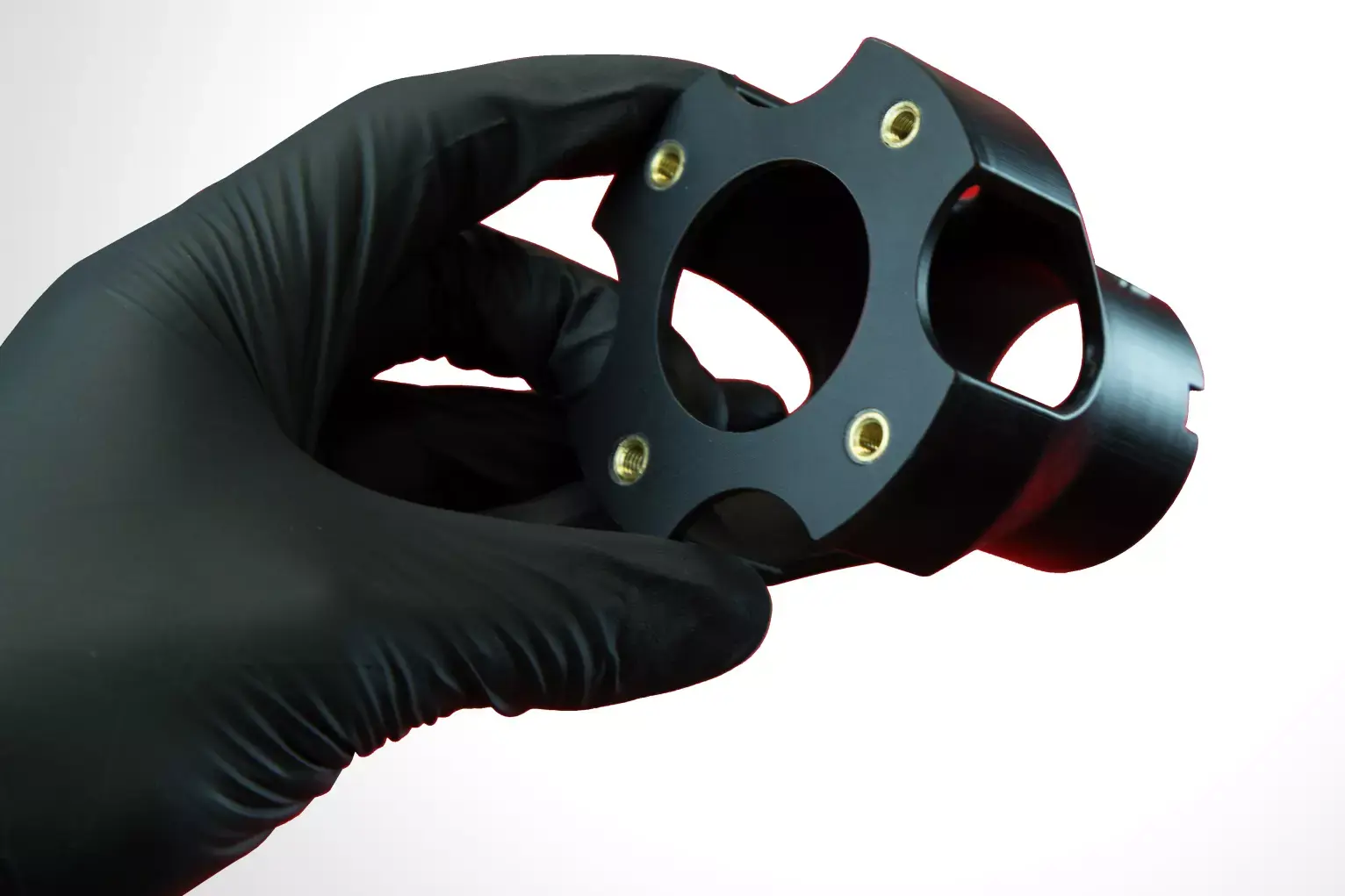
LOCTITE® High Toughness HDT60 3843, plastic 3D printing
LOCTITE® 3D 3843 is a semi-flexible material with high impact strength.
Features:
- Tensile strength: 51 MPa (ASTM D638)
- Modulus of elasticity: 1806 MPa (ASTM D638)
- Elongation at break: 43 % (ASTM D638)
- Flexural strength: 73.8 MPa (ASTM D790)
- Flexural modulus: 1783 MPa (ASTM D790)
- Impact strength (IZOD, notched): 53 J/m (ASTM D256)
- Hardness: Shore 75D (ASTM D2240)
- Heat deflection temp (at 0.46 MPa): 63 °C (ASTM D648)
Material Color:
- Black matt
LOCTITE® 3D 3843 is a semi-flexible material with high impact strength and is ideally suited for a wide range of applications such as equipment, fasteners, enclosures and covers.
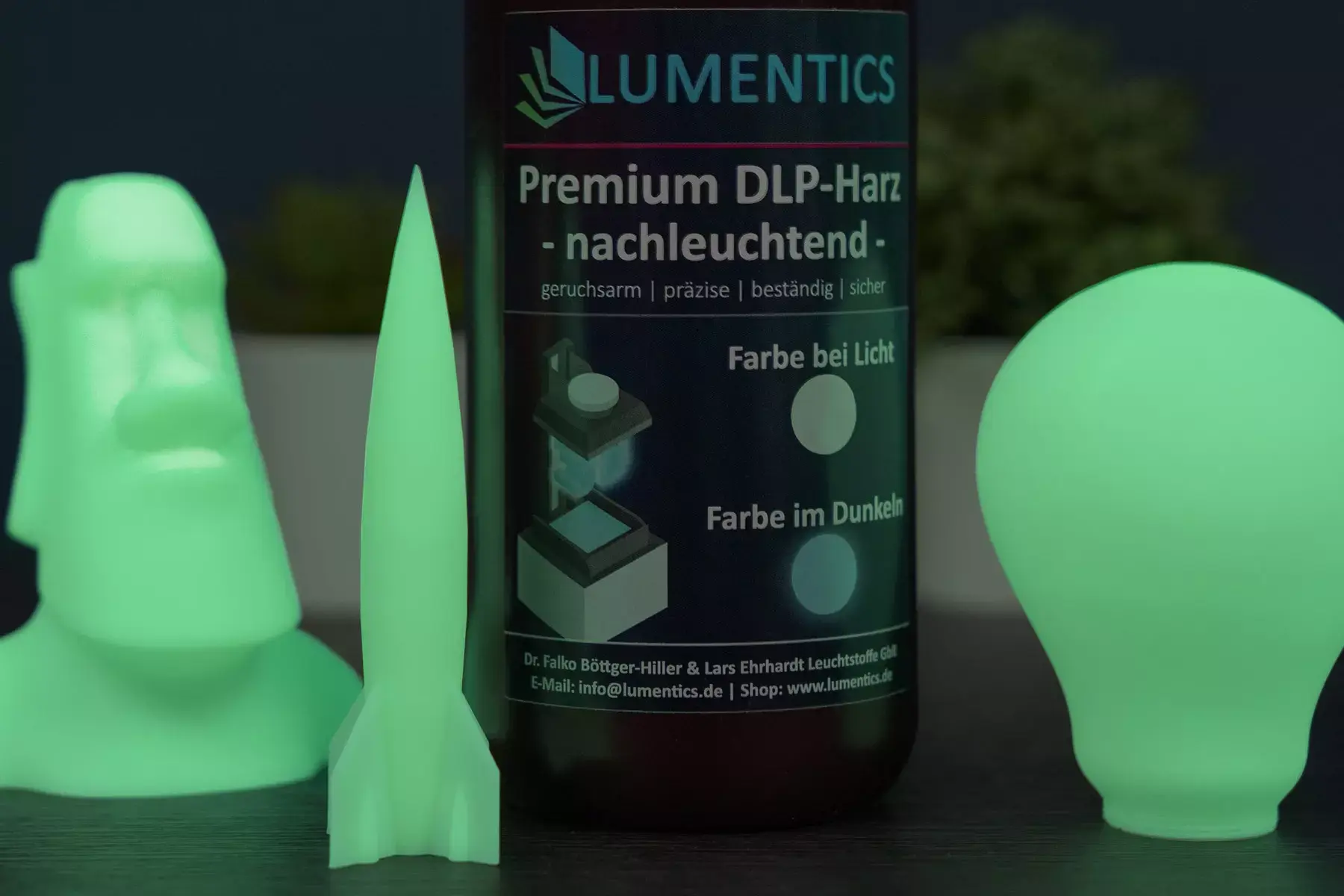
Lumentics DLP resin photoluminescent, light green, plastic 3D printing
The Lumentics material has the special property that it glows in the dark
Features:
- E-modulus: 1655 MPa (DIN EN ISO 178)
- Elongation at break: 5% (DIN EN ISO 178)
- Flexural strength: 41.3 MPa (DIN EN ISO 178
- Hardness: Shore 87D (DIN ISO 7619-1)
Material color:
- Opaque / Glow in the dark green
The material Lumentics has the special property that it glows in the dark. In addition, the material has a high stability.
xABS
Features:
- ensile strength [MPa] 60
- E-modul [Gpa] 1.62
- Flexural strength [MPa] 81
- Flexural modulus [Gpa] 1.86
- Impact resistance (Izod notched) [J/m] 54
- Heat deflection temp @0.45MPa [°C] 80
- Elongation at break [%] 47
Material Color:
- Black
Applications:
Advantages:
- High-performance plastic
- High tensile and flexural modulus
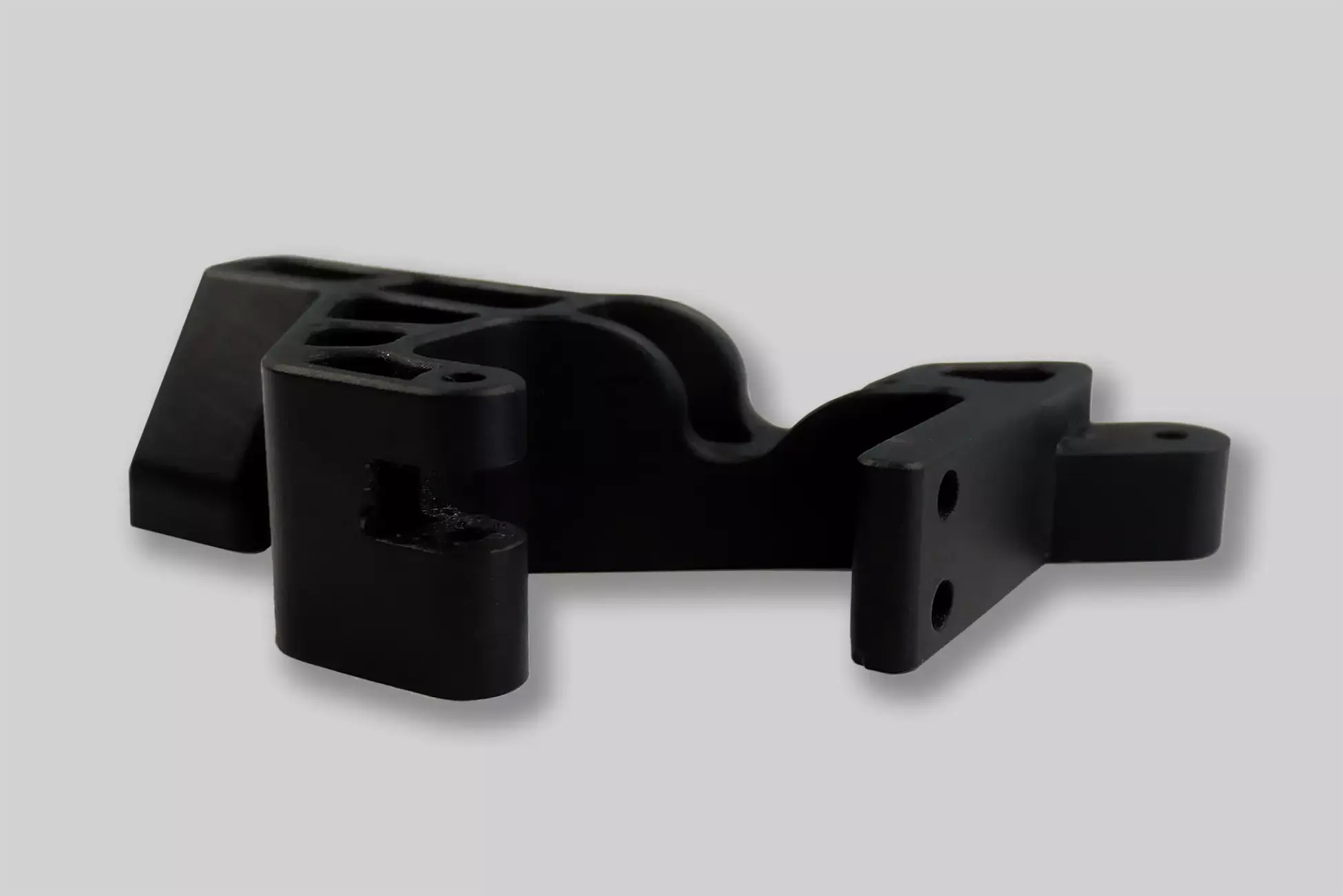
xCE-Black, plastic
Smooth, injection moulding-like surface, high accuracy, bending strength and temperature resistance.
Features:
- Tensile strength [MPa] 80
- E-modul [Gpa] 1.62
- Flexural strength [MPa] 135
- Flexural modulus [Gpa] 3.25
- Impact resistance (Izod notched) [J/m] 20
- Heat deflection temp @0.45MPa [°C] 120
- Elongation at break [%] 8Shore hardness 90D
- Black
Applications:
Advantages:
- High accuracy
- High bending strength
- High temperature resistance
- Colour: Black
The 3D printing plastic xCE-black has a high accuracy, high bending strength and high temperature resistance. It also has a very smooth surface similar to injection moulding.
xCE-black is suitable for automotive components, parts in mechanical engineering and injection moulding applications. For series in the range of 100 to more than 1,000 pieces, xCE-black is a good choice.
xMED412
Features:
- Density [g/cm3] 1.14
- Tensile strength [MPa] 38
- E-modul [Gpa] 1.245
- Flexural strength [MPa] 37
- Flexural modulus [Gpa] 1.022
- Impact resistance (Izod notched) [J/m] 42.6
- Heat deflection temp @0.45MPa [°C] 40
- Elongation at break [%] 141Shore hardness 70D
- Tanslucent
Applications:
Advantages:
- High impact strength, like polypropylene
- Biocompatible (ISO 10993, FDA Class I)
- Stable and resistant
- Serilisation in autoclave possible
- Good polishability (transparent finish)