
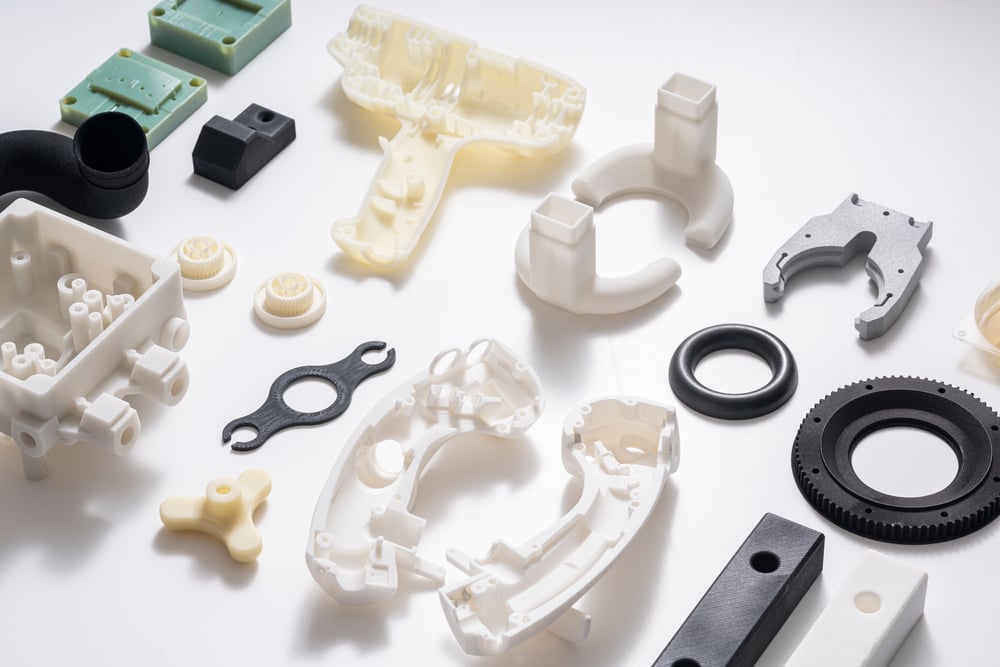
1.0558 Quality structural steel GS-60 (Ge 300)
Structural steel processed with the hybrid technology investment casting.
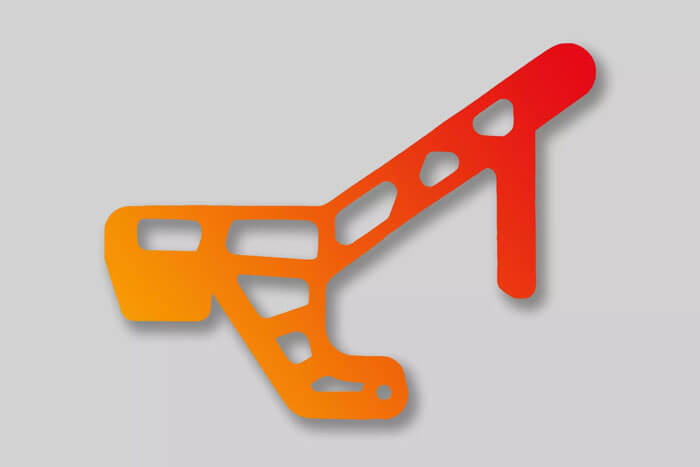
Features
- Hardness= max. 162 HB
- Re= max. 380 N/mm2
- Rm= max. 602 N/mm2
- A= 22.5%
- Density=7.85 kg/dm3
- Machinability: good
- Weldability: good
Applications
Structural steel processed with the hybrid technology investment casting. Offers the advantages of both processes.
1.4308 GX6CrNi 18 9 Stainless steel
Stainless steel processed with the technology investment casting
Features
- Hardness= max. 162 HB
- Re= max. 380 N/mm2
- Rm= max. 602 N/mm2
- A= 22.5%
- Density=7.85 kg/dm3
- Machinability: good
- Weldability: good
Applications
The cast version of 1.4301 is only slightly better machinable
The material is processed using investment casting technology.
1.4841 GX15CrNiSi 25 20 Chrome-nickel steel
Heat resistant chrome nickel steel
Features
- Hardness= max. 166 HB
- Re= max. 243 N/mm2
- Rm= max. 544 N/mm2
- A= 45.1 %
- Density=8 kg/dm3
- Machinability: good-medium
- Weldability: good
- Chemical resistance
- Temperature resistant
Applications
1.4841 is a heat-resistant chromium-nickel steel. It is chemically resistant up to approx. 1100°C, has medium corrosion resistance. In addition, the material has good heat resistance due to the higher content of chromium and nickel. The chromium-nickel steel has good strength and mechanical properties at high temperatures.
The material is processed using investment casting technology.
1.4848 GX40CrNiSi 25 20 Stainless steel
Heat resistant stainless steel processed with technology investment casting
Features
- Hardness= max. 215 HB
- Re= max. 323 N/mm2
- Rm= max. 635 N/mm2
- A= 24.4 %
- Density=8 kg/dm3
- Machinability: good -medium
- Weldability: good
- Temperature resistant
Applications
Heat resistant stainless steel processed with technology investment casting
2.4671 Inconel 713c Nickel-cobalt alloy
Material processed with investment casting technology, for applications in the high temperature range up to 900°C.
Features
- Hardness= max. 414 HB
- Re= max. 817 N/mm2
- Rm= max. 952 N/mm2
- A= 4.3 %
- Density=7.85 kg/dm3
- Machinability: heavy, high wear
- Weldability: limited with TIG, EB welding possible
Applications
Inconel 713c has a high corrosion resistance. When heated, a thick, stable oxidation layer is formed that protects the surface. The strength of the material is maintained over a wide temperature range. The metal alloy is particularly suitable for applications exposed to high temperatures up to 900°C.
The material is processed using investment casting technology.
3.2384 AlSi7Mg0.6 Aluminum Casting Alloy
With investment casting processed aluminum casting alloy.
Features
- Hardness= max. 92 HB
- Re= max. 199 N/mm2
- Rm= max. 258 N/mm2
- A= 2.4 %
- Density=2.68 kg/dm3
- Machinability: easy
- Weldability: good
Applications
Cast aluminum alloy processed with hybrid technology investment casting.
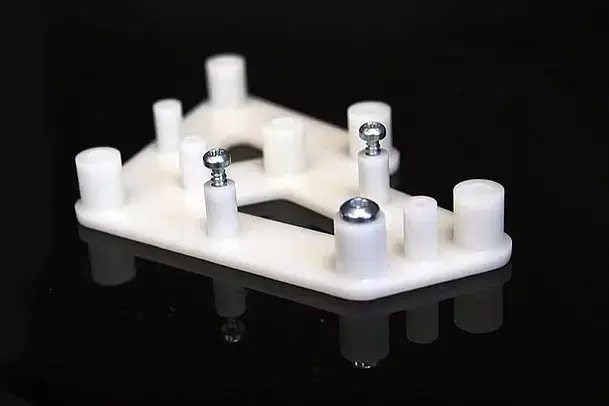
3DM Impact, Plastic 3D Printing
For tough and at the same time flexible parts
Features
- Tensile strength: 58 MPa (ISO 527-2/93)
- Modulus of elasticity: 2700 MPa (ISO 527-2/93)
- Elongation at break: 22% (ISO 527-2/93)
- Flexural strength: 70 MPa (ISO 178/01)
- Flexural modulus: 2300 MPa (ISO 178/01)
- Hardness: Shore 78-82D (ISO 868)
- Heat deflection temp (at 0.45 MPa): 55 °C (ISO75-2/04)
Material Color
Opaque
Applications
High performance parts such as:
Advantages
- Tough and flexible at the same time
- Shape memory effect (depending on temperature)
The material 3DM-IMPACT is especially suitable for parts that require high toughness combined with good flexibility. Due to its high impact strength, the material is particularly resistant to shocks and impacts. Thus, this material is ideally used for high-performance parts such as snap-fits, electrical housings, fixtures and tools. In addition, the 3D printing material has the ability of the shape memory effect, depending on the temperature.
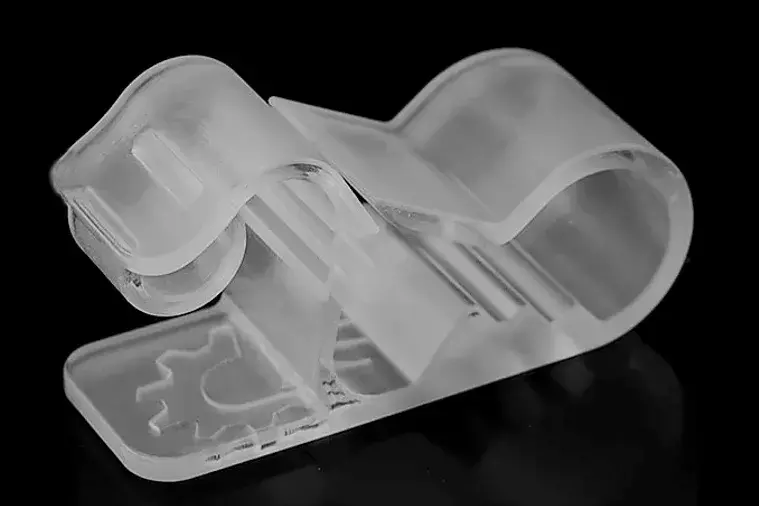
3DM-Tough, plastic 3D printing (resin)
The great feature of 3DM-Tough resin is its toughness, clarity and translucency that does not yellow.
Features
- Hardness: Shore 88-90D (ASTM D2240)
Material Color
Transparent, non-yellowing
Applications
The great feature of 3DM-Tough resin is its toughness, clarity and translucency that does not yellow. The 3D printing material is particularly suitable for applications in the automotive, medical and electronics industries, including functional prototypes.
ABS (Acrylonitrile Butadiene Styrene), plastic
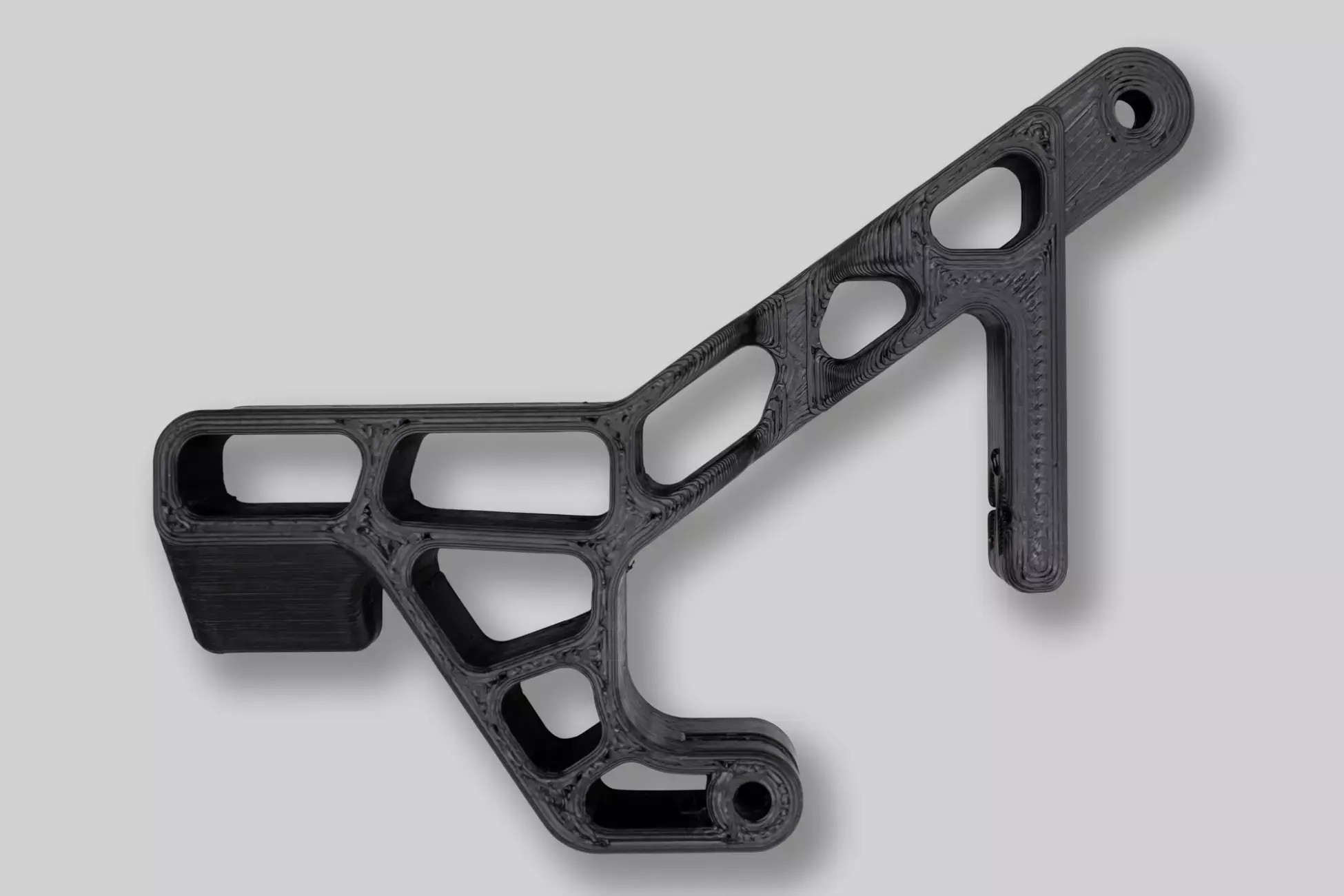
Great strength and stability, good durability and functional properties, available in various colors.
Features
- Density [g/cm3] 1.05
- Tensile strength [MPa] 22
- E-modul [Gpa] 1.627
- Flexural strength [MPa] 41
- Flexural modulus [Gpa] 1.834
- Impact resistance (Izod notched) [J/m] 107
- Heat deflection temp @0.45MPa [°C] 90
- Heat deflection temp @1.81MPa [°C] 76
- Elongation at break [%] 6
Applications
Advantages
- Great strength & stability
- High durability
- Good functional properties
- Available in different colours
- Wide range of applications
ABS (=acrylonitrile-butadiene-styrene) impresses with its great strength and stability. It also offers high durability, good functional properties and is available in various colours. ABS offers a wide range of applications, for example for functional and product samples, as well as in medicine and architecture.
ABS-M30
Features
- Density [g/cm3] 1.04
- Tensile strength [MPa] 36
- E-modul [Gpa] 2.413
- Flexural strength [MPa] 61
- Flexural modulus [Gpa] 2.317
- Impact resistance (Izod notched) [J/m] 139
- Heat deflection temp @0.45MPa [°C] 86
- Heat deflection temp @1.81MPa [°C] 82
- Elongation at break [%] 4
ABS-M30i
Features
- Density [g/cm3] 1.04
- Tensile strength [MPa] 36
- E-modul [Gpa] 2.4
- Flexural strength [MPa] 61
- Flexural modulus [Gpa] 2.3
- Impact resistance (Izod notched) [J/m] 139
- Heat deflection temp @0.45MPa [°C] 96
- Heat deflection temp @1.81MPa [°C] 82
- Elongation at break [%] 4
ABSi
Acrylonitrile-Butadien-Styrene - BiocompatibleI
Features
- Density [g/cm3] 1.08
- Tensile strength [MPa] 37
- E-modul [Gpa] 1.915
- Flexural strength [MPa] 62
- Flexural modulus [Gpa] 1.917
- Impact resistance (Izod notched) [J/m] 96
- Heat deflection temp @0.45MPa [°C] 86
- Heat deflection temp @1.81MPa [°C] 73
- Elongation at break [%] 4.4
Material Color
Translucent
Advantages
- High impact resistance
- Biocompatible
ABSi (Acrylonitrile-Butadien-Styrene - BiocompatibleI is an ABS-like thermoplastic with high impact resistance. This material is stiffer and more durable than the standard ABS material and is translucent. For this reason ABSi is ideal for applications where light transmission and flow must be observed, for example in the automotive industry or for prototypes of medical devices.
ACCURA 25
High detail resolution and at the same time high bending and impact resistance
Features
- Density [g/cm3] 1.2
- Tensile strength [MPa] 38
- E-modul [Gpa] 1.66
- Flexural strength [MPa] 58
- Flexural modulus [Gpa] 1.66
- Impact resistance (Izod notched) [J/m] 24
- Heat deflection temp @0.45MPa [°C] 58
- Elongation at break [%] 20
Advantages
- high flexibility with excellent restoring force
- excellent detail resolution and precision
- good bending strength
- high shock resistance
- Temperature resistance
- smooth surface
- very good paintability
The material ACCUR 25 is convincing due to its high detail resolution and at the same time high bending and impact resistance. In addition, the parts in this material have a smooth surface and can therefore be easily painted.
Agilus30
Rubber-like plastic
Features
- Density [g/cm3] 1.14
- Tensile strength [MPa] 2.6
- Elongation at break [%] 200
- Shore hardness 35A
Material Color
Black
Advantages
- Similar characteristics to NRA & EPDM
This rubber-like plastic has a Shore hardness of 30A and is available in the basic colour black. The properties of Agilus 30 are similar to those of NBR and EPDM. It is mainly used in the medical field and in the aerospace industry.
Aluminium AlSi10Mg, Metal 3D Printing
Aluminium
.webp)
Features
- Density [g/cm3] 2.3
- Tensile strength [MPa] 250
- E-modul [Gpa] 70
- Elongation at break [%] 1
Applications
Advantages
- High strength
- Low weight
- High dynamic load capacity
This aluminium alloy combines high strength with low weight. In addition, this material scores with a high dynamic load capacity. It is used especially in the aerospace industry.
Antero 800NA
Features
- Density [g/cm3] 1.28
- Tensile strength [MPa] 72
- E-modul [Gpa] 4.15
- Flexural strength [MPa] 88
- Flexural modulus [Gpa] 3.07
- Impact resistance (Izod notched) [J/m] 44
- Heat deflection temp @0.45MPa [°C] 150
- Heat deflection temp @1.81MPa [°C] 147
- Elongation at break [%] 6.4
ASA (acrylic ester styrene acrylonitrile), UV-resistant 3D printing material
The mechanical properties of ASA are comparable to those of ABS
Features
- Density [g/cm3] 1.08
- Tensile strength [MPa] 32
- E-modul [Gpa] 2.14
- Flexural strength [MPa] 50
- Flexural modulus [Gpa] 1.76
- Impact resistance (Izod notched) [J/m] 23.8
- Elongation at break [%] 9
Advantages
- UV-resistant
- High resistance
- ABS-like properties
The most important advantages of ASA are its UV resistance and its high durability. The mechanical properties of ASA are comparable to those of ABS.
BASF ST45 B, plastic 3D printing
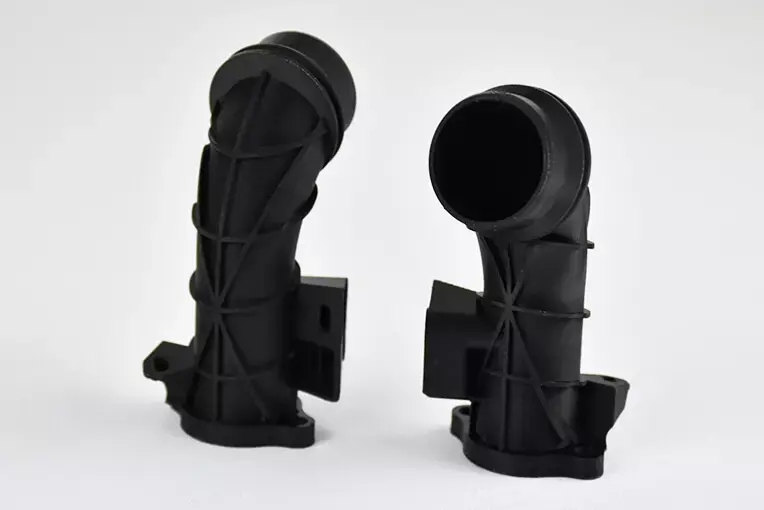
BASF ST45 B offers an excellent combination of strength, toughness and impact resistance.
Features
- Tensile strength: 52.5 MPa (ASTM D638)
- Modulus of elasticity: 2040 MPa (ASTM D638)
- Elongation at break: 21.4 % (ASTM D638)
- Flexural strength: 93.9 MPa (ASTM D790)
- Flexural modulus: 2140 MPa (ASTM D790)
- Impact strength (IZOD, notched): 20.56 J/m (ASTM D256)
- Hardness: Shore 81D (ASTM D2240)
- Heat deflection temp (at 0.46 MPa): 63 °C (ASTM D648)
- Heat deflection temp (at 1.82 MPa): 52 °C (ASTM D648)
- Flammability: HB (UV 94 1.5 mm)
Material Color
Black
Applications
Advantages
- Fixed
- Tough
- Impact resistant
BASF ST45 B plastic (resin) offers an excellent combination of strength, toughness and impact resistance. The material is very well suited for 3D printing of high performance functional parts that require high accuracy and mechanical strength.
Application: for automotive airbags, ventilation covers and fittings. The resin is also suitable for items such as housing covers, connectors, brackets and fixtures, as well as design prototypes, due to the high surface quality.
ClearVue transparent, 3D printed plastic
For applications where transparency is of crucial importance.
Features
- Density [g/cm3] 1.17
- Tensile strength [MPa] 53
- E-modul [Gpa] 2.5
- Flexural strength [MPa] 83
- Flexural modulus [Gpa] 2.33
- Impact resistance (Izod notched) [J/m] 46
- Heat deflection temp @0.45MPa [°C] 51
- Elongation at break [%] 6
Material Color
Translucent
Applications
Advantages
- Translucent and high clarity
- Excellent moisture resistance
- USP Class VI compliant
- Biocompatible and dental compliant
- Polycarbonate-like properties
ClearVue is a highly clear plastic with excellent moisture resistance. This material is suitable for a wide range of applications where transparency (translucency) is of crucial importance. These would be for example headlights, complex assemblies or fluid flows.
Copper CuCr1Zr, metal 3D printing
Features
- Density [g/cm3] 8.9
- Tensile strength [MPa] 340
- E-modul [Gpa] 110
- Elongation at break [%] 25
Digital ABS
DigitalABS is a plastic similar to standard ABS
Features
- Density [g/cm3] 1.17
- Tensile strength [MPa] 60
- E-modul [Gpa] 3
- Flexural strength [MPa] 75
- Flexural modulus [Gpa] 2.2
- Impact resistance (Izod notched) [J/m] 115
- Heat deflection temp @0.45MPa [°C] 58
- Elongation at break [%] 40Shore hardness 85D
Advantages
- High temperature resistance
- High level of detail
- ABS in production quality
- Suitable for snap connections & functional designs
DigitalABS is a plastic similar to standard ABS, but is processed using the MJM method. DigitalABS combines high temperature resistance with a high level of detail accuracy. This plastic is particularly suitable for functional designs with multi-material versatility. Another field of application is snap-fit connections at high or low temperatures.
DuraForm HST, fibre-reinforced composite material
Very stiff material with excellent mechanical strength and high Heat deflection temp.
Features
- Density [g/cm3] 1.2
- Tensile strength [MPa] 48
- E-modul [Gpa] 5.48
- Flexural strength [MPa] 83
- Flexural modulus [Gpa] 4.4
- Impact resistance (Izod notched) [J/m] 37.4
- Heat deflection temp @0.45MPa [°C] 184
- Elongation at break [%] 4.5
DuraForm® HST is a fibre-reinforced composite material based on PA12. The 3D printed material combines excellent mechanical strength with high Heat deflection temp (@0.45MPa 184°C). In addition, the material is very stiff. A typical field of application is functional prototypes.
Electronically dissipative ABS-ESD7, plastic
For electronic products in which electrostatic charges could lead to performance impairments.
Features
- Heat deflection temperature at 0.45 Mpa: medium (80-150 °C)
- Flexural modulus: medium (1-3GPa)
- Flexural strength: medium (37-100 MPa)
- Tensile strength: medium (28-75 MPa)
- Young's modulus: medium (1.7-4.8 GPa)
- Weight: light (<1.11g/cm3)
- ESD
Electrostatic dissipative. For electronic products in which electrostatic charges could lead to performance impairments. Same material properties as normal ABS.
EVOLVE
Features
- Density [g/cm3] 1.12
- E-modul [Gpa] 2.96
- Flexural modulus [Gpa] 2.65
- Impact resistance (Izod notched) [J/m] 38.9
- Heat deflection temp @0.45MPa [°C] 52
- Elongation at break [%] 11Shore hardness 82D
GP PLUS
Features
- Density [g/cm3] 1.16
- Tensile strength [MPa] 37
- E-modul [Gpa] 2.51
- Flexural strength [MPa] 67.3
- Flexural modulus [Gpa] 2.2
- Impact resistance (Izod notched) [J/m] 26
- Heat deflection temp @0.45MPa [°C] 46
- Elongation at break [%] 7.5Shore hardness 79D
GreenTEC
Features
- Density [g/cm3] 1.33
- Tensile strength [MPa] 46
- E-modul [Gpa] 3.2
HIPS
Features
- Density [g/cm3] 1.04
- Tensile strength [MPa] 22
- E-modul [Gpa] 1.55
- Flexural strength [MPa] 52.1
- Flexural modulus [Gpa] 2.126
Inconel 625, metal for 3D printed parts
Inconel: nickel-chromium-iron-molybdenum alloy
Features
- Density [g/cm3] 8.44
- Tensile strength [MPa] 938
- E-modul [Gpa] 170
- Elongation at break [%] 30
Advantages
- High strength
- High heat resistance
- High corrosion resistance
- High resistance to oxidation
IN625 is a nickel-chromium-iron-molybdenum alloy with exceptional strength, heat resistance and excellent resistance to corrosion and oxidation.
Inconel 718, metal 3D printing
Inconel: nickel-chromium-iron-molybdenum alloy
Features
- Density [g/cm3] 8.2
- Tensile strength [MPa] 1350
- E-modul [Gpa] 180
- Elongation at break [%] 17
Advantages
- High strength
- High heat resistance (700°C)
- High corrosion resistance
- High resistance to oxidation
IN718 is a nickel-chromium-iron-molybdenum alloy with exceptional strength, heat resistance and excellent resistance to corrosion and oxidation.
Istroflex
Features
- Density [g/cm3] 1.34
- Tensile strength [MPa] 11.5
- E-modul [Gpa] 0.06
- Elongation at break [%] 300
KeyGuide
Features
- Flexural strength [MPa] 106
- Flexural modulus [Gpa] 2.4
- Elongation at break [%] 6.3Shore hardness 95D
Material Color
Translucent
Applications
Advantages
- Dental technology
- Biocompatible
- Polishing possible
- Sterilisation in autoclave possible
KeyTray
Features
- Tensile strength [MPa] 62.1
- E-modul [Gpa] 2.056
- Flexural strength [MPa] 84.7
- Flexural modulus [Gpa] 1.913
- Elongation at break [%] 26.4Shore hardness 86.5D
Material Color
Translucent purple
Applications
Advantages
- Dental technology
- Biocompatible
Stainless steel 1.4404, metal 3D printing
Stainless steel
Features
- Density [g/cm3] 7.9
- Tensile strength [MPa] 510
- E-modul [Gpa] 180
- Elongation at break [%] 45
Advantages
- Good corrosion resistance
- High conductivity
The stainless steel alloy 1.4404 impresses with good corrosion resistance in combination with high conductivity.
Stainless steel 1.4542, metal 3D printing
Stainless steel
Features
- Density [g/cm3] 7.8
- Tensile strength [MPa] 900
- E-modul [Gpa] 140
- Elongation at break [%] 25
Advantages
- High corrosion resistance
- Sterilizable
- High strength
- High ductility
The steel 1.4542 is characterised by high strength and ductility. At the same time, this steel has a high resistance to corrosion and can be sterilised.
Stainless steel Ultrafuse® 17-4 PH (1.4542), BASF
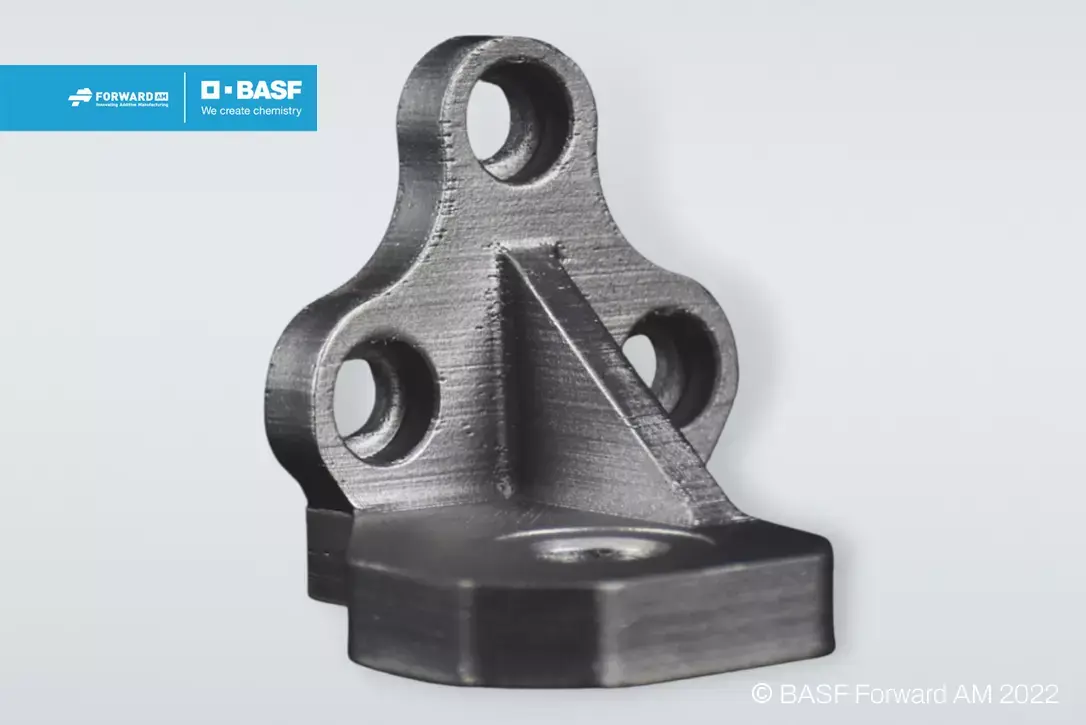
FDM material for low-cost, components with high mechanical properties
Features
- Tensile strength (ISO 6892-1): 760 MPa
- Tensile strength: high (>80 MPa)
- Elongation at break (ISO 6892-1): 4%
- Yield strength Rp 0.2 (ISO 6892-1): 700 MPa
- Vickers hardness (ISO 6507-1): 352 HV 10
- Material data sheet: external link, BASF Forward AM, Ultrafuse® 17-4 PH
Material Type
- Metal
Postprocessing
- Bead blasting, for robust, non-sensitive and matt surfaces
- Polishing for high gloss surfaces
Material Color
- Metal
Applications
Advantages
- Inexpensive, because made with FDM technology
Ultrafuse® 17-4 PH stainless steel from BASF (1.4542), is processed using FDM additive manufacturing technology. Components are printed together with a binder. The parts are then freed from the binder and sintered in a furnace.
Stainless steel Ultrafuse® 316L (1.4404), BASF
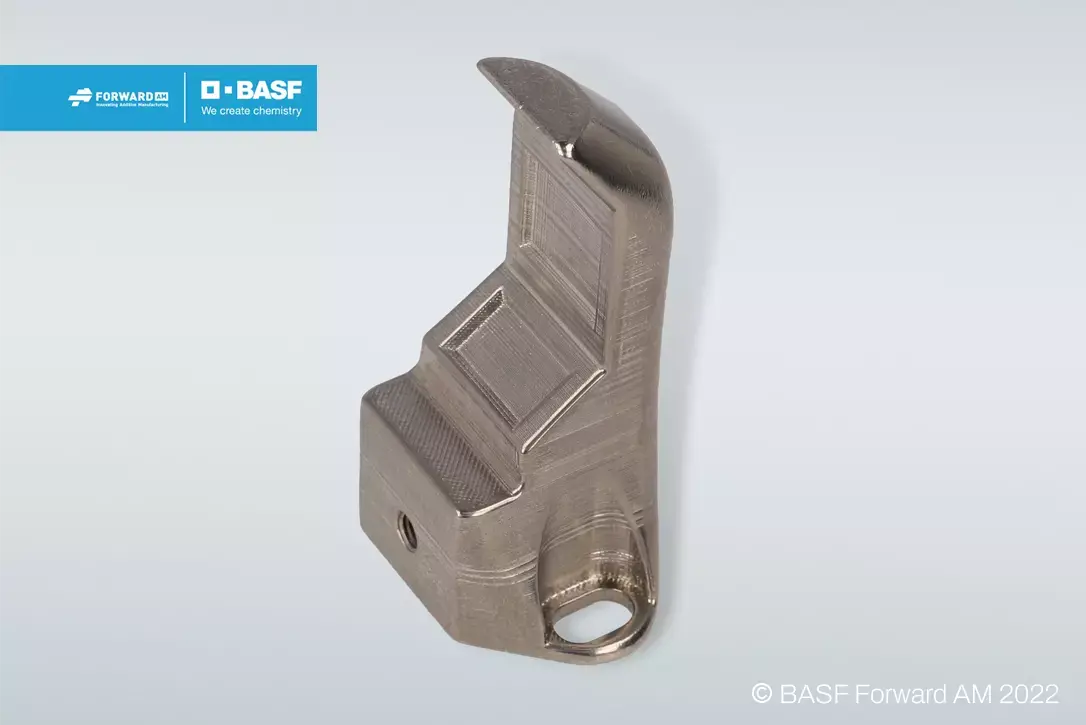
FDM material for low-cost, components with increased corrosion resistance
Features
- Tensile strength (ISO 6892-1): 561 MPa
- Tensile strength: high (>80 MPa)
- Elongation at break (ISO 6892-1): 53%
- Yield strength Rp 0.2 (ISO 6892-1): 251 MPa
- Impact strength Charpy (notched) (ISO 148-1): 111 kJ/m2
- Impact strength: medium (53-139 J/m)
- Vickers hardness (ISO 6507-1): 128 HV10
- Increased corrosion resistance
- Material data sheet: external link, BASF Forward AM, Ultrafuse® 316L
Material Type
- Metal
Postprocessing
- Bead blasting, for robust, non-sensitive and matt surfaces
- Polishing for high gloss surfaces
Material Color
- Metal
Applications
Advantages
- For applications in humid and salty environments
- Pipe connections
- Spare parts e.g. for packaging equipment
- Tools, jigs and fixtures.
Ultrafuse® 316L stainless steel from BASF (1.4542), is processed using FDM additive manufacturing technology. Components are printed together with a binder. The parts are then freed from the binder and sintered in a furnace.
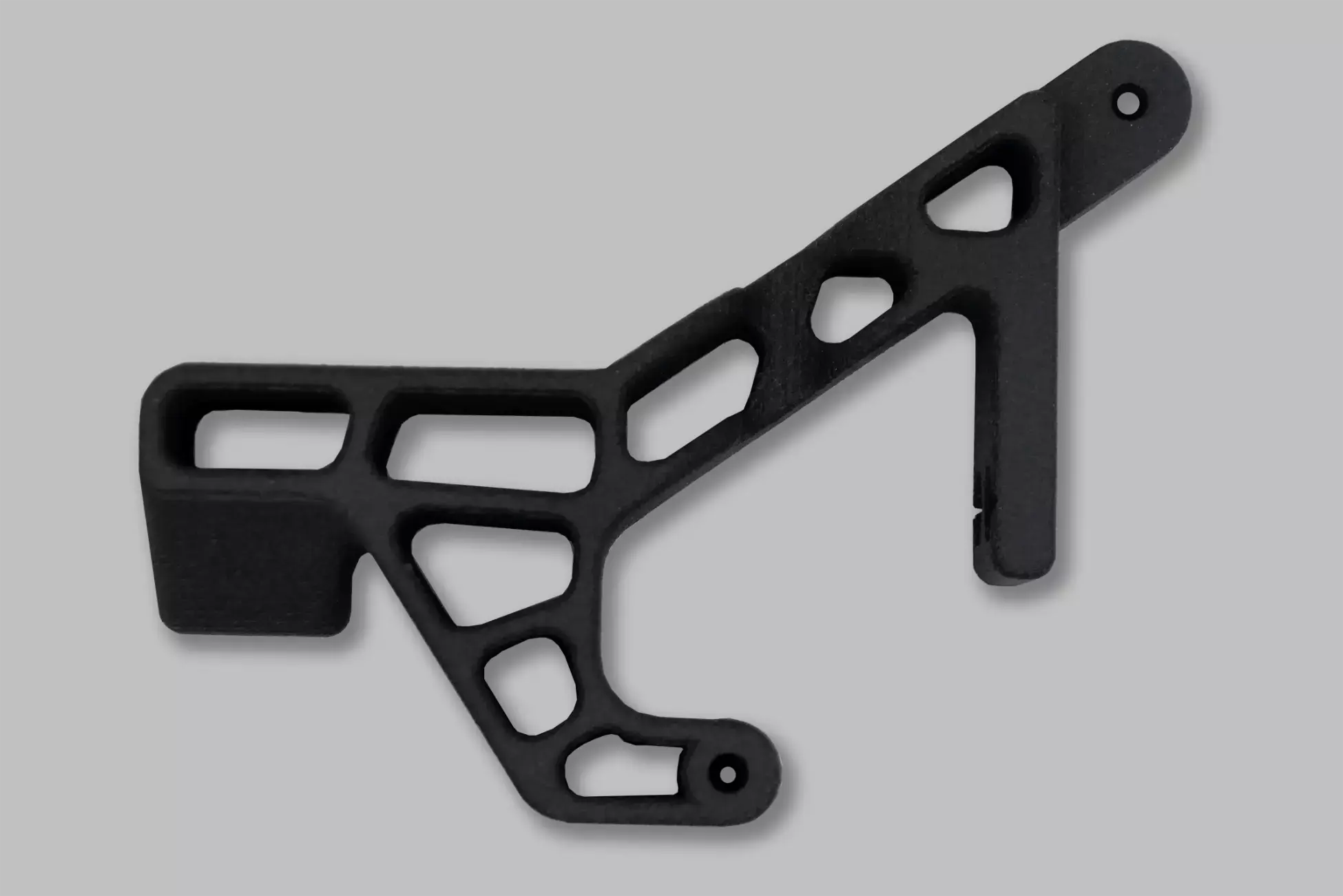
Plastic PA 12.12 (black)
Suitable for products with high requirements for mechanical properties and toughness.
Features
- Tensile modulus (GB/T 1040.2-2006): 1350-1600 MPa
- Tensile strength (GB/T 1040.2-2006): 42-47 MPa
- Elongation at break (GB/T 1040.2-2006): 25-45%.
- Flexural modulus (GB/T 1040.2-2006): 1100-1350 MPa
- Flexural strength (GB/T 1040.2-2006): 35-47 MPa
- Impact strength (Izod notched impact strength) (GB/T 1843-2008): 10-20 kJ/m3
- Heat deflection temperature at 0.45 MPa (GB/T 1040.2-2006): 135-155 °C
- Heat deflection temperature at 1.8 MPa (GB/T 1040.2-2006): 65-75 °C
Material Certificate
- Biocompatibility ISO 10993 1-20
Material Color
- Black
Advantages
- Resistant
- Stable/Solid
- Durable
- Shock Resistant
This PA12.12 has excellent mechanical properties and a balanced ratio between strength and toughness. Suitable for products with high demands on mechanical properties and toughness.
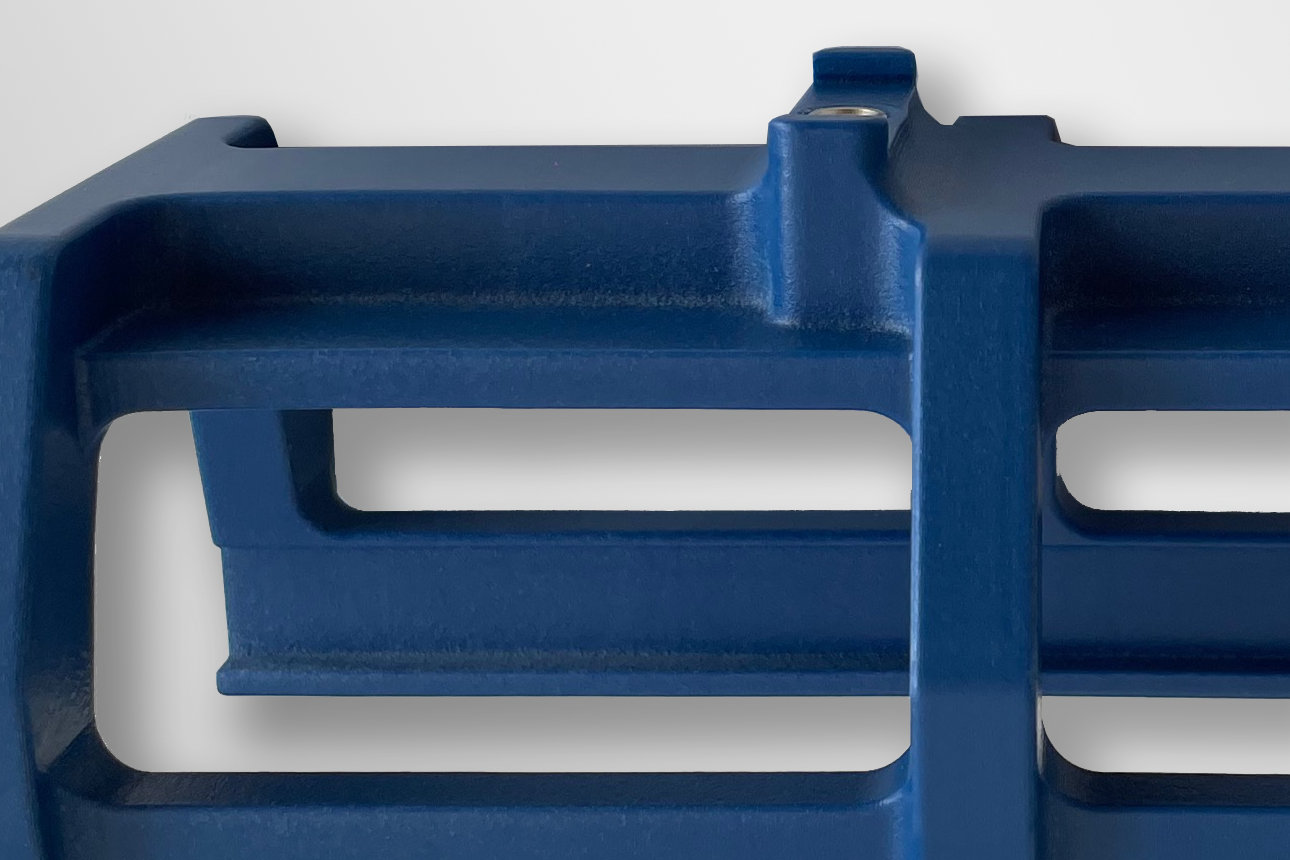
Plastic PA11, blue dyed through
Especially for the food industry (EU10/20211)
Features
- Blue dyed through
- Excellent flexibility
- High impact strength
- Resistance to chemicals
- Flexural strength: medium (37-100 MPa)
- Tensile strength: medium (28-75 MPa)
- Ductility: low (<200%)
- Food grade
- Weight: light (<1.11g/cm3)
Material Type
- Plastic
Material Certificate
- EU10/2011 Certification
- FDA approved
Postprocessing
- Post-processing chemical smoothing possible as desired
Material Color
- Blue dyed through
The material made from renewable raw materials is completely dyed through in the color blue and has the approval EU 10-2011 and FDA for food. Thanks to the through-dyed powder in blue, the material meets additional requirements for use in the food industry.
If required, components made of the PA11 blue can be processed with the post-processing method chemical smoothing to obtain a very high surface quality. With this finishing method, components with a surface roughness of up to Ra0.8 are possible.
Plastic XPEEK147, 3D printing technology DLP
Features
- Density [g/cm3] 1.26
- Tensile strength [MPa] 75
- E-modul [Gpa] 3.192
- Flexural strength [MPa] 128
- Flexural modulus [Gpa] 3.168
- Impact resistance (Izod notched) [J/m] 14.6
- Heat deflection temp @0.45MPa [°C] 238
- Heat deflection temp @1.81MPa [°C] 107
- Elongation at break [%] 3Shore hardness 94D
Material Color
Black
Applications
Advantages
- High temperature resistance up to 230°C
- High dimensional stability
- Good surface quality
xPEEK147 is a material that meets high demands in terms of temperature, stability and surface quality. The parts produced with the additive manufacturing technology Digital Light Processing (DLP) are suitable for a wide range of applications such as spare parts and prototypes, injection moulding deep-drawing moulds or also for series components in the range of 100 to 1000+ pieces.
The 3D printer manufacturer Nexa calls the DLP process LSPc, Lubricant-Sublayer-Photo-curing.
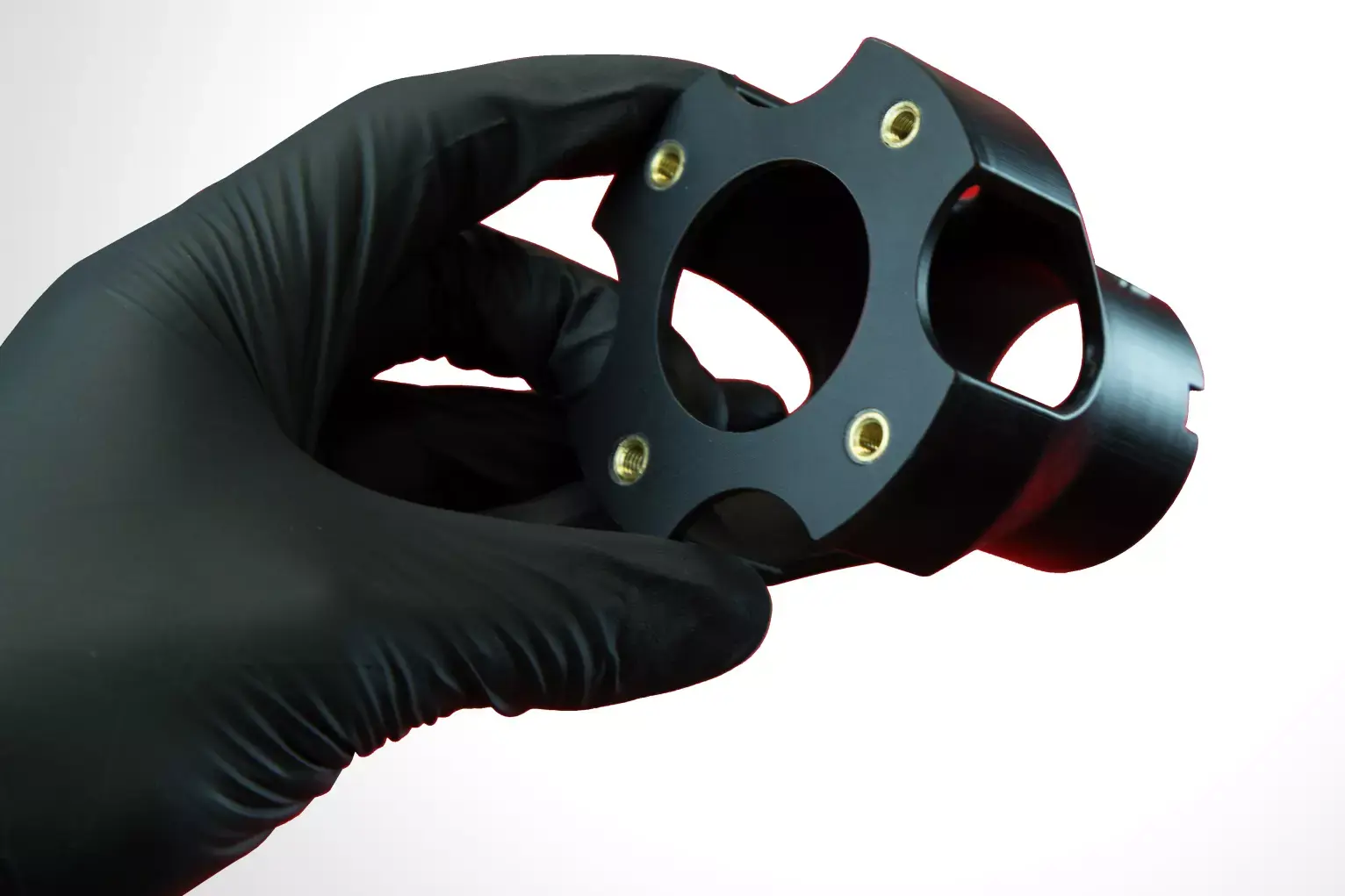
LOCTITE® High Toughness HDT60 3843, plastic 3D printing
LOCTITE® 3D 3843 is a semi-flexible material with high impact strength.
Features
- Tensile strength: 51 MPa (ASTM D638)
- Modulus of elasticity: 1806 MPa (ASTM D638)
- Elongation at break: 43 % (ASTM D638)
- Flexural strength: 73.8 MPa (ASTM D790)
- Flexural modulus: 1783 MPa (ASTM D790)
- Impact strength (IZOD, notched): 53 J/m (ASTM D256)
- Hardness: Shore 75D (ASTM D2240)
- Heat deflection temp (at 0.46 MPa): 63 °C (ASTM D648)
Material Color
Black matt
LOCTITE® 3D 3843 is a semi-flexible material with high impact strength and is ideally suited for a wide range of applications such as equipment, fasteners, enclosures and covers.
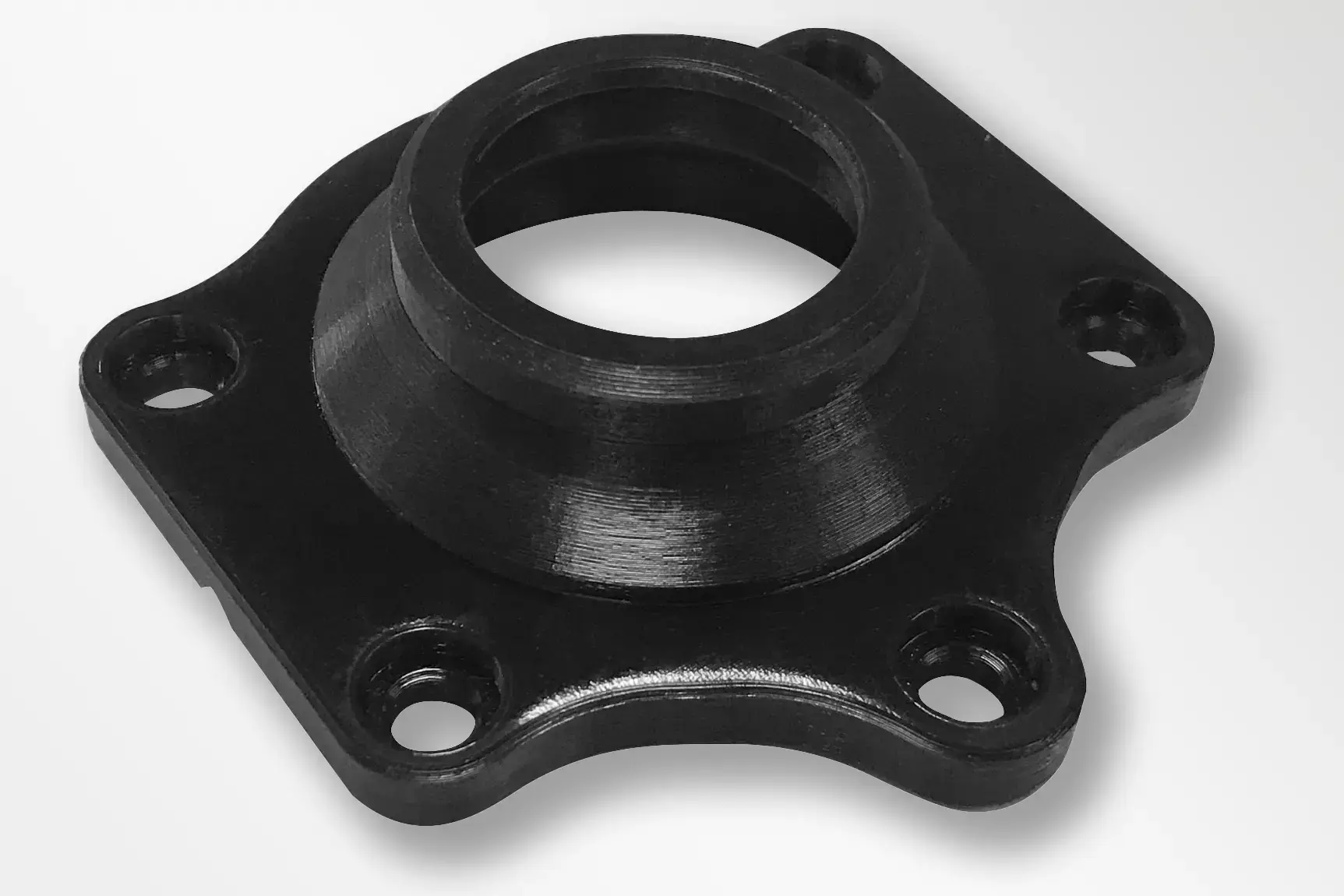
LOCTITE® IND 408, plastic 3D printing
For 3D printed parts with isotropic properties
Features
- Tensile strength: 42 MPa (ASTM D638)
- Modulus of elasticity: 3240 MPa (ASTM D638)
- Elongation at break: 1.3 % (ASTM D638)
- Flexural strength: 144 MPa (ASTM D790)
- Flexural modulus: 3830 MPa (ASTM D790)
- Impact strength (IZOD, notched): 16 J/m (ASTM D256)
- Hardness: Shore 80D (ASTM D2240)
- Heat deflection temp (at 0.46 MPa): 118 °C (ASTM D648)
- Heat deflection temp (at 1.82 MPa): 95°C (ASTM D648)
Material Color
Black
Surface
Excellent surface finish
Advantages
- For parts with isotropic properties
- For parts with high detail accuracy
Loctite 3D IND408 is ideally suited for the rapid production of parts with high detail and excellent surface finish for applications ranging from general purpose to end-use parts.
Lumentics DLP resin photoluminescent, light green, plastic 3D printing
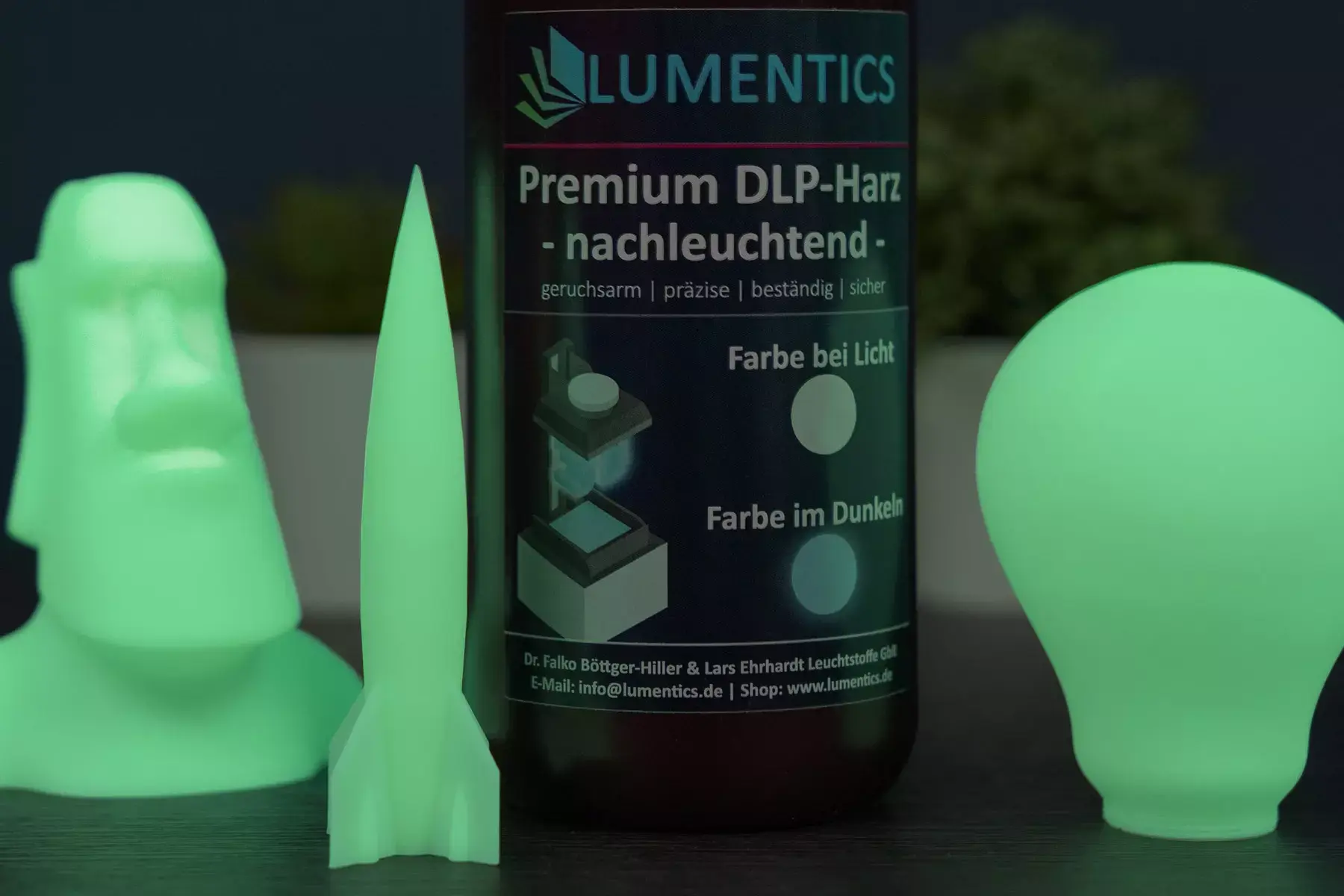
The Lumentics material has the special property that it glows in the dark
Features
- E-modulus: 1655 MPa (DIN EN ISO 178)
- Elongation at break: 5% (DIN EN ISO 178)
- Flexural strength: 41.3 MPa (DIN EN ISO 178)
- Hardness: Shore 87D (DIN ISO 7619-1)
Material Color
Opaque / Glow in the dark green
The material Lumentics has the special property that it glows in the dark. In addition, the material has a high stability.
Martensitic nickel steel 1.2709, metal 3D printing
Martensitic nickel steel, tool steel
Features
- Density [g/cm3] 8
- Tensile strength [MPa] 1050
- E-modul [Gpa] 160
- Elongation at break [%] 11
Advantages
- Excellent tensile strength & toughness
- Particularly low distortion
1.2709 tool steel is a high strength martensitic nickel steel with excellent tensile strength and toughness. In addition, this steel is particularly low in distortion.
MG 703
Features
- Flexural strength [MPa] 52
- Flexural modulus [Gpa] 1.34
MG 804
Features
- Flexural strength [MPa] 90
- Flexural modulus [Gpa] 2.27
NEXT
Features
- Density [g/cm3] 1.17
- Tensile strength [MPa] 32.8
- E-modul [Gpa] 2.43
- Flexural strength [MPa] 69.3
- Flexural modulus [Gpa] 2.47
- Impact resistance (Izod notched) [J/m] 50
- Heat deflection temp @0.45MPa [°C] 56
- Elongation at break [%] 9Shore hardness 82D
Advantages
- Properties similar to ABS
- high strength
- high hardness
- Appearance and surface of a thermoplastic
This material comes very close to the properties of ABS and therefore has a high strength and hardness.
Onyx FR, carbon fibre reinforced plastic
Ähnliche Eigenschaften wie Onyx: leicht, flammwidrig, hohe Festigkeit
Features
- Density [g/cm3] 1.2
- E-modul [Gpa] 3
- Flexural strength [MPa] 71
- Flexural modulus [Gpa] 3.6
- Heat deflection temp @0.45MPa [°C] 145
Onyx FR is a UL94 V-0 certified material that has similar mechanical properties to Onyx.
It is best suited for applications where flame resistance, light weight and strength are required.
Onyx, carbon fibre reinforced plastic
Features
- Heat resistance at 0.45 Mpa: medium (80-150 °C)
- Tensile strength: medium (28-75 MPa)
- Weight: medium (1.12-1.36 g/cm3)
- Modulus of elasticity: medium (1.7-4.8 GPa)
- Chemical resistance
- Wear resistant
- Rigid/stiff/stable in shape
- Temperature resistant
- Weight: light (<1.11g/cm3)
- Carbon fibre filled
- Matt surface
Onyx is a polymaid (PA) filled with chopped carbon fibres. It is 1.4 times stronger and stiffer than ABS and can be additionally reinforced with continuous fibres (post-processing: composite materials). Onyx sets the bar for surface finish, chemical resistance and heat resistance. Medium price segment.
PA 11 (MJF)
Features
- Density [g/cm3] 1.05
- Tensile strength [MPa] 54
- E-modul [Gpa] 1.7
- Flexural strength [MPa] 70
- Flexural modulus [Gpa] 1.8
- Impact resistance (Izod notched) [J/m]
- Heat deflection temp à 0.45MPa [°C] 185
- Heat deflection temp à 1.81MPa [°C] 129
- Dehnung bis Bruch [%] 40
- Shore hardness 80D
Material Type
x
PA 11 (SLS)
Features
- Density [g/cm3] 1.03
- Tensile strength [MPa] 48
- E-modul [Gpa]
- Flexural strength [MPa] 62
- Flexural modulus [Gpa]
- Impact resistance (Izod notched) [J/m]
- Heat deflection temp à 0.45MPa [°C]
- Heat deflection temp à 1.81MPa [°C]
- Dehnung bis Bruch [%] 55
- Shore hardness 76D
PA 12 (FDM)
Features
- Density [g/cm3] 0.95
- Tensile strength [MPa] 48
- E-modul [Gpa] 1.65
- Flexural strength [MPa] 41
- Flexural modulus [Gpa] 1.5
- Impact resistance (Izod notched) [J/m] 4.4
- Elongation at break [%] 20
Advantages
- High strength & stability
- Flexible Protoypes
- Minimum wall thickness
- Good resolution and detail
- High variety of variants
- Versatile after-treatments
- No support material (support necessary)
Polyamid (PA) 12 is an engineering plastic which is particularly striking because of its good mechanical properties. At the same time, PA 12 offers high strength and toughness as well as excellent sliding and wear behaviour. These properties make this plastic a particularly good material for robust components.
PA 6
Features
- Density [g/cm3] 1.12
- Tensile strength [MPa] 67.6
- E-modul [Gpa] 2.9952
- Flexural strength [MPa] 97
- Flexural modulus [Gpa] 1.878
- Impact resistance (Izod notched) [J/m] 106
- Heat deflection temp @1.81MPa [°C] 93
- Elongation at break [%] 38
Applications
Advantages
- High strength (higher than PA 12)
- Excellent sliding and wear behaviour
Polyamide (PA) 6 is an engineering plastic that stands out above all for its good mechanical properties. At the same time, PA 6 offers high strength and toughness, as well as excellent sliding and wear behaviour. These properties make this plastic a good material for robust components.
PA-Al
Features
- Density [g/cm3] 1.36
- Tensile strength [MPa] 48
- E-modul [Gpa] 3.8
- Flexural modulus [Gpa] 3.6
- Elongation at break [%] 3.5
Advantages
- Special metal look
- High stiffness
- Good post-processing possibilities
Alumide is a mixture of polyamide and aluminium powder, which stands out due to its special metallic look. In addition to this special metal design, components made of Alumide are characterised by high rigidity and good post-processing possibilities.
PA-CF
Features
- Density [g/cm3] 1.4
- Tensile strength [MPa] 83
- E-modul [Gpa] 9
- Flexural strength [MPa] 153
- Flexural modulus [Gpa] 11.1
- Impact resistance (Izod notched) [J/m] 106
- Heat deflection temp @0.45MPa [°C] 160
- Elongation at break [%] 2.4
PA-GF (MJF)
MJF-PA-GF is a thermoplastic filled to 40% with glass beads.
Features
- Density [g/cm3] 1.3
- Tensile strength [Mpa] 30
- E-modul [GPa] 2.9
- Heat deflection temp @0.45MPA [°C] 170
- Heat deflection temp @1.81MPA [°C] 113
- Elongation at break [%] 10
Advantages
- Optimum mechanical properties
- With 70% a high recycling rate
- Complies with UL-94 fire protection standard as well as UL-746A standard for plastics
- Enables components in the best designs
MJF-PA-GF is a thermoplastic filled to 40% with glass beads. Optimum mechanical properties are as much a benefit of this material as a high recycling rate of around 70%. In this way, MJF-PA-GF makes it possible to significantly reduce the unit costs of production.
PA-GF (MJF)
A thermoplastic filled to 40% with glass beads
Features
- Density [g/cm3] 1.22
- Tensile strength [MPa] 51
- E-modul [Gpa] 3.2
- Flexural modulus [GPa] 2.90
- Impact resistance (Izod notched) [J/m] 21.30
- Heat deflection temp @1.81MPA [°C] 110
- Elongation at break [%] 6.00
- Shore Hardness 80D
Advantages
- High stiffness
- Good elongation at break
- Excellent mechanical properties
- Very smooth surfaces
- High level of detail
MJF-PA-GF is a thermoplastic filled to 40% with glass beads. Optimum mechanical properties are as much a benefit of this material as a high recycling rate of around 70%. In this way, MJF-PA-GF makes it possible to significantly reduce the unit costs of production.
PC
Features
- Density [g/cm3] 1.2
- Tensile strength [MPa] 68
- E-modul [Gpa] 2.28
- Flexural strength [MPa] 104
- Flexural modulus [Gpa] 2.234
- Impact resistance (Izod notched) [J/m] 53
- Heat deflection temp @0.45MPa [°C] 130
- Heat deflection temp @1.81MPa [°C] 127
- Elongation at break [%] 4.8
Advantages
- Heat resistant
- Good mechanical resistance
- High shock and impact resistance
This thermoplastic offers good heat resistance, combined with good mechanical resistance. At the same time, Polycarbonate (PC) impresses with excellent impact and shock resistance.
PC-ISO
Features
- Density [g/cm3] 1.2
- Tensile strength [MPa] 57
- E-modul [Gpa] 2
- Flexural strength [MPa] 90
- Flexural modulus [Gpa] 2.1
- Impact resistance (Izod notched) [J/m] 86
- Heat deflection temp @0.45MPa [°C] 133
- Heat deflection temp @1.81MPa [°C] 127
Advantages
- Biocompatible
- Heat resistant
- ISO10993
- USP Class V
- ETO sterilisable
PC-ISO is a biocompatible FDM thermoplastic that enables engineers to produce prototypes, moulds and products from heat-resistant material for the pharmaceutical, food and medical industries.
PC-PBT
Features
- Density [g/cm3] 1.2
- Tensile strength [MPa] 41
- E-modul [Gpa] 2.1
- Flexural strength [MPa] 64
- Flexural modulus [Gpa] 1.93
- Elongation at break [%] 4.6
PC/ABS
Features
- Density [g/cm3] 1.2
- Tensile strength [MPa] 41
- E-modul [Gpa] 1.917
- Flexural strength [MPa] 68
- Flexural modulus [Gpa] 1.931
- Impact resistance (Izod notched) [J/m] 196
- Heat deflection temp @0.45MPa [°C] 110
- Heat deflection temp @1.81MPa [°C] 96
- Elongation at break [%] 6
Advantages
- Heat resistant
- Good flexibility
This material blend of polycarbonate (PC) and acrylonitrile-butadiene-styrene (ABS) combines the strength and heat resistance of PC with the flexibility of ABS.
PETG-CF, fibre-reinforced plastic
PETG-CF is a material containing carbon fibre (20%)
Features
- Density [g/cm3] 1.3
- Tensile strength [MPa] 53
- Modulus of elasticity [Gpa] 4.015
- Flexural modulus [Gpa] 2.987
- Heat deflection temperature @0.45MPa [°C] 68
- Hardness in Shore 76.4D
- Impact strength: high (>150 J/m)
- Rigid/stiff/stable
- Weight: light (<1.11g/cm3)
- High strength
- Carbon fibre filled
PETG-CF is a material containing carbon fibre (20%). Properties: High stiffness and temperature resistant up to 80°C. Visually very appealing, matt surface, reasonably priced.
PETG-FR, flame retardant plastic
PETG equipped with flame retardant (halogen-free), meets UL94 HB and UL94 V0 test specifications for flame retardant materials.
Features
- Color: Black matt
- modulus of elasticity (UNE-EN ISO 527-2): 2980 MPa
- Tensile strength (UNE-EN ISO 527-2): 51 MPa
- Tensile elongation (UNE-EN ISO 527-2): 129%.
- Heat deflection temperature (UNE-EN ISO 306): 80 °C
- RoHS and REACH compliant
- Flame retardant (UL94 V0 classification)
Material Certificate
UL94 V-0 (flame retardant)
This PETG is equipped with a flame retardant (halogen-free) and thus meets the test specifications UL94 HB and UL94 V0 for flame retardant materials. Otherwise, this is a standard PETG, a good all-rounder for low-cost components with a wide range of applications such as housings, holders, covers, functional prototypes, etc.
PETG, plastic
Features
- Density [g/cm3] 1.27
- E-modul [Gpa] 1.5
Applications
Advantages
- Flexibility, strength and resilience
- Temperature resistance
- Clear, stable material
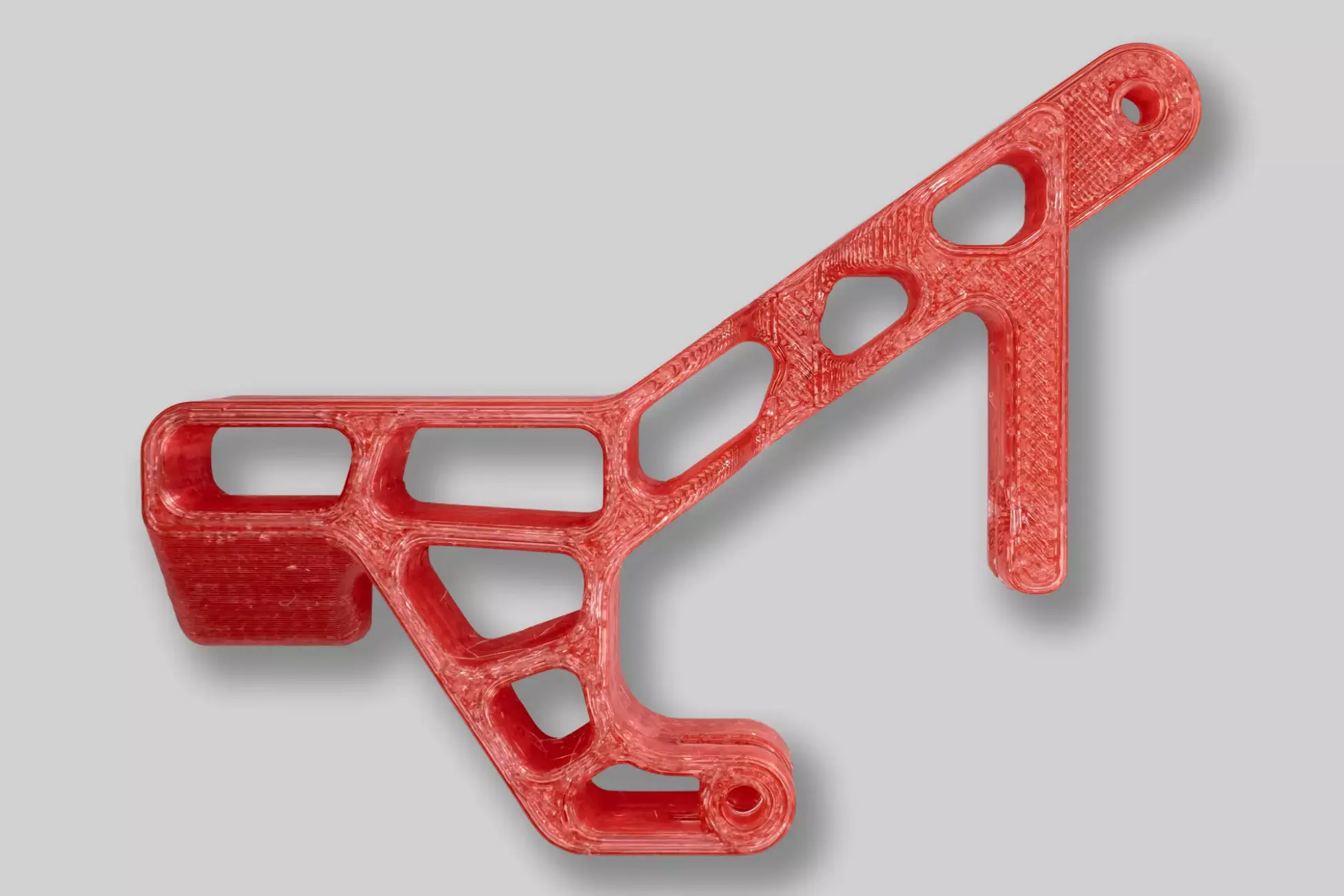
The basic material PET (polyethylene terephthalate) is generally known and very widespread in almost all sectors. For 3D printing, however, the sub-material PETG is usually used. The G stands for "glycol-modified". This modification makes the material clearer, more stable and last but not least easier to print. With regard to its stability, PETG lies between ABS (even more stable) and PLA (less stable). PETG scores points above all for its flexibility, strength, temperature resistance and resilience. On the one hand, it is suitable for visually attractive visible components and on the other hand for components subject to mechanical stress. PETG is used for functional prototypes as well as for coarser threads within components.
PLA-CF
Features
- Density [g/cm3] 1.29
- Tensile strength [MPa] 48
- E-modul [Gpa] 4.8
- Impact resistance (Izod notched) [J/m] 10.7
- Heat deflection temp @0.45MPa [°C] 56
- Elongation at break [%] 2Shore hardness 95D
PLA-metalfill
Features
- Density [g/cm3] 3.13
- Tensile strength [MPa] 23
- Flexural strength [MPa] 30
- Flexural modulus [Gpa] 3
PLA-woodfill
Features
- Density [g/cm3] 1.15
- Tensile strength [MPa] 46
- E-modul [Gpa] 3.29
- Flexural modulus [Gpa] 3.93
PLA, plastic
Very frequently used 3D printing material, made from renewable raw materials, biodegradable.
Features
- Density [g/cm3] 1.24
- Tensile strength [MPa] 45
- E-modul [Gpa] 3.6
- Flexural strength [MPa] 84
- Flexural modulus [Gpa] 2.93
- Impact resistance (Izod notched) [J/m] 27
- Heat deflection temp @0.45MPa [°C] 53
- Heat deflection temp @1.81MPa [°C] 51
- Elongation at break [%] 2.5
Advantages
- Biocompatible
- High stiffness
- Inexpensive material option
- From renewable raw materials
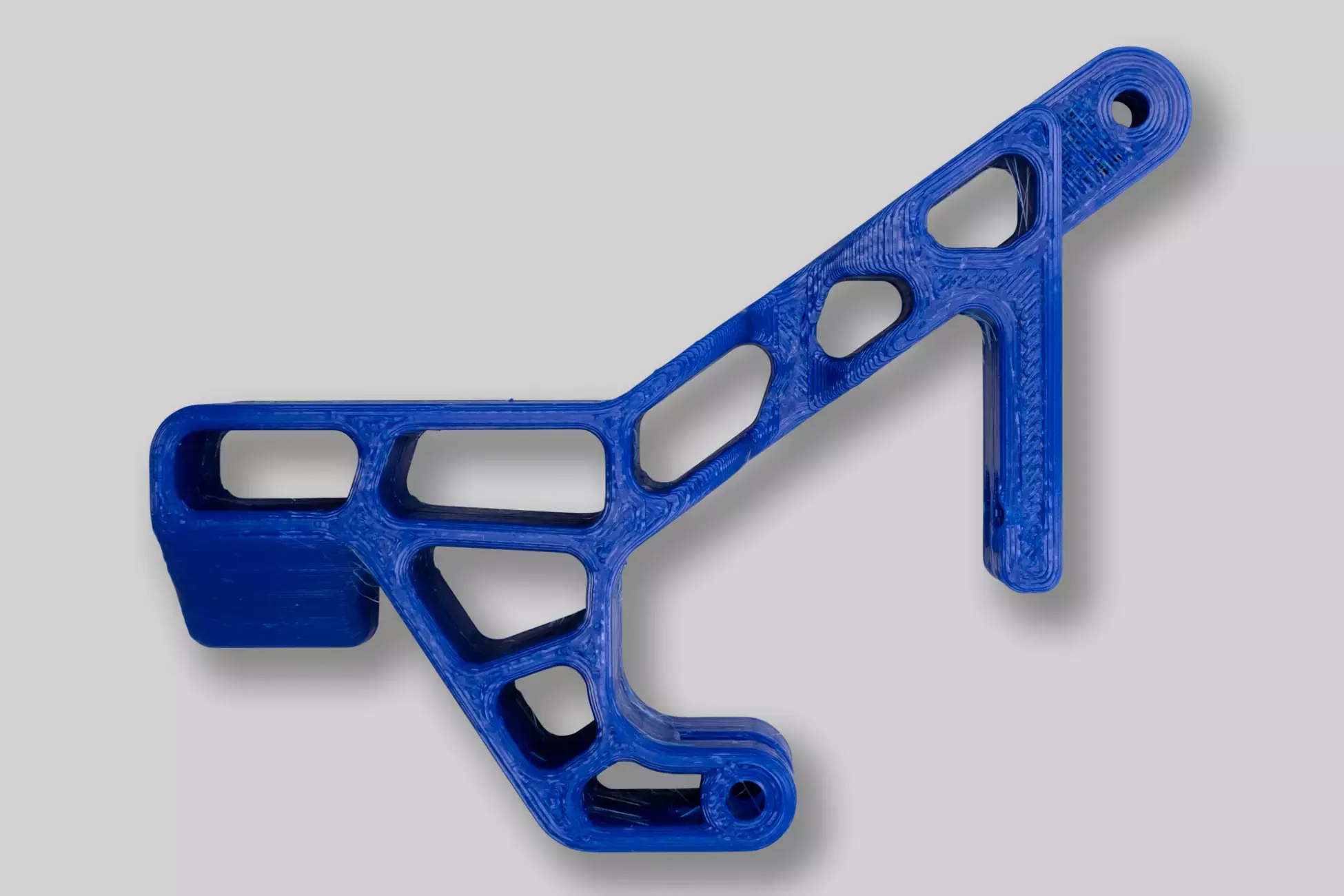
Polylactide (PLA), which is mainly known from home 3D printing, is a biocompatible plastic of high stiffness. At the same time, PLA is an inexpensive material option made from renewable raw materials.
PMMA Pro 3D printing material (polymethyl methacrylate, acrylic glass)
The material is suitable for large components because it is processed using binder jetting technology. It is also cheaper than comparable materials from other technologies.
Features
- Tensile strength (DIN EN ISO 527-1): 38 MPa
- Modulus of elasticity (DIN EN ISO 527-1): 2460 MPa
- Tensile elongation (DIN EN ISO 527-1): 1.9%
- Flexural strength (DIN EN ISO 178): 52 MPa
- Flexural elongation (DIN EN ISO 178): 3%
- Heat deflection temperature (DIN EN ISO 75-2 method A 1.80MPa): 56 °C
Postprocessing
- Glass bead blasted (included in standard)
- Chemically smoothed for a smoother surface (select finishing when ordering)
- Lacquered upon request
Material Color
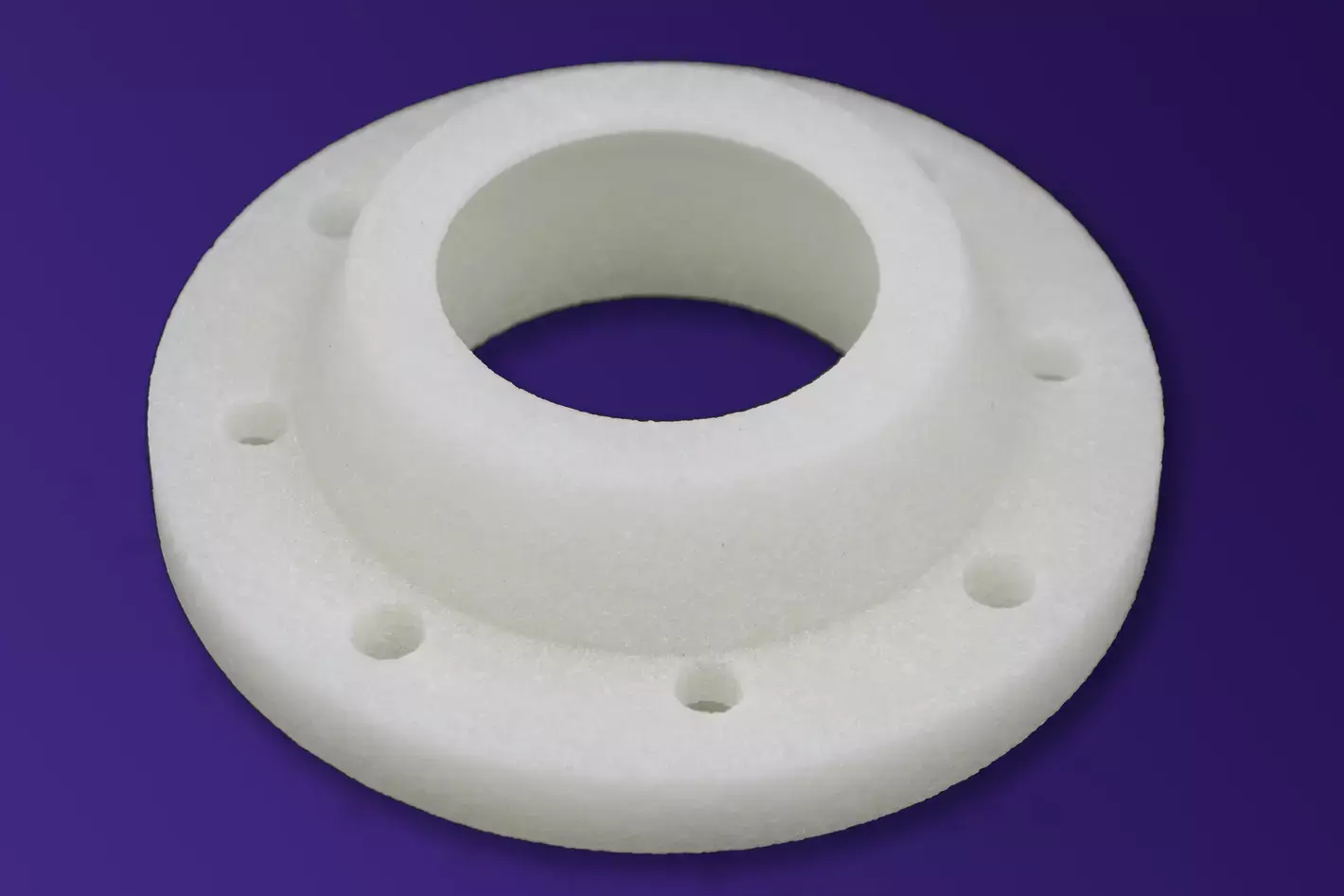
- Color: slightly greenish
- Translucent (thin wall thickness)
- Dyed in div. colors
Surface
- Directly from the printer
- Glass bead blasted
- Chemically smoothed: very smooth surface
Installation space
- 850 x 450 x 480 mm
Applications
Advantages
- Less expensive than comparable materials from SLS, SAF or MJF, especially for large components (price also depends on geometry / number of pieces)
- No support structures are required for binder jetting
- Sustainable: the powder that is not needed can be reused 100%.
Polymethyl methacrylate (acrylic glass, Plexiglas) processed with the 3D printing technology Binder J etting is a good complement to comparable plastics from the SLS, MJF or SAF. Very large components can be printed; the maximum installation space for binder jetting for plastics is 850 x 450 x 480 mm. In addition, no support structures are required during printing.
In addition to PMMA Pro, PMMA + is also available, which has a lower tensile strength but higher E-modulus values: View material PMMA +
PMMA+ 3D Printing Material (Polymethyl Methacrylate, Acrylic)
The material is suitable for large components because it is processed using binder jetting technology. It is also cheaper than comparable materials from other technologies.
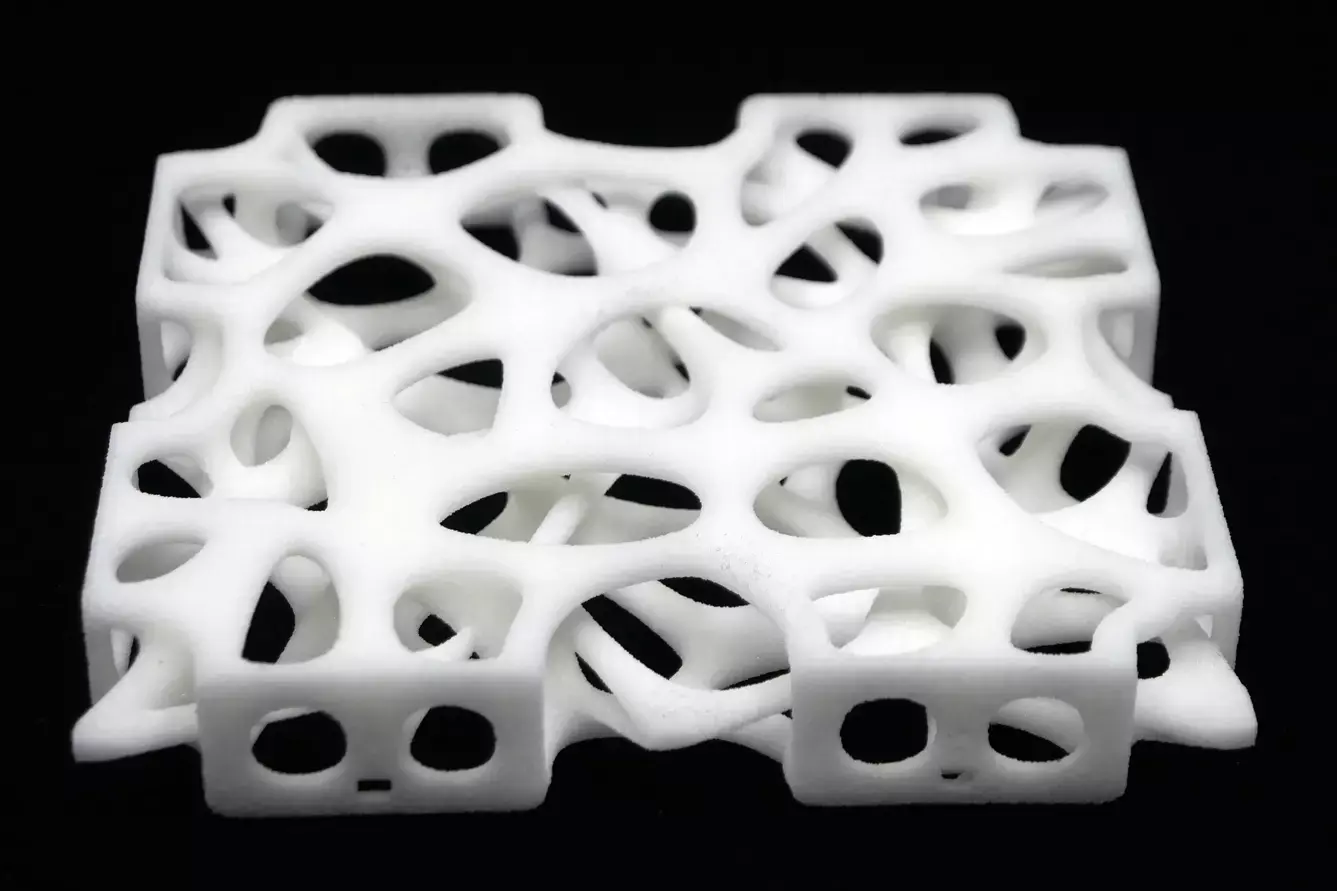
Features
- Color: matt white
- Tensile strength (DIN EN ISO 527-1): 20 MPa
- E-modulus (DIN EN ISO 527-1): 1200 MPa
- Tensile elongation (DIN EN ISO 527-1): 3%
- Flexural strength: 25 MPa
- Heat deflection temperature (DIN EN ISO 75-2 method A 1.80MPa): 56 °C
Postprocessing
- Glass bead blasted (included in standard)
- Chemically smoothed for a smoother surface (select finishing when ordering)
- Lacquered upon request
Material Color
- Color: matte white
- Dyed in div. colors
Surface
- Directly from the printer
- Glass bead blasted
- Chemically smoothed: very smooth surface
Installation space
- 850 x 450 x 480 mm
Applications
Advantages
- Less expensive than comparable materials from SLS, SAF or MJF, especially for large components (price also depends on geometry / number of pieces)
- No support structures are required for binder jetting
- Sustainable: the powder that is not needed can be reused 100%.
Polymethyl methacrylate (acrylic glass, Plexiglas) processed with the 3D printing technology Binder J etting is a good complement to comparable plastics from the SLS, MJF or SAF. Very large components can be printed; the maximum installation space for binder jetting for plastics is 850 x 450 x 480 mm. In addition, no support structures are required during printing.
In addition to PMMA+, PMMA Pro is also available, which has a higher tensile strength. View material properties of PMMA Pro
Polyamide PA 11, 3d printing plastic, technology SAF
For plastic parts with very high durability and availability
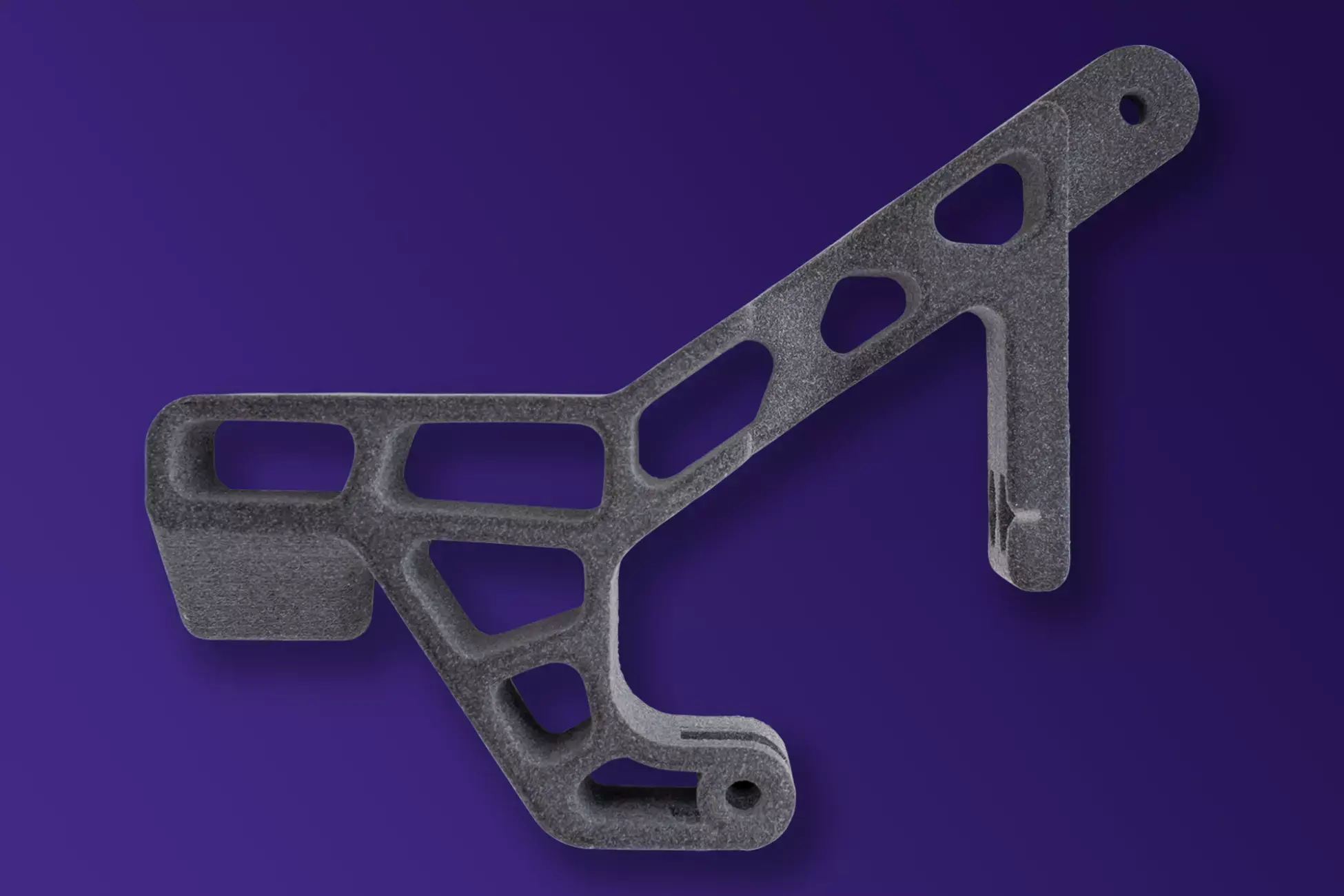
Features
- Density [g/cm3] 0.99
- Tensile strength [MPa] 48
- E-Modulus [Gpa] 1.60
- Heat deflection temp @0.45 MPa [°C] 185 (ASTM D648)
- Elongation at break [%] 45
- Shore Hardness 75D
Applications
Advantages
- Longevity
- Production of larger quantities
- High strength & stability
- Flexible prototypes
- Minimum wall thicknesses
- Good resolution and detail
- High diversity of variants
- Versatile aftercare
- No support material (support) necessary
PA 11 is usually obtained from castor oil and is an ecologically friendly product. It has better mechanical properties than petrochemically produced PA12: higher ductility, impact strength (notched impact strength), abrasion and fatigue resistance, improved isotropy, better chemical resistance. The temperature resistance of PA11 is comparable to PA12.
Polyamide PA 12 plastic 3d printing material, technology SLS
Polyamide (PA) 12 is an engineering plastic that stands out above all for its good mechanical properties.
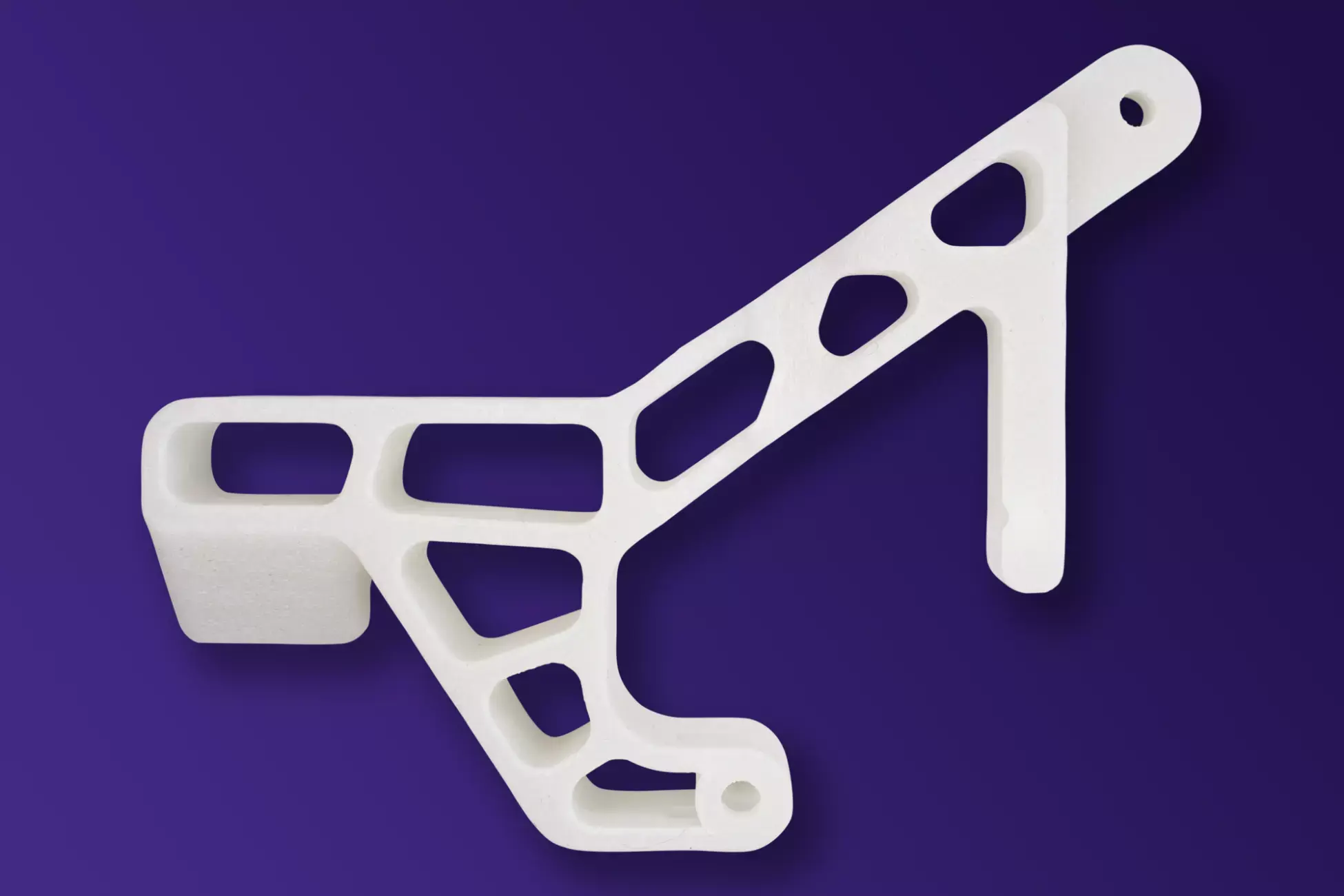
Features
- Density [g/cm3] 0.95
- Tensile strength [MPa] 48
- E-modul [Gpa] 1.65
- Flexural strength [MPa] 41
- Flexural modulus [Gpa] 1.5
- Impact resistance (Izod notched) [J/m] 4.4
- Heat deflection temp @1.81MPA [°C] 86
- Heat deflection temp @ 0.45MPA [°C] 180 (ASTM D648)
- Elongation at break [%] 20
- Shore Hardness 75D
Advantages
- High strength & stability
- Flexible Protoypes
- Minimum wall thickness
- Good resolution and detail
- High variety of variants
- Versatile after-treatments
- No support material (support necessary)
Polyamid (PA) 12 is an engineering plastic which is particularly striking because of its good mechanical properties. At the same time, PA 12 offers high strength and toughness as well as excellent sliding and wear behaviour. These properties make this plastic a particularly good material for robust components.
Polyamide PA 12, 3D printing plastic, technology MJF
Engineering plastic with good mechanical properties
Features
- Density [g/cm3] 1.01
- Tensile strength [MPa] 50
- E-modul [Gpa] 1.9
- Elongation at break [%] 17
Applications
Advantages
- Good mechanical properties
- High strength & toughness
- Excellent sliding & wear behaviour
Polyamid (PA) 12 is an engineering plastic which is particularly striking because of its good mechanical properties. At the same time, PA 12 offers high strength and toughness as well as excellent sliding and wear behaviour. These properties make this plastic a particularly good material for robust components.
Polyamide PA 12, 3D Printing Technology SAF
The material is perfect for applications that have high requirements for tolerances and strength. Fine resolutions and high accuracy are further advantages. Perfectly suited for high volumes.
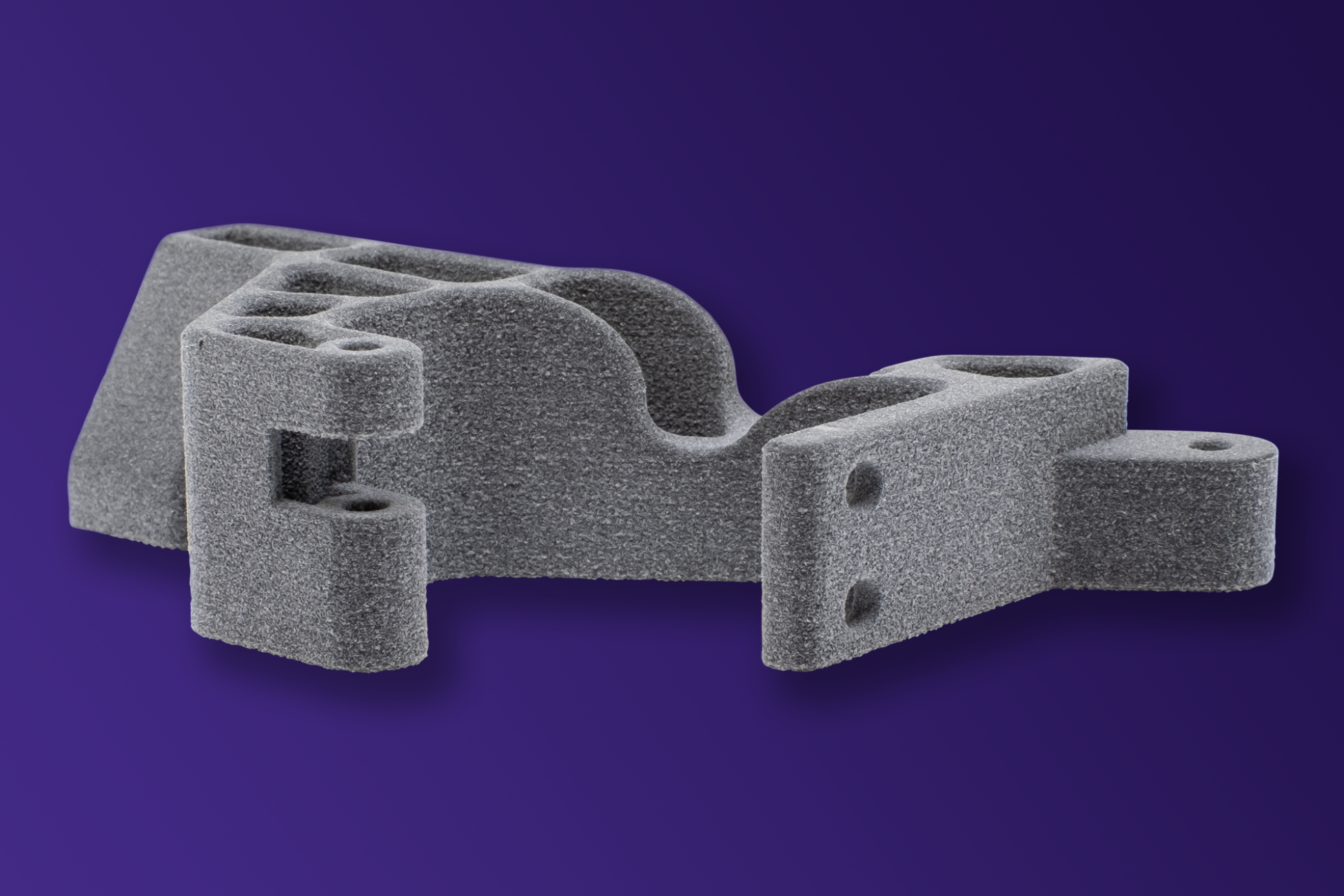
Features
- Tensile strength (ASTM D638-14): 46 MPa
- Young's modulus (ASTM D638-14): 1700 MPa
- Flexural strength (ASTM D790-17): 40 MPa
- Flexural modulus (ASTM D790-17): 900 MPa
- Elongation at break (ASTM D638-14): 5%
- Impact strength notched (ASTM D256-10): 3.36 kJ/m2
- Heat deflection temperature at 0.45 MPa (ASTM D648): 173°C
- Heat deflection temperature at 0.45 Mpa: high (>185°C)
- Flexural modulus: low (<1 GPa)
- Flexural strength: medium (37-100 MPa)
- Tensile strength: medium (28-75 MPa)
- Young's modulus: low (<1.7 GPa)
Material Color
Dark gray
Surface
Finer resolution than PA11 from the SAF
Advantages
- High strength
- High accuracy and fine resolution
- For series production
High yield, high accuracy and low cost are the distinguishing features of components made of polyamide PA12 from SAF technology. Components made of SAF™ PA12 are stiffer than PA11 parts and are perfect for applications where strength is an important requirement. SAF™ PA12 enables fine feature resolution, high strength and accuracy even at high volumes. The material is particularly suitable for higher tolerance requirements, such as assemblies and connectors.
Photo: Left in picture Polyamide PA12, right PA11
PP (FDM)
Features
- Density [g/cm3] 1.15
- Tensile strength [MPa] 30
- E-Modul [Gpa] 1.2
- Flexural strength [MPa] 40
- Flexural modulus [Gpa] 1.6
- Impact resistance (Izod notched) [J/m] 50
- Heat deflection temp @0.45MPA [°C] 37
- Heat deflection temp @1.81MPA [°C] [°C] 32
- Elongation at break [%] 50
- Shore Hardness 74D
PP (SLS)
Thermoplastic material
Advantages
- High chemical resistance
- Good resistance to material fatigue
This thermoplastic material combines high chemical resistance with good fatigue resistance. In addition, the slightly elastic PP proves to be extremely temperature resistant.
PP-GF30
Features
- Density [g/cm3] 1.12
- Tensile strength [MPa] 65
- E-modul [Gpa] 6.75
- Flexural strength [MPa] 78
- Flexural modulus [Gpa] 5.32
- Heat deflection temp @0.45MPa [°C] 139
- Elongation at break [%] 1.7
PPSF/PPSU
Features
- Density [g/cm3] 1.29
- Tensile strength [MPa] 55
- E-modul [Gpa] 2.1
- Flexural strength [MPa] 110
- Flexural modulus [Gpa] 2.2
- Impact resistance (Izod notched) [J/m] 58
- Heat deflection temp @1.81MPa [°C] 189
Advantages
- High temperature and chemical resistance
- Sterilizable
- Strong mechanical performance
PPSU combines strong mechanical performance with high temperature and chemical resistance for demanding applications such as low volume injection moulds, automotive parts in the engine compartment and heat, chemical, plasma and radiation sterilisation.
ProtoFlex
For flexible prototypes
Features
- Density [g/cm3] 1.2
- Tensile strength [MPa] 6
- Elongation at break [%] 1900
Applications
Advantages
- Flexible components
- Different degrees of hardness possible
This material is ideal for flexible prototypes which are to be produced by vacuum casting.
Silica sand SH-C053, colour beige/sand colours, synthetic
In 3D printing, quartz sand allows economical production. This material combines high thermal resistance with high strength.
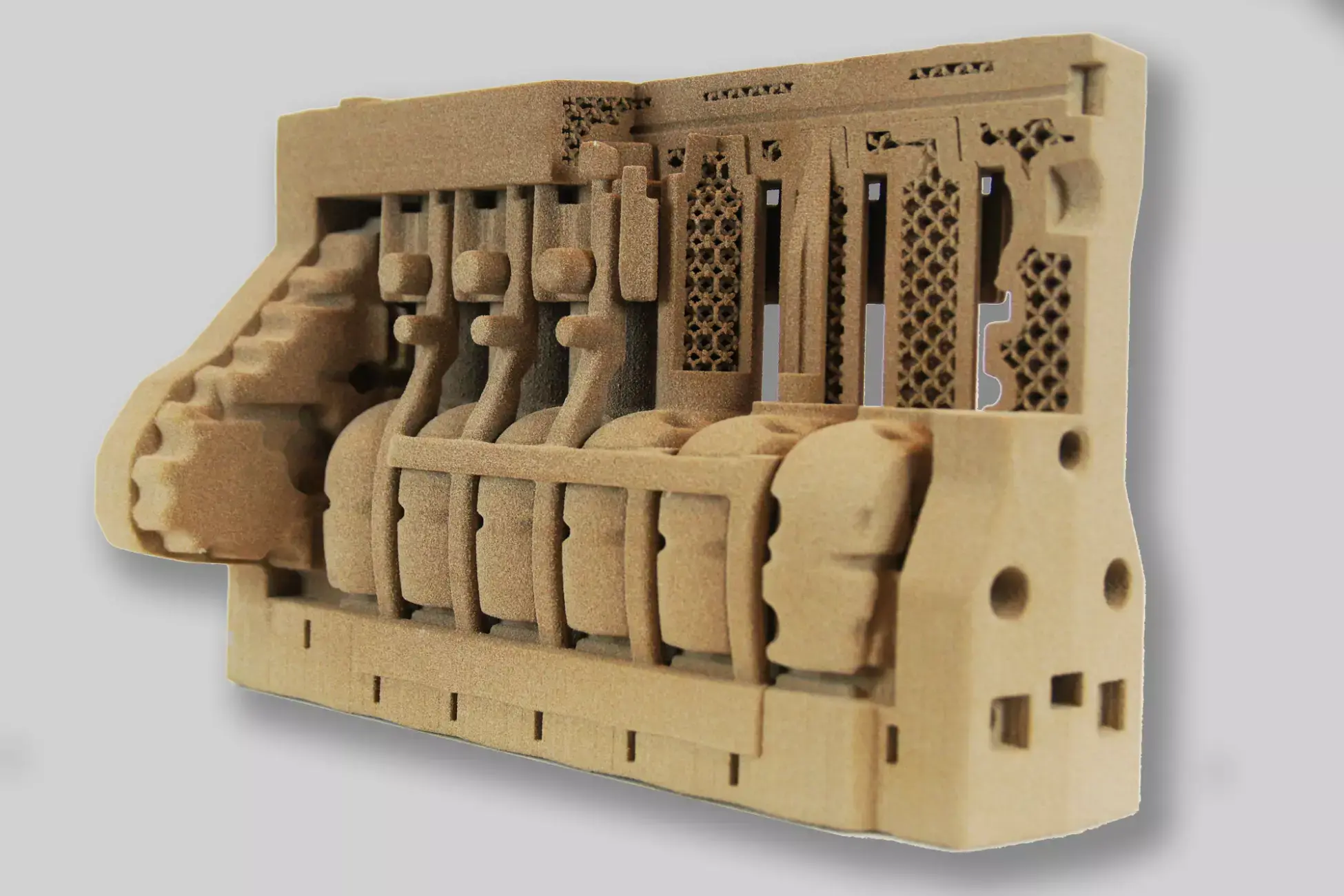
Features
- Density [g/cm3] 2.65
- Average grain size: 140 μm
- Flexural strength: 250 - 500 N/cm2 (depending on sand/binder content)
- Total loss on ignition: 2.0 - 2.6 wt.%.
- Accuracy: ±0.1 %
- Maximum installation space: 1'000 x 600 x 500 mm
Postprocessing
- Sanding
- Painting
Material Color
- Beige / Sand colours
Surface
- Rough
Applications
Advantages
- Economical production
- High thermal resistance
- High strength
- Optimally suited for sand casting
Quartz sand is a raw material that is available worldwide in almost unlimited quantities. In 3D printing, quartz sand allows economic production. This material combines high thermal resistance with high strength. Quartz sand is particularly suitable for sand casting.
Silica sand SH-F01, matt black
In 3D printing, quartz sand allows for economical production. This material combines high thermal resistance with high strength.
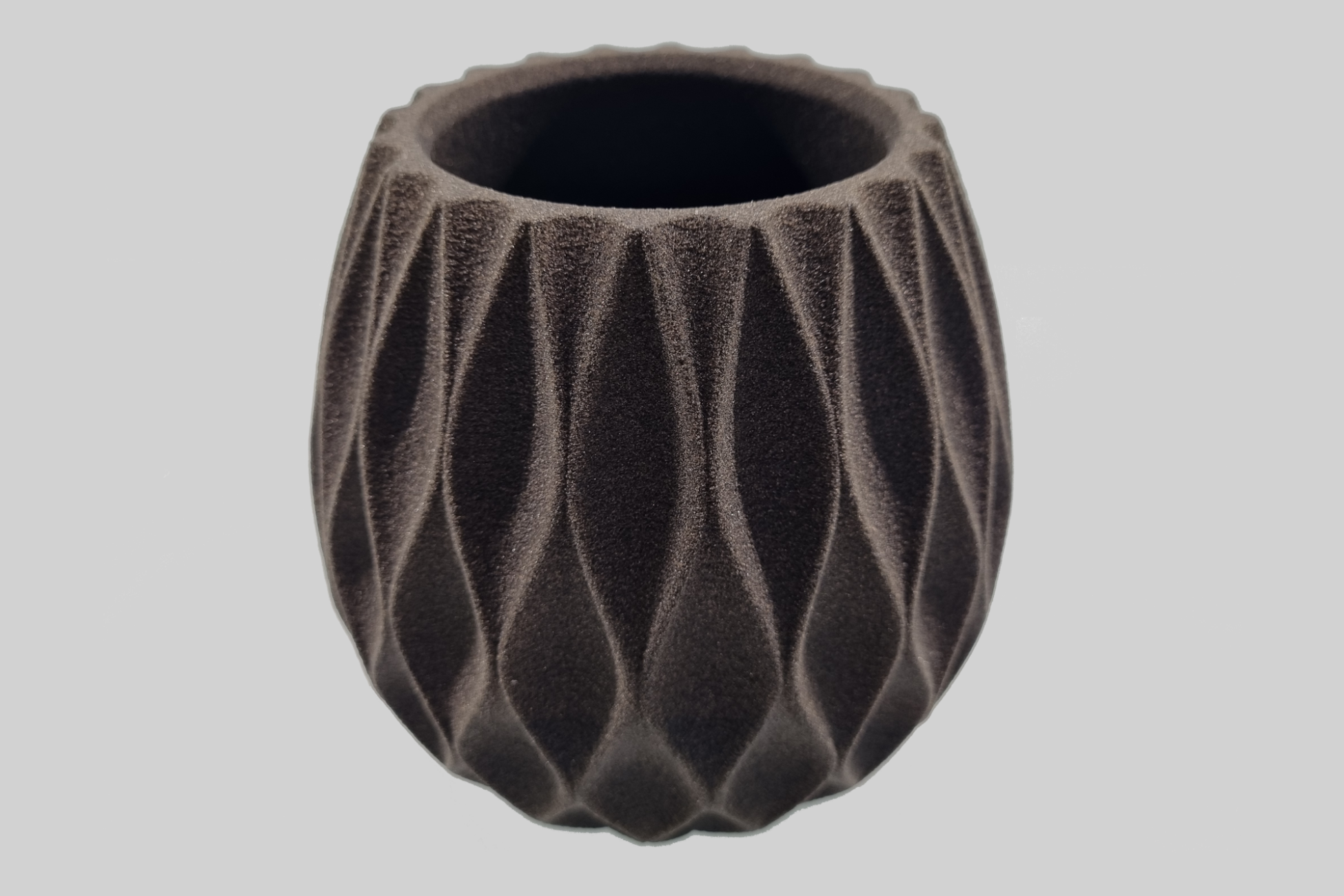
Features
- Density [g/cm3] 2.65
- Average grain size: 140 μm
- Flexural strength: 250 - 500 N/cm2 (depending on sand/binder content)
- Total loss on ignition: 2.0 - 2.6 wt.%.
- Accuracy: ±0.1 %
- Maximum installation space: 1'000 x 600 x 500 mm
Applications
Advantages
- Economic production
- High thermal resistance
- High strength
- Optimally suited for sand casting
Quartz sand is a raw material that is available in almost unlimited quantities worldwide. In 3D printing, quartz sand allows for economical production. This material combines high thermal resistance with high strength. Quartz sand is particularly suitable for sand casting.
Silica sand SH-P14 colour beige / sand colours
In 3D printing, quartz sand allows economical production. This material combines high thermal resistance with high strength.
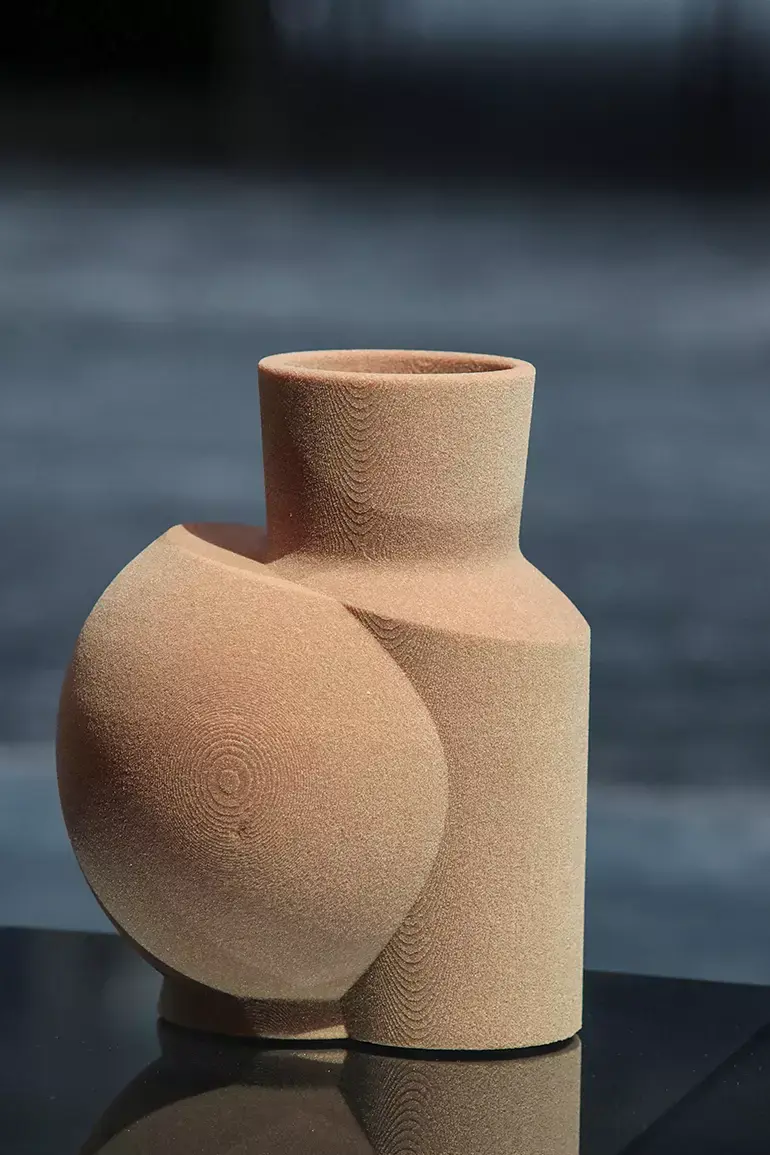
Features
- Density [g/cm3] 2.65
- Average grain size: 140 μm
- Flexural strength: 250 - 500 N/cm2 (depending on sand/binder content)
- Total loss on ignition: 2.0 - 2.6 wt.%.
- Accuracy: ±0.1 %
- Maximum installation space: 1'000 x 600 x 500 mm
Applications
Advantages
- Economical production
- High thermal resistance
- High strength
- Optimally suited for sand casting
Quartz sand is a raw material that is available worldwide in almost unlimited quantities. In 3D printing, quartz sand allows economic production. This material combines high thermal resistance with high strength. Quartz sand is particularly suitable for sand casting.
Resin Durable
Features
- Density [g/cm3] 1.2
- Tensile strength [MPa] 28
- E-modul [Gpa] 1
- Flexural strength [MPa] 24
- Flexural modulus [Gpa] 0.66
- Impact resistance (Izod notched) [J/m] 114
- Heat deflection temp @0.45MPa [°C] 41
- Elongation at break [%] 55
Resin Flexible
Features
- Density [g/cm3] 1.2
- Tensile strength [MPa] 8.9
- Elongation at break [%] 120Shore hardness 80A
Resin High Temp | 3D printing materials
Features
- Density [g/cm3] 1.2
- Tensile strength [MPa] 58.3
- E-modul [Gpa] 2.75
- Flexural strength [MPa] 94.5
- Flexural modulus [Gpa] 2.62
- Impact resistance (Izod notched) [J/m] 18.2
- Heat deflection temp @0.45MPa [°C] 142
- Elongation at break [%] 3.3
Applications
Especially suitable for components which are exposed to high temperatures.
Resin Rigid 10000
Features
- Density [g/cm3] 1.2
- Tensile strength [MPa] 65
- E-modul [Gpa] 10
- Flexural strength [MPa] 126
- Flexural modulus [Gpa] 9
- Impact resistance (Izod notched) [J/m] 16
- Heat deflection temp @0.45MPa [°C] 163
- Elongation at break [%] 1
Resin Rigid 4000
Features
- Density [g/cm3] 1.2
- Tensile strength [MPa] 68
- E-modul [Gpa] 4.1
- Flexural strength [MPa] 105
- Flexural modulus [Gpa] 3.4
- Impact resistance (Izod notched) [J/m] 23
- Heat deflection temp @0.45MPa [°C] 77
- Elongation at break [%] 5.3
Resin Tough 1500
Features
- Density [g/cm3] 1.2
- Tensile strength [MPa] 33
- E-modul [Gpa] 1.5
- Flexural strength [MPa] 39
- Flexural modulus [Gpa] 1.4
- Impact resistance (Izod notched) [J/m] 67
- Heat deflection temp @0.45MPa [°C] 52
- Elongation at break [%] 51
Resin Tough 2000
Features
- Density [g/cm3] 1.2
- Tensile strength [MPa] 46
- E-modul [Gpa] 2.2
- Flexural strength [MPa] 65
- Flexural modulus [Gpa] 1.9
- Impact resistance (Izod notched) [J/m] 40
- Heat deflection temp @0.45MPa [°C] 63
- Elongation at break [%] 48
RR60 white, Kunststoff 3D-Druck
Features
- Tensile strength: 54 MPa (ASTM D638)
- Modulus of elasticity: 2920 MPa (ASTM D638)
- Elongation at break: 4-6% (ASTM D638)
- Flexural strength: 85 MPa (ASTM D790)
- Flexural modulus: 2670 MPa (ASTM D790)
- Impact strength: 18.6 J/m (ASTM D256)
- Hardness: Shore 81D (ASTM D2240)
- Heat deflection temp (at 66psi): 54 °C (ASTM D648)
- Heat deflection temp (at 264psi): 50 °C (ASTM D648)
Material Color
White
Applications
Advantages
All-rounder material
EP-RR 60 WH white is a tough, optically neutral white, dimensionally stable resin with low viscosity. The all-rounder material is suitable for various parts, specifically for parts that require high attention to detail.
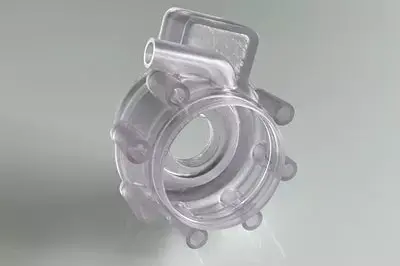
RR60-crystal clear, plastic 3D print
Features
- Tensile strength: 52 MPa (ASTM D638)
- Modulus of elasticity: 2500 MPa (ASTM D638)
- Elongation at break: 6-10% (ASTM D638)
- Flexural strength: 82 MPa (ASTM D790)
- Flexural modulus: 2000 MPa (ASTM D790)
- Impact strength: 21.4 J/m (ASTM D256)
- Hardness: Shore 83D (ASTM D2240)
- Heat deflection temperature (at 66psi): 55 °C (ASTM D648)
- Heat deflection temperature (at 264psi): 50 °C (ASTM D648)
Material Color
Translucent
Applications
Advantages
- Tough
- Dimensionally stable
RR 60 CR is a crystal clear, tough, dimensionally stable resin made from an ABS-like material. For applications that require translucency and have dimensionally demanding construction.
ST-130
Features
- Heat deflection temp @0.45MPa [°C] 121
Taurus
High stability and temperature resistance
Features
- Density [g/cm3] 1.13
- Tensile strength [MPa] 46.9
- E-modul [Gpa] 2.31
- Flexural strength [MPa] 73.8
- Flexural modulus [Gpa] 2.05
- Impact resistance (Izod notched) [J/m] 47.5
- Heat deflection temp @0.45MPa [°C] 62
- Elongation at break [%] 17Shore hardness 83D
Advantages
- High stability
- Temperature resistant
- Heat resistant up to 90°C
- Good surfaces
When it comes to components with high stability and temperature resistance, the Taurus material is perfect for these applications.
Titanium TiAl6V4, Metal 3D Printing
Titanium alloy
Features
- Density [g/cm3] 4.5
- Tensile strength [MPa] 900
- E-modul [Gpa] 110
- Elongation at break [%] 10
Advantages
- High strength
- Corrosion resistant
- Low weight
Titanium (TiAl6V4) is a metal alloy for highest demands. It convinces by high strength and corrosion resistance. A further advantage is the low density of the material.
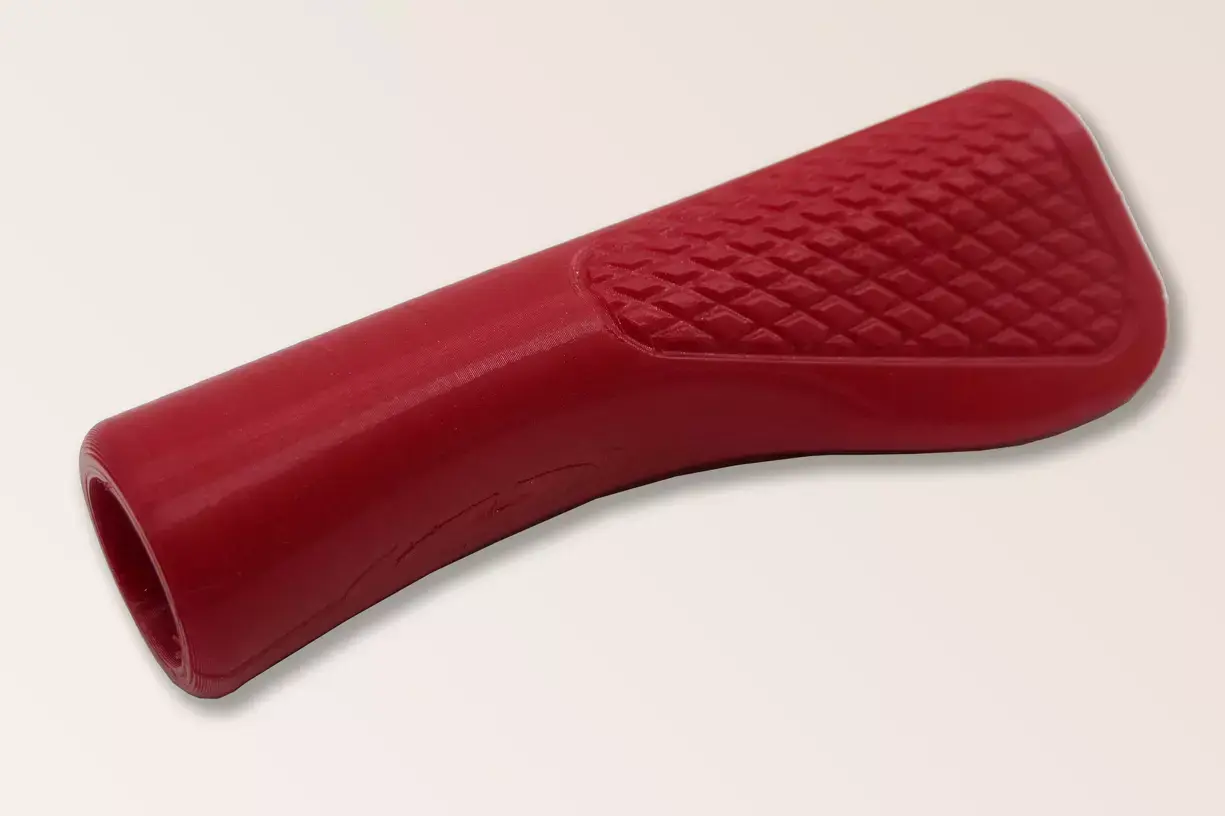
TPU thermoplastic polyurethane (FDM)
TPU is a lightweight polyurethane-based plastic with rubber-like properties.
Features
- Dichte [g/cm3] 1.13
- Zugfestigkeit [MPa] 17
- E-Modul [Gpa] 0.02
- Biegefestigkeit [MPa] 2.5
- Biegemodul [Gpa] 0.036
- Wärmeformbeständigkeit @0.45MPa [°C] 38
- Dehnung bis Bruch [%] 552
- Härte in Shore 92A
Applications
Advantages
- Lightweight plastic
- Rubber-like properties
- High elasticity and flexibility
- High impact strength, even in cold conditions
- Good chemical resistance
- High wear resistance and aging resistance
TPU is a lightweight polyurethane-based plastic with rubber-like properties. This makes TPU particularly suitable for the production of flexible objects. At the same time, TPU impresses with its high impact strength in combination with good chemical resistance. Areas of application include textiles or flexible prototypes.
Note: for parts with complex geometries or with lattice structures and the like, the TPU from SLS is more suitable, as this, in contrast to FDM 3D printing, does not require any support structures during processing. Read more about the material TPU SLS
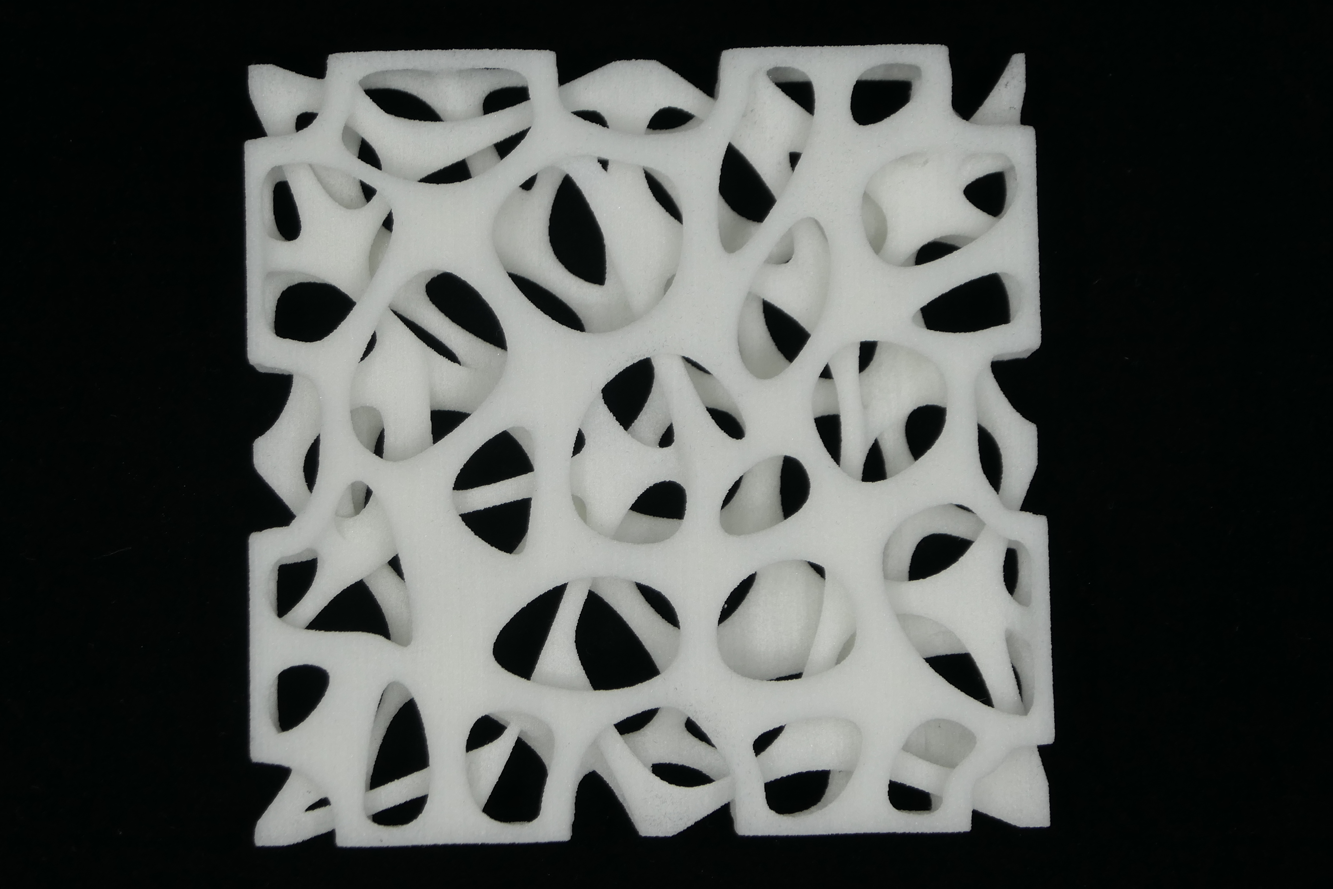
TPU (SLS)
Elastic and wear-resistant material
Features
- Density [g/cm3] 0.78
- Tensile strength [MPa] 2.1
- E-modul [Gpa] 0.01
- Flexural modulus [Gpa] 0.1
- Elongation at break [%] 200
- Shore hardness 59A
Advantages
- Elastic & wear resistant
- Dynamic resistance
Thermoplastic polyurethane (TPU) is an elastic and at the same time wear-resistant material. TPU also offers dynamic resistance.
ULTEM 1010
High performance thermoplastic with good chemical resistance
Features
- Density [g/cm3] 1.29
- Tensile strength [MPa] 45
- E-modul [Gpa] 3
- Flexural strength [MPa] 81
- Flexural modulus [Gpa] 2.91
- Impact resistance (Izod notched) [J/m] 22
- Heat deflection temp @0.45MPa [°C] 214
- Heat deflection temp @1.81MPa [°C] 212
- Elongation at break [%] 4
Advantages
- Good chemical resistance
- Food contact certified according to NSF 51
- Biocompatible according to ISO 10993/USP
- Flame retardant according to UL94-V0
ULTEM 1010 is a high performance thermoplastic with good chemical resistance. ULTEM 1010 complies with the food contact certification NSF 51, the biocompatibility standard ISO 10993/USP Class VI, as well as the flame retardancy standard UL94-V0. ULTEM 1010 is heat resistant up to 216°C.
ULTEM 9085 thermoplastic 3D printing high-performance plastic
Plastic with good chemical resistance, flame retardant
Features
- Density [g/cm3] 1.27
- Tensile strength [MPa] 70
- E-modul [Gpa] 2.51
- Flexural strength [MPa] 100
- Flexural modulus [Gpa] 2.4
- Impact resistance (Izod notched) [J/m] 88
- Heat deflection temp @1.81MPa [°C] 173
- Elongation at break [%] 5.7
Applications
Advantages
- Good chemical resistance
- Permanently flame retardant
ULTEM 9085 is a high performance thermoplastic with good chemical resistance. At the same time ULTEM 9085 is permanently flame retardant (according to UL94-V0) and heat resistant up to 153°C. In addition, this material meets the FST safety standards and is particularly suitable for lightweight construction.
Vero
Vero is a PolyJet printing material based on synthetic resin
Features
- Density [g/cm3] 1.18
- Tensile strength [MPa] 60
- E-modul [Gpa] 3
- Flexural strength [MPa] 70
- Flexural modulus [Gpa] 2.5
- Impact resistance (Izod notched) [J/m] 30
- Heat deflection temp @0.45MPa [°C] 45
- Elongation at break [%] 25Shore hardness 83D
Advantages
- Highly accurate components
- Thin layers
- Detailed surfaces
Vero is a PolyJet printing material based on synthetic resin. This material enables particularly accurate components, made of thin layers and with detailed surfaces.
VeroClear
Features
- Density [g/cm3] 1.17
- Tensile strength [MPa] 65
- E-modul [Gpa] 3
- Flexural strength [MPa] 110
- Flexural modulus [Gpa] 3.2
- Impact resistance (Izod notched) [J/m] 30
- Heat deflection temp @0.45MPa [°C] 45
- Elongation at break [%] 25Shore hardness 83D
Material Color
Translucent
Advantages
- Detailed surfaces
- Thin layer structure
- Acrylic-like properties
Vero Clear Transparent is a translucent material for PolyJet printing. This synthetic resin-based material combines detailed surfaces with a thin layer structure. Vero Clear Transparent has properties comparable to those of acrylic.
Tool Steel Corrax, Metal 3D Printing
Corrosion-resistant tool steel
Features
- Density [g/cm3] 7.7
- Tensile strength [MPa] 1100
- E-modul [Gpa] 170
Advantages
- High corrosion resistance
- High strength
- Food certified
- Good post-processing possibilities
The corrosion-resistant tool steel Corrax (CL91RW) offers a high level of corrosion resistance while maintaining high strength. At the same time, Corrax is food-certified and allows good reworking possibilities.
xABS
Features
- Tensile strength [MPa] 60
- E-modul [Gpa] 1.62
- Flexural strength [MPa] 81
- Flexural modulus [Gpa] 1.86
- Impact resistance (Izod notched) [J/m] 54
- Heat deflection temp @0.45MPa [°C] 80
- Elongation at break [%] 47
Material Color
Black
Applications
Advantages
- High-performance plastic
- High tensile and flexural modulus
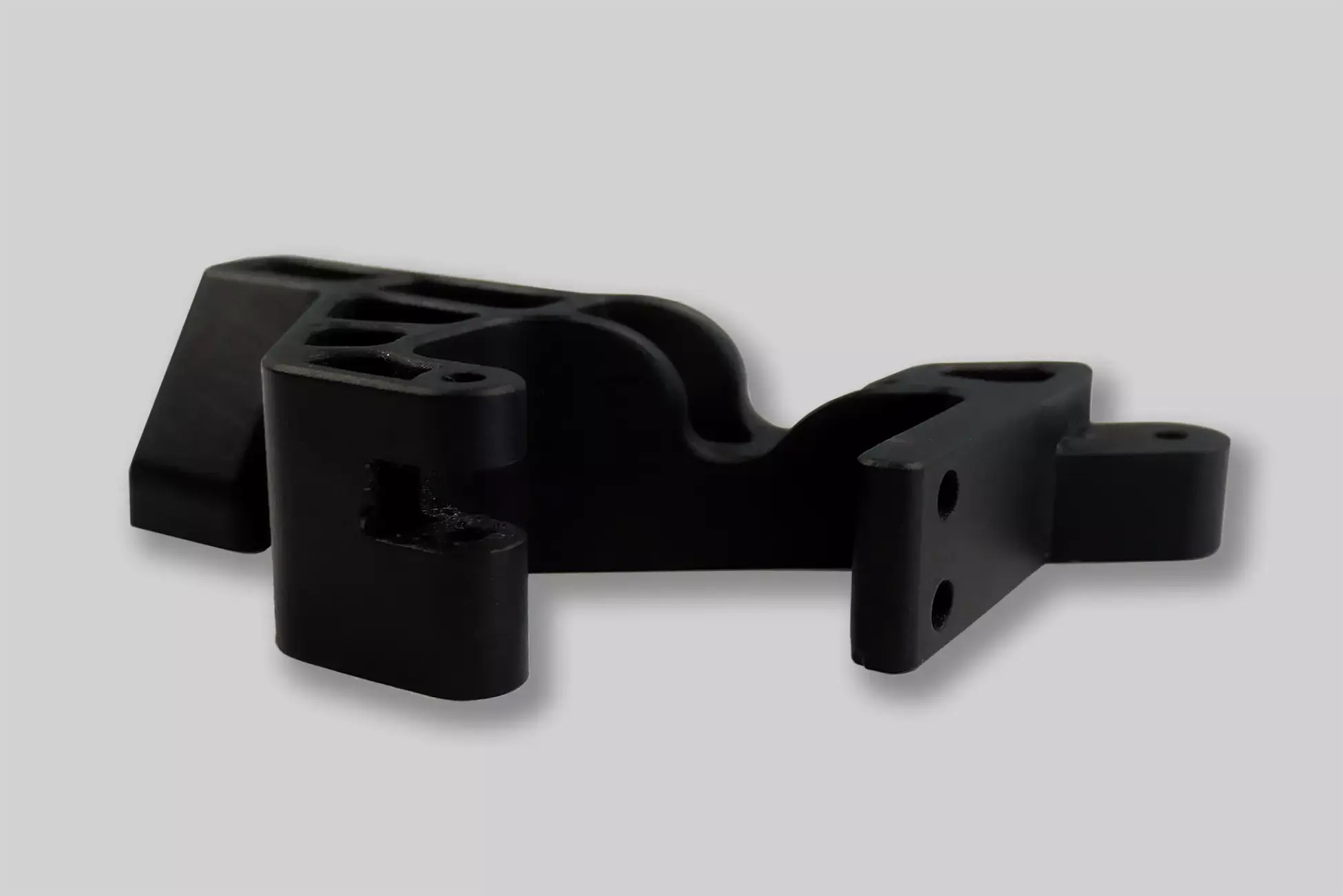
xCE-Black, plastic
Smooth, injection moulding-like surface, high accuracy, bending strength and temperature resistance.
Features
- Tensile strength [MPa] 80
- E-modul [Gpa] 1.62
- Flexural strength [MPa] 135
- Flexural modulus [Gpa] 3.25
- Impact resistance (Izod notched) [J/m] 20
- Heat deflection temp @0.45MPa [°C] 120
- Elongation at break [%] 8Shore hardness 90D
Material Color
Black
Applications
Advantages
- High accuracy
- High bending strength
- High temperature resistance
- Colour: Black
The 3D printing plastic xCE-black has a high accuracy, high bending strength and high temperature resistance. It also has a very smooth surface similar to injection moulding.
xCE-black is suitable for automotive components, parts in mechanical engineering and injection moulding applications. For series in the range of 100 to more than 1,000 pieces, xCE-black is a good choice.
xMED412
Features
- Density [g/cm3] 1.14
- Tensile strength [MPa] 38
- E-modul [Gpa] 1.245
- Flexural strength [MPa] 37
- Flexural modulus [Gpa] 1.022
- Impact resistance (Izod notched) [J/m] 42.6
- Heat deflection temp @0.45MPa [°C] 40
- Elongation at break [%] 141Shore hardness 70D
Material Color
Tanslucent
Applications
Advantages
- High impact strength, like polypropylene
- Biocompatible (ISO 10993, FDA Class I)
- Stable and resistant
- Serilisation in autoclave possible
- Good polishability (transparent finish)
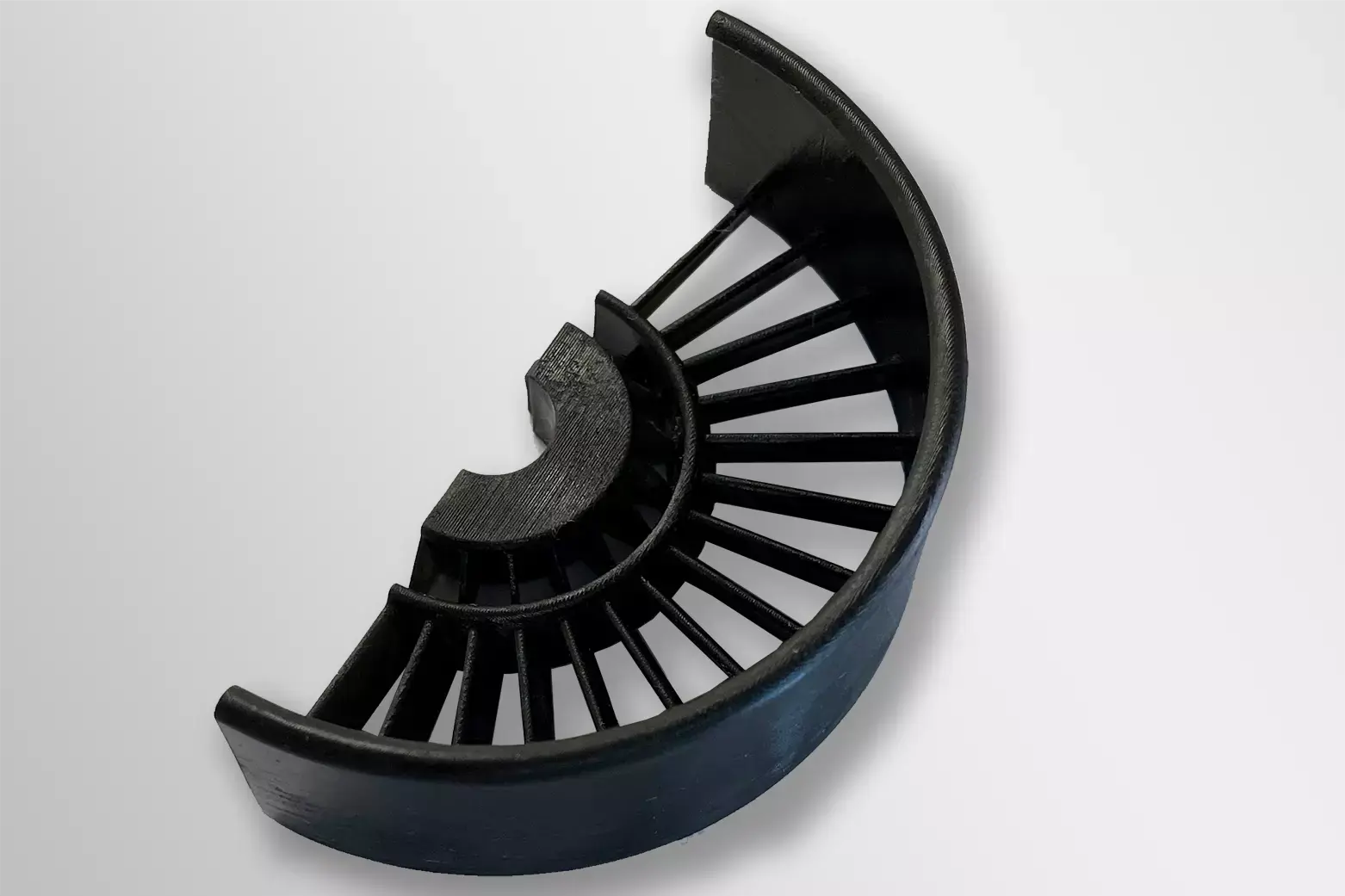
xPP405-Black, 3D Printing Resin
Very tough material with excellent surface quality
Features
- Young's modulus (ASTM D638): 1579 MPa
- Tensile strength (ASTM D638): 44 Mpa
- Flexural modulus (ASTM D790): 1181 MPa
- Flexural Strength (ASTM D790): Does not break
- Elongation at break (ASTM D638): 87%.
- Impact strength IZOD notched (ASTM D256): 62 J/m
- Heat deflection temperature at 0.44 MPa (ASTM D648): 52.8°C
- Shore hardness (ASTM D2240): 81D
- Impact strength: medium (53-139 J/m)
- Smooth surface
- Durable
Material Color
Black
Surface
Excellent surface quality
Applications
For applications that require a stiff and resistant material, such as:
In addition, it is ideally suited for larger quantities, i.e. series production.
The xPP405-Black is a very tough material with excellent surface quality. It is especially suitable for applications that require a stiff and resistant material, such as production aids, housings, holders, clips, etc. The properties are comparable to polypropylene. The properties are comparable to polypropylene.
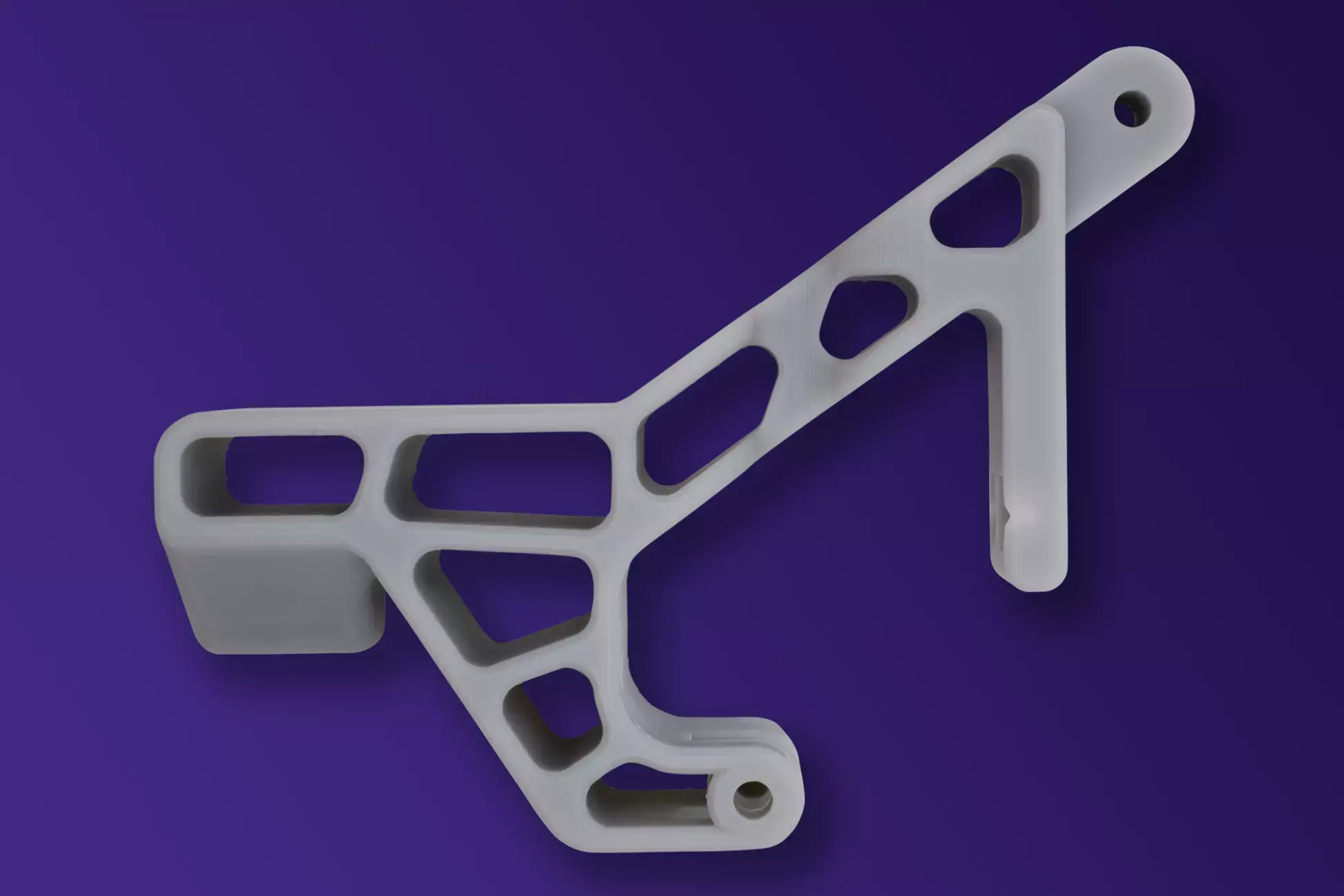
Xtreme
Sehr zähes Material mit ausgezeichneter Oberflächenqualität
Features
- Density [g/cm3] 1.18
- Tensile strength [MPa] 38-44
- E-modul [Gpa] 1.98
- Flexural modulus [Gpa] 2.07
- Impact resistance (Izod notched) [J/m] 52
- Heat deflection temp @0.45MPa [°C] 62
- Elongation at break [%] 22
Applications
Advantages
- Excellent surface quality
- Good elongation at break properties
- High shock resistance
- High stability
- Similar properties to cast plastic
Accura's Xtreme material is particularly impressive with its excellent surface quality, good elongation properties, high impact resistance and high stability. In terms of appearance and surface finish, Xtreme corresponds to a durable cast plastic.