Spare part is missing; production line is at a standstill
A missing part can result in downtime costs of several thousand euros. With 3D printing, we manufacture it directly from the CAD data, often within a few days.
It’s not worth making a mold for just 20 or 50 parts. With 3D printing, you only pay for the parts you need. Typically, 1 to 1,000 units are cost-effective, and even more depending on the part.
In 3D printing, you can modify the CAD file and print it again. There’s no need for tooling changes or the wait time associated with them.
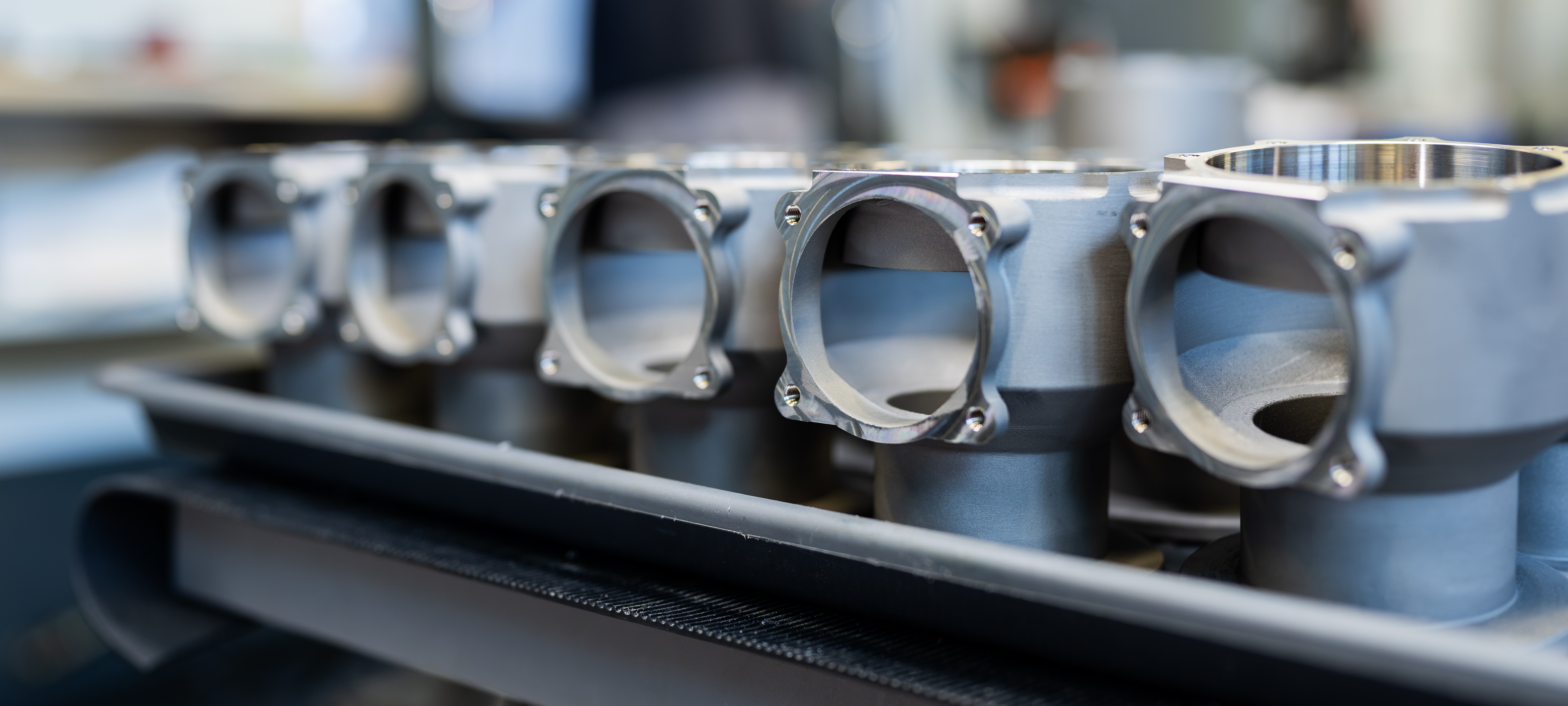
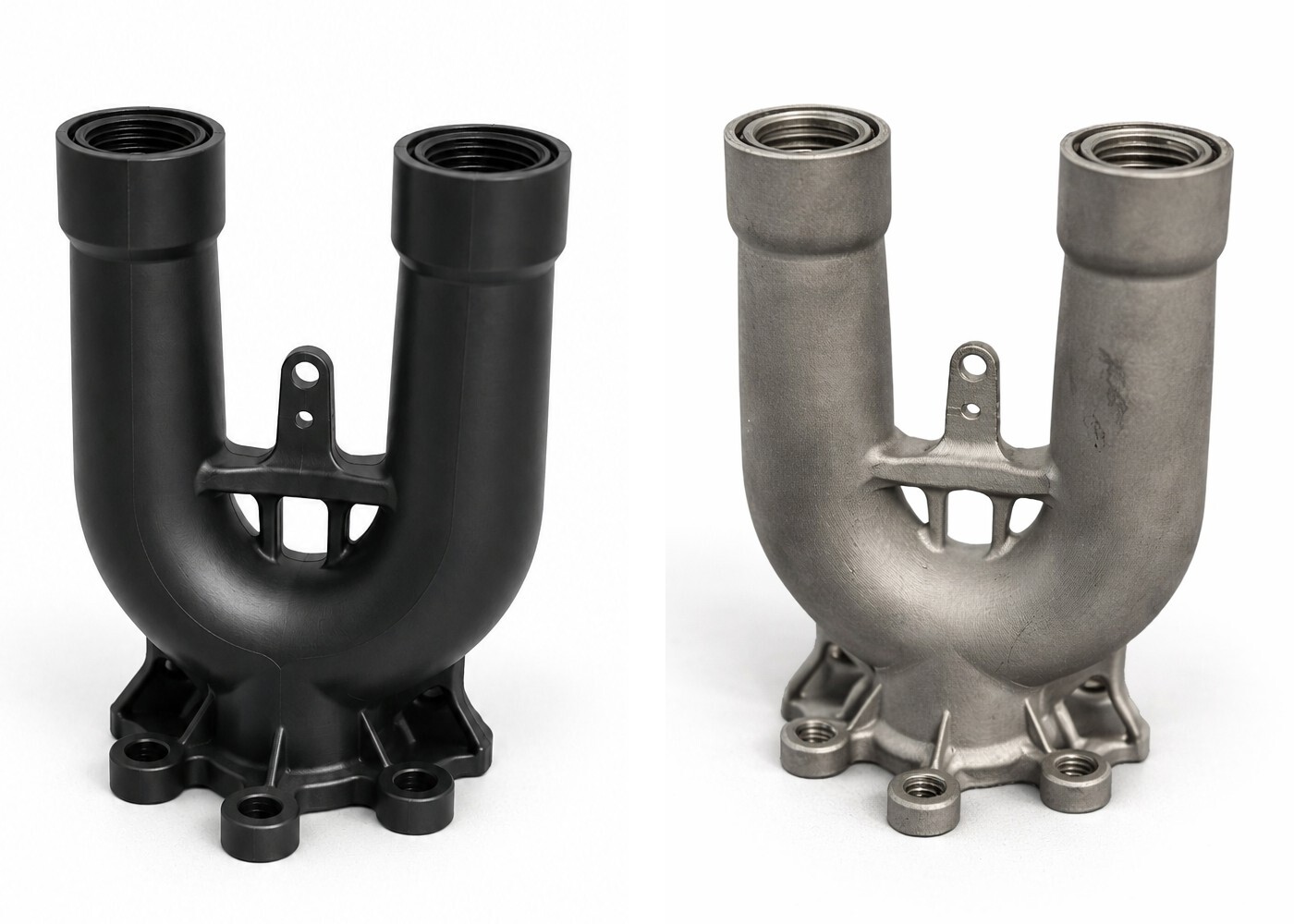
For this valve housing, we calculated the costs for both options, including all project-related expenses.
| Cast | 3D printing | |
|---|---|---|
| Fixed costs | 16,500 € Design and manufacture of the mold |
250 € Data preparation, orientation, and support structures |
| Price per part | 12 € | 510 € |
| Delivery time per part | 1.5 months | 3.5 days |
| Total cost for 10 pieces | 16,620 € | 5,350 € |
| Total cost for 50 units | 17,100 € | 25,750 € |
Break-even point at approximately 32 components.
16,500 € + 12 € × n = 250 € + 510 € × n yields n ≈ 32.6. Below this quantity, 3D printing is cheaper; above it, casting is cheaper. Added to this is the time savings: 3.5 days instead of 1.5 months.

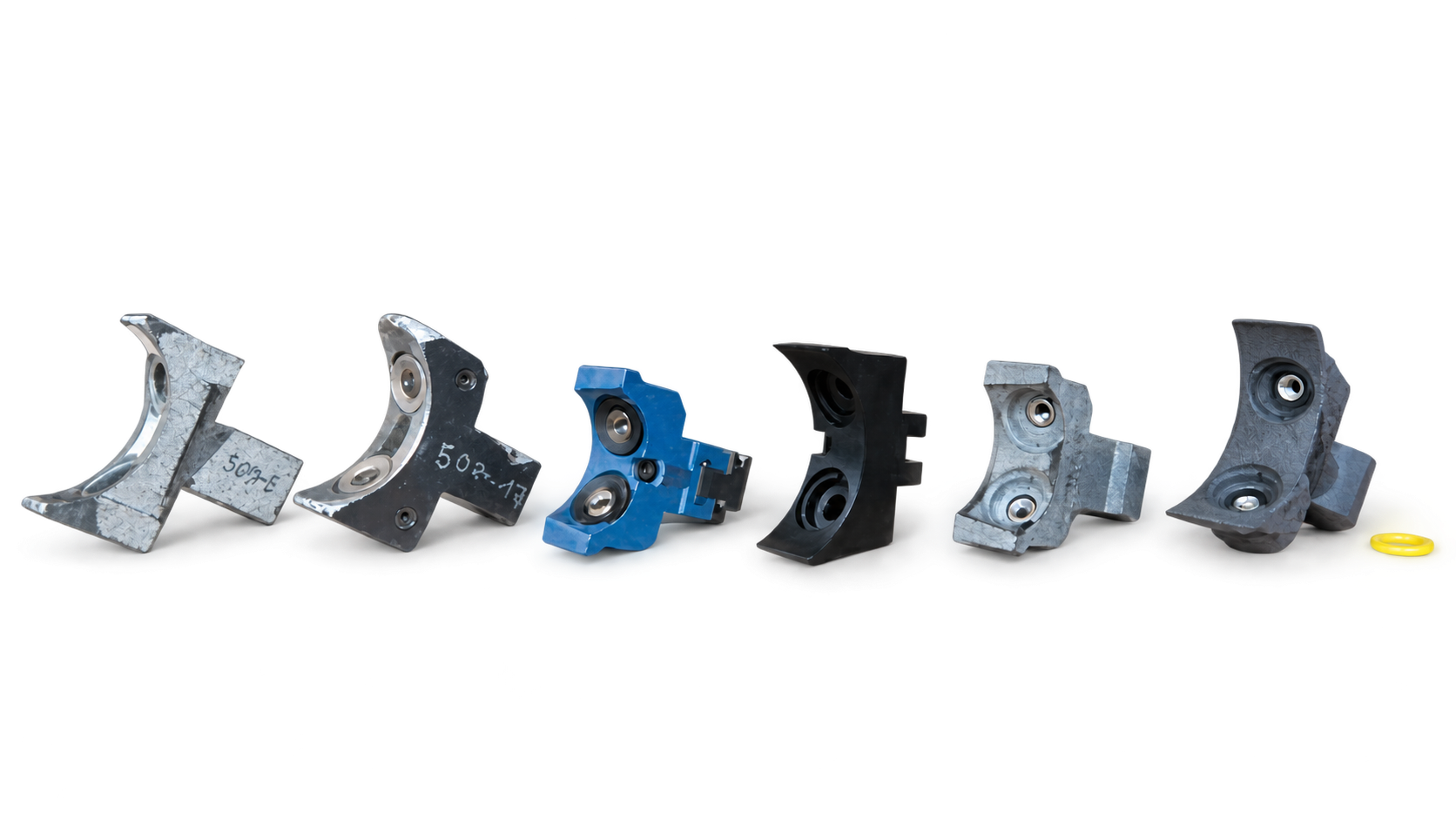
Initial Situation: Greiner Packaging was purchasing gripper arms for its packaging line as original parts, at a cost of approximately CHF 900 each and with long lead times.
Solution: Jointly redesigned and 3D-printed from PA12, featuring vacuum channels and predetermined breaking points that protect the machine in the event of a malfunction.
Result: Significantly lower costs, faster availability, and less downtime.

Initial Situation: A combustion chamber component for rocket engines would conventionally have consisted of many individual parts.
Solution: Printed from Inconel 718 as a single component, with integrated cooling channels. Print time: 11 hours.
Result: Less assembly, fewer sources of error, delivery in just a few days.
Lightweight housing for an aircraft engine made of AlSi10Mg. Extruded, then stress-relieved, sandblasted, and CNC-turned and milled at the connection surfaces.
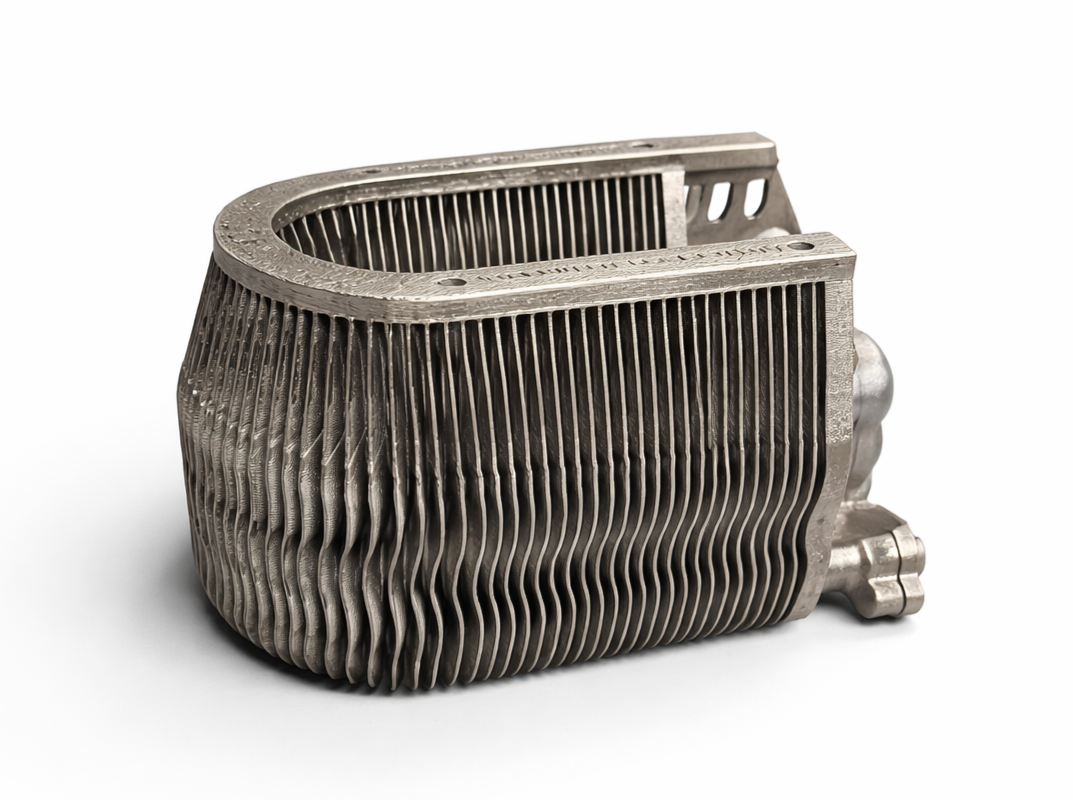
Heat exchanger with fine cooling channels made of Ti-6Al-4V (Grade 23) for the aerospace industry, manufactured without tooling investment. Stress-relieved and sandblasted.
That depends on the material, volume, printing time, and post-processing. Here are two examples from our projects: a fan housing made of AlSi10Mg for €900 and a titanium radiator for €970. For your part, the online calculator will show you the price and delivery time in just a few seconds.
That depends on the ratio between tooling costs and unit price. For the valve housing in our example, the break-even point is around 32 units. For large production runs, traditional manufacturing is usually more cost-effective.
Each part is built up individually, layer by layer, and this process takes up machine time. However, no mold is required. For small production runs, this more than offsets the higher unit price.
Data preparation with alignment and support structures, as well as post-processing, such as stress-relief annealing, sandblasting, or CNC machining of fits and sealing surfaces.
By designing the part for 3D printing: integrate functions into a single part, use material only where it is needed to support the structure, and limit CNC machining to the functional surfaces.
Upload your CAD file to the online calculator and get an instant estimate of the price and delivery time. For complex components, production runs, or special requirements, we’ll provide you with personalized advice.
Get prices and delivery times for prototypes, replacement parts, and small production runs in just a few seconds.
For complex components, series production projects, or special requirements, our experts will advise you personally.
Fislisbach, Switzerland