Replacement Parts and Variants That Require No Tools
Even with just one piece, production is worthwhile without the need for tools. This is helpful for replacement parts for existing systems and for variants that are needed only in small quantities.
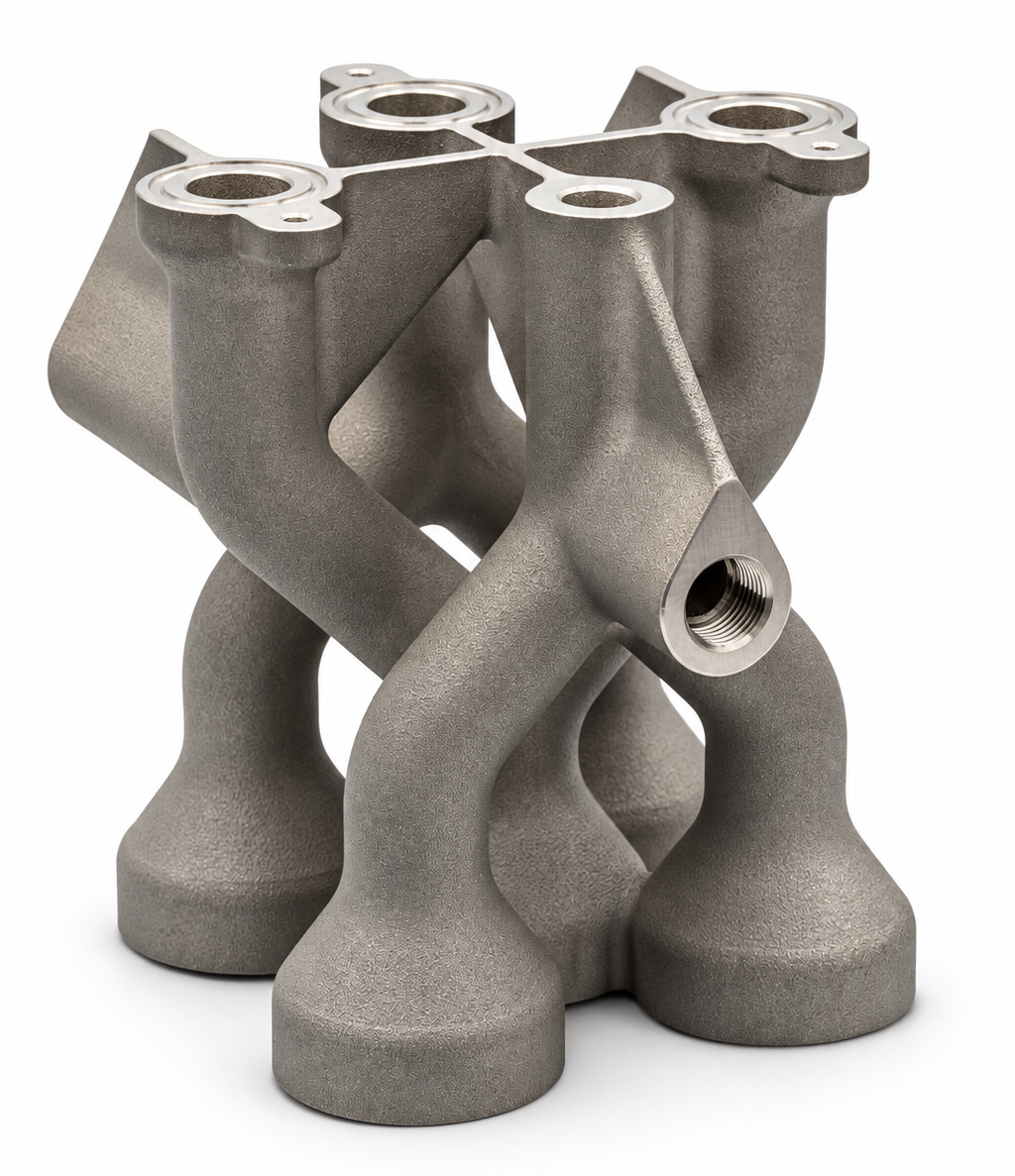
In mechanical and plant engineering, many components are required that, due to their complex geometry, cannot be manufactured at all using conventional manufacturing processes or can only be produced with great effort. One example is the 316L stainless steel manifold shown here: The channels branch off internally, and the flanges and threads are machined after printing.
Hoffmann AM manufactures such parts using additive manufacturing with metal and plastic, whether as prototypes, individual parts, or small production runs. The choice of process and material depends on the component’s function, load, quantity, and operating environment.

Even with just one piece, production is worthwhile without the need for tools. This is helpful for replacement parts for existing systems and for variants that are needed only in small quantities.
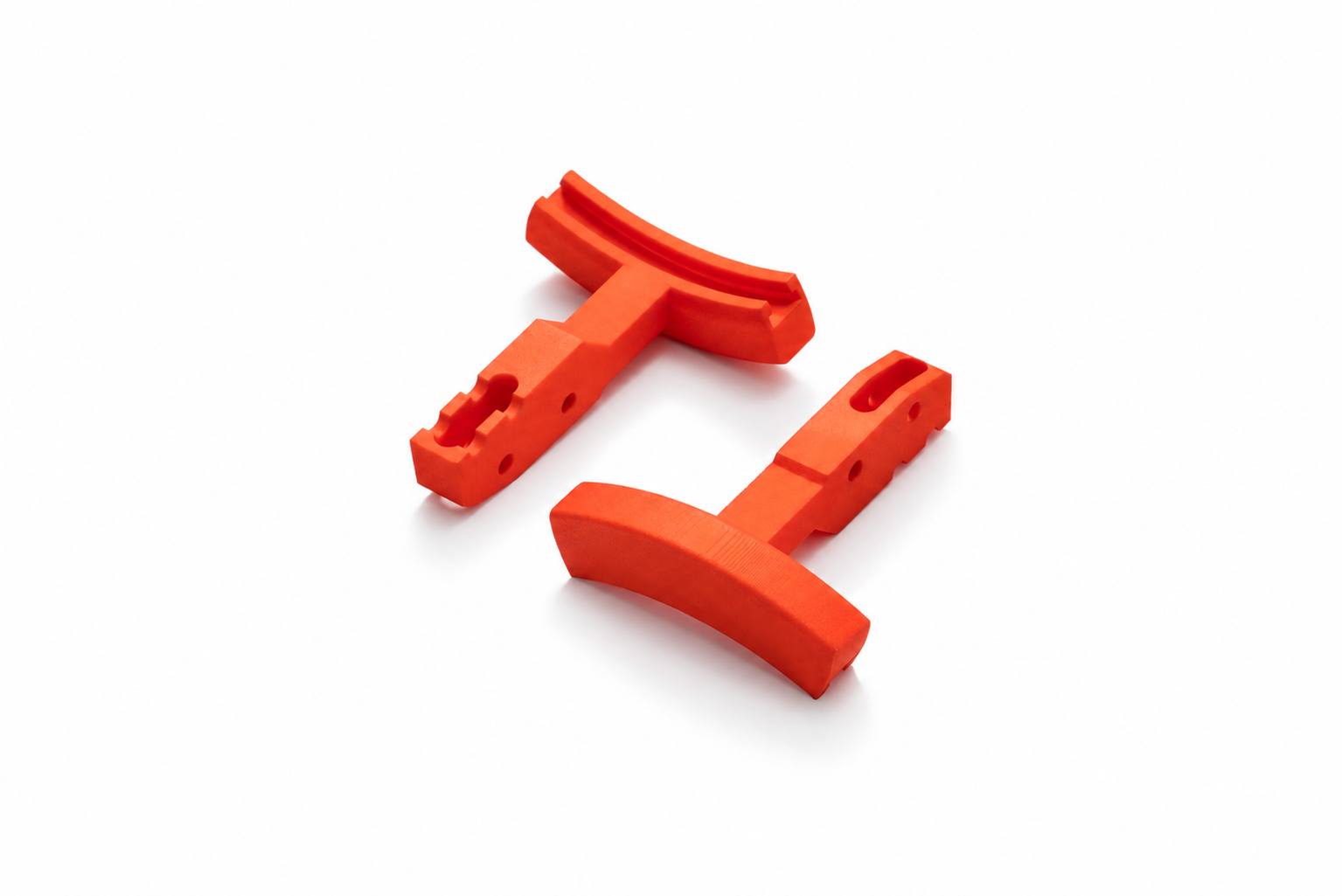
Supports, clamping jaws, and stops for assembly and testing fixtures can be customized to fit the exact contours of the workpiece. If the workpiece changes, a new version is simply printed.
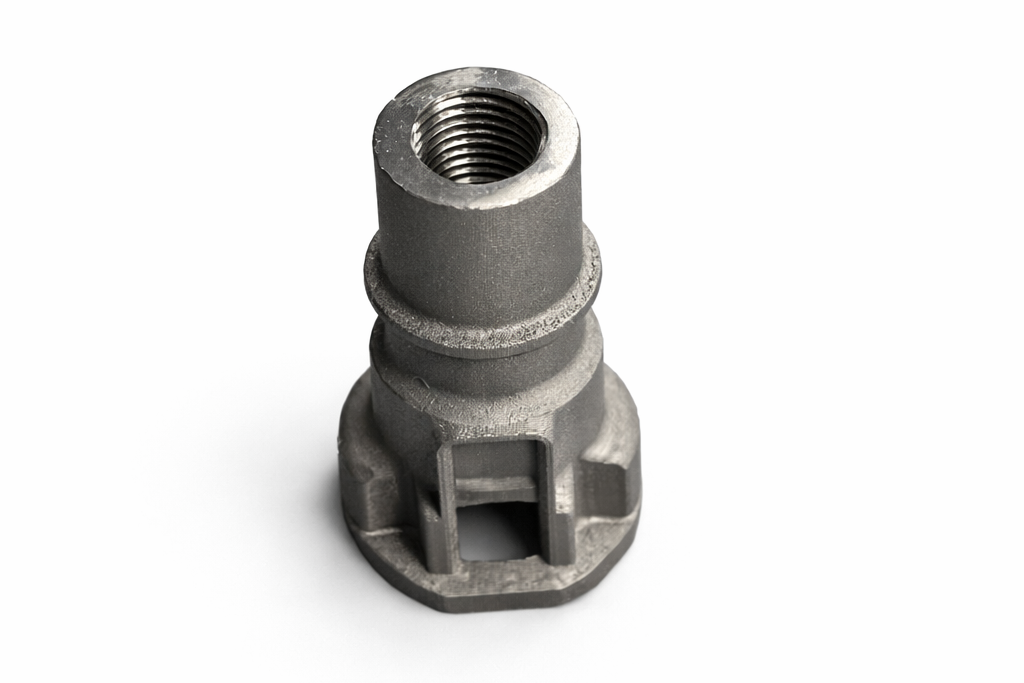
Manifold blocks with internal channels or adapters with bayonet and threaded connections can be manufactured in a single piece using metal 3D printing. Flanges, threads, and fits are then machined.


Often within a few days once CAD data is available. The online calculator shows the delivery date for your part right after upload. If only a drawing or the old part is available, add the time needed to create the CAD model.
Yes, if material and geometry meet the requirements of the original part. The basis is CAD data or a drawing. We assess suitability together with you based on function and load.
For simple shapes, milling is often cheaper. 3D printing pays off mainly for small quantities, many variants, short lead times or shapes that are difficult to machine.
Yes, parts made by laser powder bed fusion are almost fully dense. Sealing and connection surfaces are CNC-machined after printing so that seals sit properly. For pressure-bearing parts, we recommend a pressure test on the finished component.
On metal parts, threads and fits are cut, turned or milled after printing, which allows standard threads and tight tolerances. In plastic parts, metal threaded inserts are suitable for screws that are loosened frequently. Mark these areas on the drawing.
Metal parts are stress-relieved and blasted, with fits and functional surfaces CNC-machined as needed. For plastic parts, depending on the material, we offer:
Please let us know the function, installation space, quantity, and operating conditions of your component. We’ll work with you to determine which material, manufacturing process, and post-processing steps are best suited for your project.
Fislisbach, Switzerland