
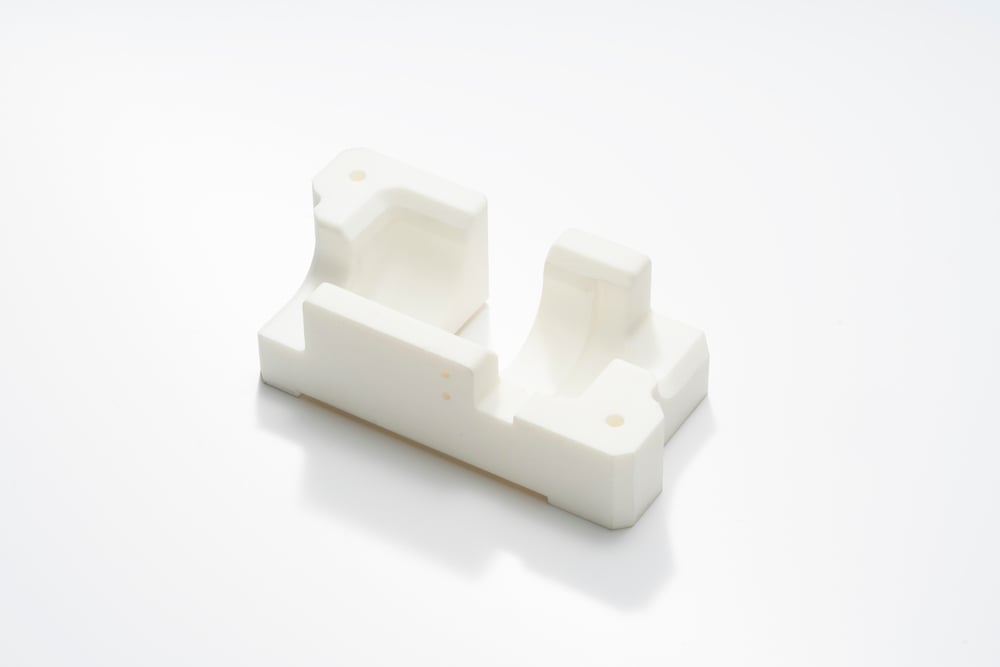
DuraForm HST, fibre-reinforced composite material
Very stiff material with excellent mechanical strength and high Heat deflection temp.
Features:
- Density [g/cm3] 1.2
- Tensile strength [MPa] 48
- E-modul [Gpa] 5.48
- Flexural strength [MPa] 83
- Flexural modulus [Gpa] 4.4
- Impact resistance (Izod notched) [J/m] 37.4
- Heat deflection temp @0.45MPa [°C] 184
- Elongation at break [%] 4.5
DuraForm® HST is a fibre-reinforced composite material based on PA12. The 3D printed material combines excellent mechanical strength with high Heat deflection temp (@0.45MPa 184°C). In addition, the material is very stiff. A typical field of application is functional prototypes.
PA 11 (SLS)
Features:
- Density [g/cm3] 1.03
- Tensile strength [MPa] 48
- E-modul [Gpa]
- Flexural strength [MPa] 62
- Flexural modulus [Gpa]
- Impact resistance (Izod notched) [J/m]
- Heat deflection temp à 0.45MPa [°C]
- Heat deflection temp à 1.81MPa [°C]
- Dehnung bis Bruch [%] 55
- Shore hardness 76D
PA-GF (MJF)
A thermoplastic filled to 40% with glass beads
Features:
- Density [g/cm3] 1.22
- Tensile strength [MPa] 51
- E-modul [Gpa] 3.2
- Flexural modulus [GPa] 2.90
- Impact resistance (Izod notched) [J/m] 21.30
- Heat deflection temp @1.81MPA [°C] 110
- Elongation at break [%] 6.00
- Shore Hardness 80D
Advantages:
- High stiffness
- Good elongation at break
- Excellent mechanical properties
- Very smooth surfaces
- High level of detail
MJF-PA-GF is a thermoplastic filled to 40% with glass beads. Optimum mechanical properties are as much a benefit of this material as a high recycling rate of around 70%. In this way, MJF-PA-GF makes it possible to significantly reduce the unit costs of production.
PP (SLS)
Thermoplastic material
Advantages:
- High chemical resistance
- Good resistance to material fatigue
This thermoplastic material combines high chemical resistance with good fatigue resistance. In addition, the slightly elastic PP proves to be extremely temperature resistant.
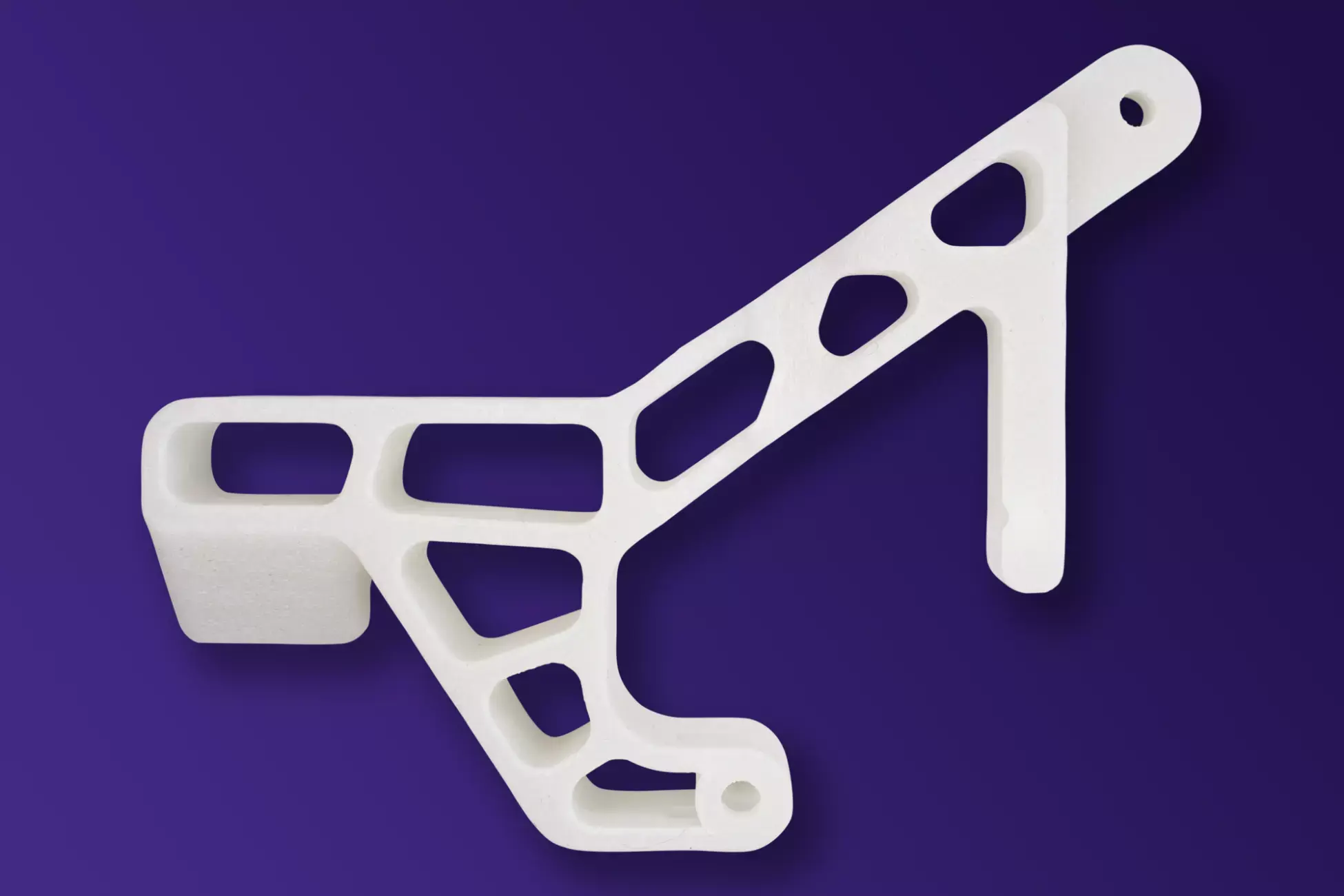
Polyamide PA 12 plastic 3d printing material, technology SLS
Polyamide (PA) 12 is an engineering plastic that stands out above all for its good mechanical properties.
Features:
- Density [g/cm3] 0.95
- Tensile strength [MPa] 48
- E-modul [Gpa] 1.65
- Flexural strength [MPa] 41
- Flexural modulus [Gpa] 1.5
- Impact resistance (Izod notched) [J/m] 4.4
- Heat deflection temp @1.81MPA [°C] 86
- Heat deflection temp @ 0.45MPA [°C] 180 (ASTM D648)
- Elongation at break [%] 20
- Shore Hardness 75D
Advantages:
- High strength & stability
- Flexible Protoypes
- Minimum wall thickness
- Good resolution and detail
- High variety of variants
- Versatile after-treatments
- No support material (support necessary)
Polyamid (PA) 12 is an engineering plastic which is particularly striking because of its good mechanical properties. At the same time, PA 12 offers high strength and toughness as well as excellent sliding and wear behaviour. These properties make this plastic a particularly good material for robust components.
TPU (SLS)
Elastic and wear-resistant material
Features:
- Density [g/cm3] 0.78
- Tensile strength [MPa] 2.1
- E-modul [Gpa] 0.01
- Flexural modulus [Gpa] 0.1
- Elongation at break [%] 200
- Shore hardness 59A
Advantages:
- Elastic & wear resistant
- Dynamic resistance
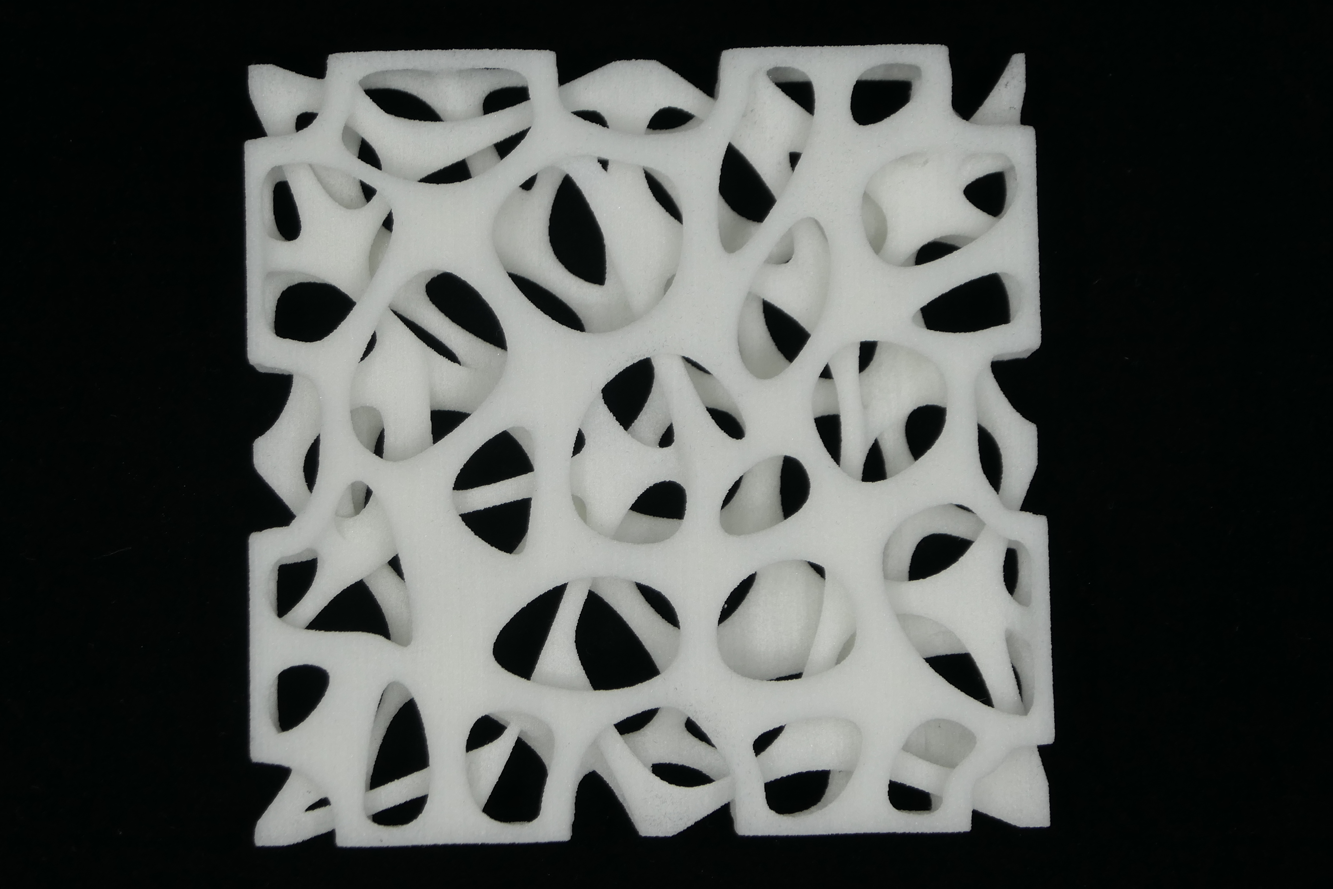
Thermoplastic polyurethane (TPU) is an elastic and at the same time wear-resistant material. TPU also offers dynamic resistance.