
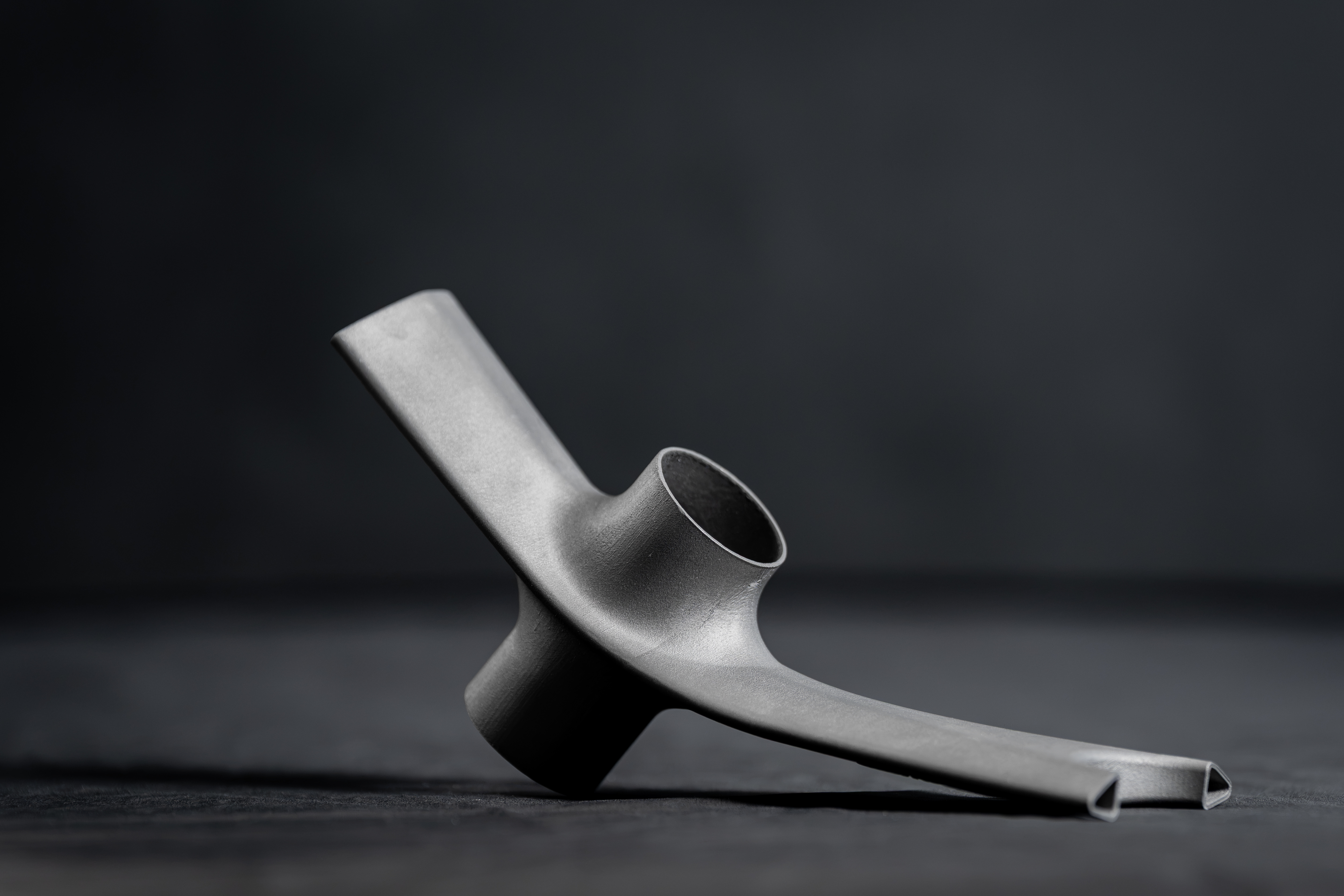
Aluminium AlSi10Mg, Metal 3D Printing
Aluminium
.webp)
Features
- Density [g/cm3] 2.3
- Tensile strength [MPa] 250
- E-modul [Gpa] 70
- Elongation at break [%] 1
Applications
Advantages
- High strength
- Low weight
- High dynamic load capacity
This aluminium alloy combines high strength with low weight. In addition, this material scores with a high dynamic load capacity. It is used especially in the aerospace industry.
Stainless steel 1.4404, metal 3D printing
Stainless steel
Features
- Density [g/cm3] 7.9
- Tensile strength [MPa] 510
- E-modul [Gpa] 180
- Elongation at break [%] 45
Advantages
- Good corrosion resistance
- High conductivity
The stainless steel alloy 1.4404 impresses with good corrosion resistance in combination with high conductivity.
Stainless steel 1.4542, metal 3D printing
Stainless steel
Features
- Density [g/cm3] 7.8
- Tensile strength [MPa] 900
- E-modul [Gpa] 140
- Elongation at break [%] 25
Advantages
- High corrosion resistance
- Sterilizable
- High strength
- High ductility
The steel 1.4542 is characterised by high strength and ductility. At the same time, this steel has a high resistance to corrosion and can be sterilised.
Copper CuCr1Zr, metal 3D printing
Features:
- Density [g/cm3] 8.9
- Tensile strength [MPa] 340
- E-modul [Gpa] 110
- Elongation at break [%] 25
Martensitic nickel steel 1.2709, metal 3D printing
Martensitic nickel steel, tool steel
Features:
- Density [g/cm3] 8
- Tensile strength [MPa] 1050
- E-modul [Gpa] 160
- Elongation at break [%] 11
Advantages:
- Excellent tensile strength & toughness
- Particularly low distortion
1.2709 tool steel is a high strength martensitic nickel steel with excellent tensile strength and toughness. In addition, this steel is particularly low in distortion.
Tool Steel Corrax, Metal 3D Printing
Corrosion-resistant tool steel
Features:
- Density [g/cm3] 7.7
- Tensile strength [MPa] 1100
- E-modul [Gpa] 170
Advantages:
- High corrosion resistance
- High strength
- Food certified
- Good post-processing possibilities
The corrosion-resistant tool steel Corrax (CL91RW) offers a high level of corrosion resistance while maintaining high strength. At the same time, Corrax is food-certified and allows good reworking possibilities.
Titanium TiAl6V4, Metal 3D Printing
Titanium alloy
Features:
- Density [g/cm3] 4.5
- Tensile strength [MPa] 900
- E-modul [Gpa] 110
- Elongation at break [%] 10
Advantages:
- High strength
- Corrosion resistant
- Low weight
Titanium (TiAl6V4) is a metal alloy for highest demands. It convinces by high strength and corrosion resistance. A further advantage is the low density of the material.