
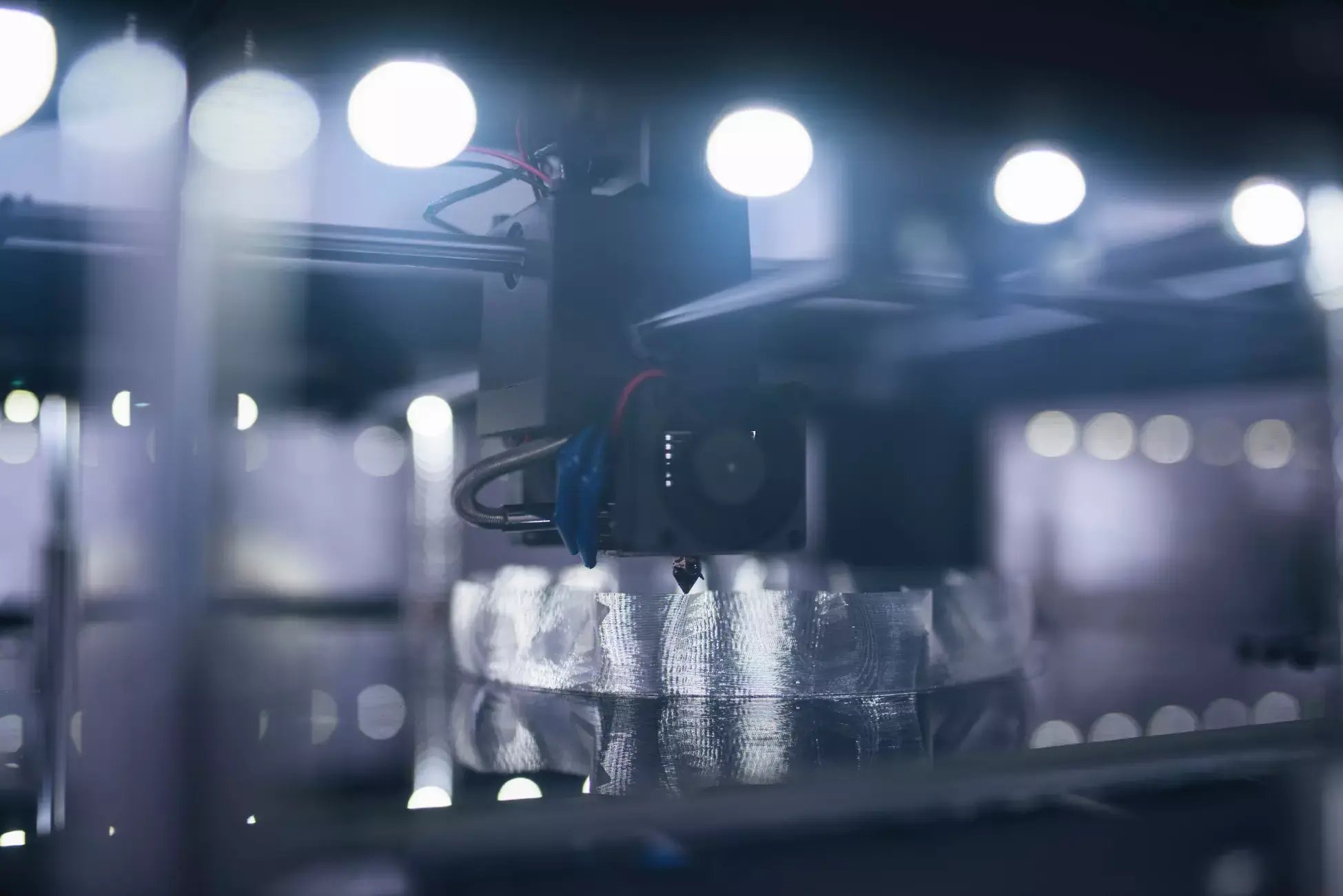
ABS (Acrylnitril-Butadien-Styrol), Kunststoff
Great strength and stability, good durability and functional properties, available in various colors.
Features
- Density [g/cm3] 1.05
- Tensile strength [MPa] 22
- E-modul [Gpa] 1.627
- Flexural strength [MPa] 41
- Flexural modulus [Gpa] 1.834
- Impact resistance (Izod notched) [J/m] 107
- Heat deflection temp @0.45MPa [°C] 90
- Heat deflection temp @1.81MPa [°C] 76
- Elongation at break [%] 6
Applications
Advantages
- Great strength & stability
- High durability
- Good functional properties
- Available in different colours
- Wide range of applications
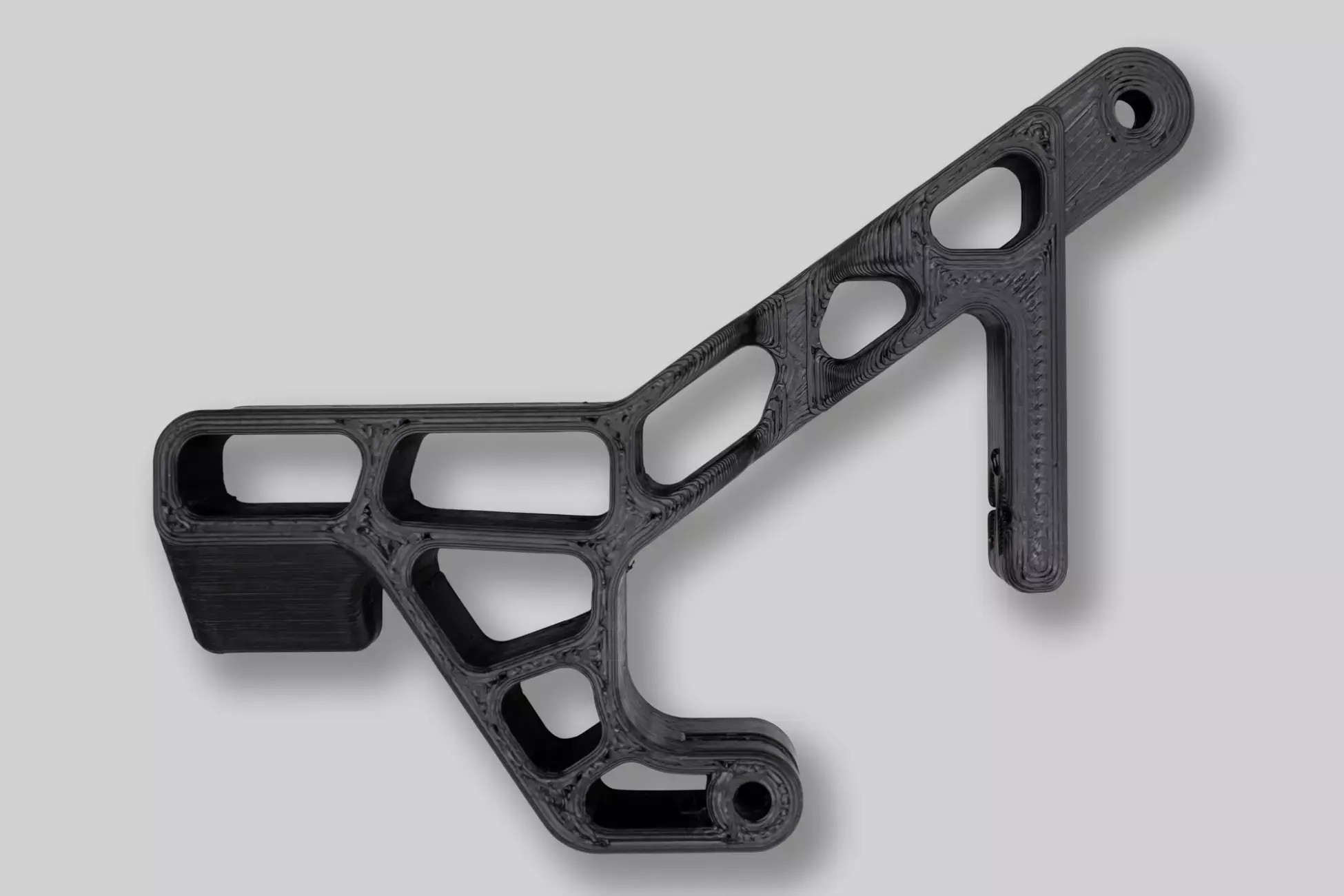
ABS (=acrylonitrile-butadiene-styrene) impresses with its great strength and stability. It also offers high durability, good functional properties and is available in various colours. ABS offers a wide range of applications, for example for functional and product samples, as well as in medicine and architecture.
ABSi
Acrylonitrile-Butadien-Styrene - BiocompatibleI
Features
- Density [g/cm3] 1.08
- Tensile strength [MPa] 37
- E-modul [Gpa] 1.915
- Flexural strength [MPa] 62
- Flexural modulus [Gpa] 1.917
- Impact resistance (Izod notched) [J/m] 96
- Heat deflection temp @0.45MPa [°C] 86
- Heat deflection temp @1.81MPa [°C] 73
- Elongation at break [%] 4.4
Material Color
-
Translucent
Advantages
- High impact resistance
- Biocompatible
ABSi (Acrylonitrile-Butadien-Styrene - BiocompatibleI is an ABS-like thermoplastic with high impact resistance. This material is stiffer and more durable than the standard ABS material and is translucent. For this reason ABSi is ideal for applications where light transmission and flow must be observed, for example in the automotive industry or for prototypes of medical devices.
ASA (acrylic ester styrene acrylonitrile), UV-resistant 3D printing material
The mechanical properties of ASA are comparable to those of ABS
Features
- Density [g/cm3] 1.08
- Tensile strength [MPa] 32
- E-modul [Gpa] 2.14
- Flexural strength [MPa] 50
- Flexural modulus [Gpa] 1.76
- Impact resistance (Izod notched) [J/m] 23.8
- Elongation at break [%] 9
Advantages
- UV-resistant
- High resistance
- ABS-like properties
Stainless steel 1.4404, metal 3D printing
Stainless steel
Features
- Density [g/cm3] 7.9
- Tensile strength [MPa] 510
- E-modul [Gpa] 180
- Elongation at break [%] 45
Advantages
- Good corrosion resistance
- High conductivity
The stainless steel alloy 1.4404 impresses with good corrosion resistance in combination with high conductivity.
Stainless steel 1.4542, metal 3D printing
Stainless steel
Features
- Density [g/cm3] 7.8
- Tensile strength [MPa] 900
- E-modul [Gpa] 140
- Elongation at break [%] 25
Advantages
- High corrosion resistance
- Sterilizable
- High strength
- High ductility
The steel 1.4542 is characterised by high strength and ductility. At the same time, this steel has a high resistance to corrosion and can be sterilised.
GreenTEC
Features
- Density [g/cm3] 1.33
- Tensile strength [MPa] 46
- E-modul [Gpa] 3.2
HIPS
Features
- Density [g/cm3] 1.04
- Tensile strength [MPa] 22
- E-modul [Gpa] 1.55
- Flexural strength [MPa] 52.1
- Flexural modulus [Gpa] 2.126
Istroflex
Features
- Density [g/cm3] 1.34
- Tensile strength [MPa] 11.5
- E-modul [Gpa] 0.06
- Elongation at break [%] 300
Onyx FR, carbon fibre reinforced plastic
Ähnliche Eigenschaften wie Onyx: leicht, flammwidrig, hohe Festigkeit
Features
- Density [g/cm3] 1.2
- E-modul [Gpa] 3
- Flexural strength [MPa] 71
- Flexural modulus [Gpa] 3.6
- Heat deflection temp @0.45MPa [°C] 145
Onyx FR is a UL94 V-0 certified material that has similar mechanical properties to Onyx.
It is best suited for applications where flame resistance, light weight and strength are required.
PA 12 (FDM)
Features
- Density [g/cm3] 0.95
- Tensile strength [MPa] 48
- E-modul [Gpa] 1.65
- Flexural strength [MPa] 41
- Flexural modulus [Gpa] 1.5
- Impact resistance (Izod notched) [J/m] 4.4
- Elongation at break [%] 20
Advantages
- High strength & stability
- Flexible Protoypes
- Minimum wall thickness
- Good resolution and detail
- High variety of variants
- Versatile after-treatments
- No support material (support necessary)
Polyamid (PA) 12 is an engineering plastic which is particularly striking because of its good mechanical properties. At the same time, PA 12 offers high strength and toughness as well as excellent sliding and wear behaviour. These properties make this plastic a particularly good material for robust components.
PA 6
Features
- Density [g/cm3] 1.12
- Tensile strength [MPa] 67.6
- E-modul [Gpa] 2.9952
- Flexural strength [MPa] 97
- Flexural modulus [Gpa] 1.878
- Impact resistance (Izod notched) [J/m] 106
- Heat deflection temp @1.81MPa [°C] 93
- Elongation at break [%] 38
Applications
Advantages
- High strength (higher than PA 12)
- Excellent sliding and wear behaviour
Polyamide (PA) 6 is an engineering plastic that stands out above all for its good mechanical properties. At the same time, PA 6 offers high strength and toughness, as well as excellent sliding and wear behaviour. These properties make this plastic a good material for robust components.
PC
Features
- Density [g/cm3] 1.2
- Tensile strength [MPa] 68
- E-modul [Gpa] 2.28
- Flexural strength [MPa] 104
- Flexural modulus [Gpa] 2.234
- Impact resistance (Izod notched) [J/m] 53
- Heat deflection temp @0.45MPa [°C] 130
- Heat deflection temp @1.81MPa [°C] 127
- Elongation at break [%] 4.8
Advantages
- Heat resistant
- Good mechanical resistance
- High shock and impact resistance
This thermoplastic offers good heat resistance, combined with good mechanical resistance. At the same time, Polycarbonate (PC) impresses with excellent impact and shock resistance.
PC/ABS
Features
- Density [g/cm3] 1.2
- Tensile strength [MPa] 41
- E-modul [Gpa] 1.917
- Flexural strength [MPa] 68
- Flexural modulus [Gpa] 1.931
- Impact resistance (Izod notched) [J/m] 196
- Heat deflection temp @0.45MPa [°C] 110
- Heat deflection temp @1.81MPa [°C] 96
- Elongation at break [%] 6
Advantages
- Heat resistant
- Good flexibility
This material blend of polycarbonate (PC) and acrylonitrile-butadiene-styrene (ABS) combines the strength and heat resistance of PC with the flexibility of ABS.
PC-ISO
Features
- Density [g/cm3] 1.2
- Tensile strength [MPa] 57
- E-modul [Gpa] 2
- Flexural strength [MPa] 90
- Flexural modulus [Gpa] 2.1
- Impact resistance (Izod notched) [J/m] 86
- Heat deflection temp @0.45MPa [°C] 133
- Heat deflection temp @1.81MPa [°C] 127
Advantages
- Biocompatible
- Heat resistant
- ISO10993
- USP Class V
- ETO sterilisable
PC-ISO is a biocompatible FDM thermoplastic that enables engineers to produce prototypes, moulds and products from heat-resistant material for the pharmaceutical, food and medical industries.
PC-PBT
Features
- Density [g/cm3] 1.2
- Tensile strength [MPa] 41
- E-modul [Gpa] 2.1
- Flexural strength [MPa] 64
- Flexural modulus [Gpa] 1.93
- Elongation at break [%] 4.6
PETG, plastic
Features
- Density [g/cm3] 1.27
- E-modul [Gpa] 1.5
Applications
Advantages
- Flexibility, strength and resilience
- Temperature resistance
- Clear, stable material
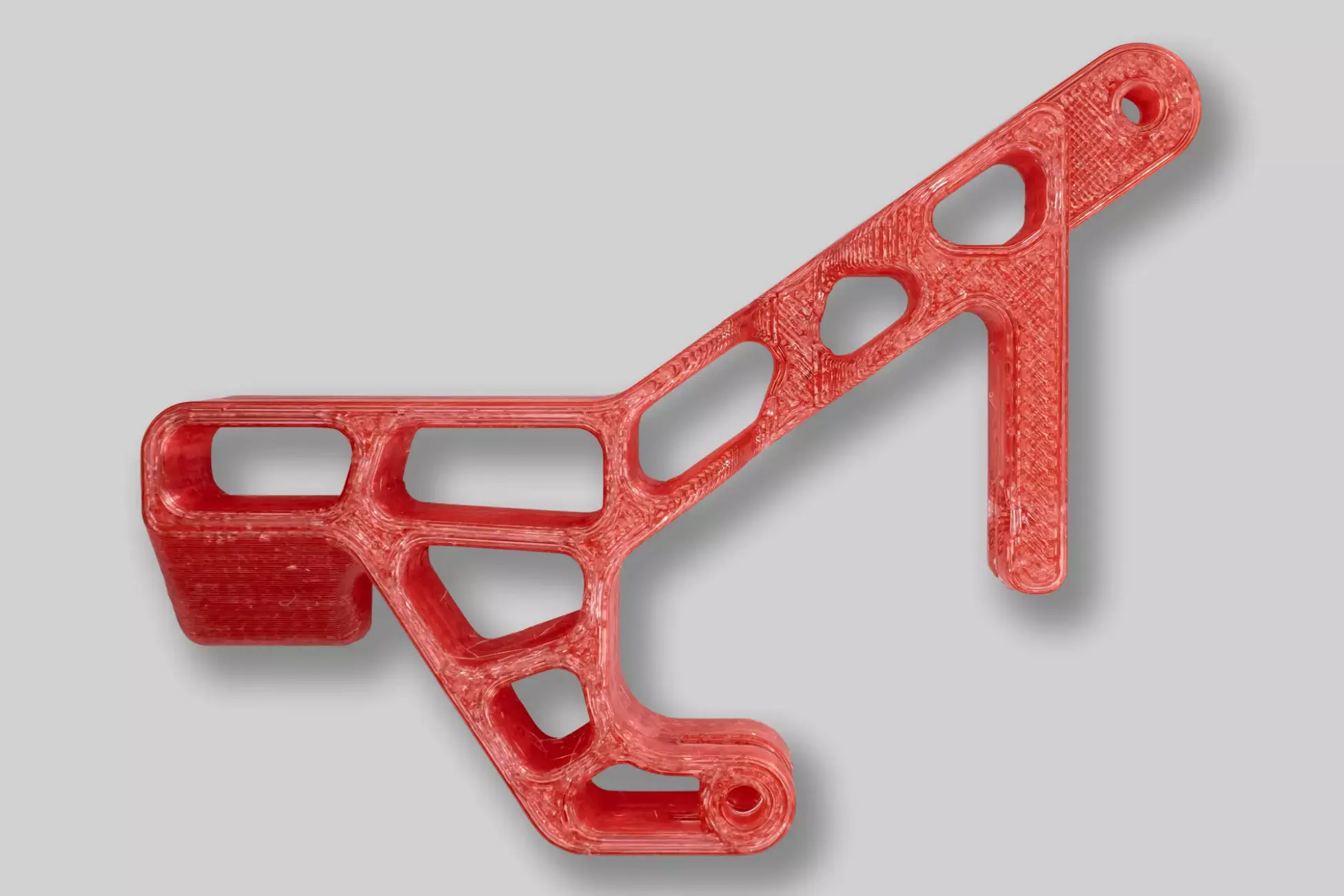
The basic material PET (polyethylene terephthalate) is generally known and very widespread in almost all sectors. For 3D printing, however, the sub-material PETG is usually used. The G stands for "glycol-modified". This modification makes the material clearer, more stable and last but not least easier to print. With regard to its stability, PETG lies between ABS (even more stable) and PLA (less stable). PETG scores points above all for its flexibility, strength, temperature resistance and resilience. On the one hand, it is suitable for visually attractive visible components and on the other hand for components subject to mechanical stress. PETG is used for functional prototypes as well as for coarser threads within components.
PETG-CF, fibre-reinforced plastic
PETG-CF is a material containing carbon fibre (20%)
Features
- Density [g/cm3] 1.3
- Tensile strength [MPa] 53
- Modulus of elasticity [Gpa] 4.015
- Flexural modulus [Gpa] 2.987
- Heat deflection temperature @0.45MPa [°C] 68
- Hardness in Shore 76.4D
- Impact strength: high (>150 J/m)
- Rigid/stiff/stable
- Weight: light (<1.11g/cm3)
- High strength
- Carbon fibre filled
PETG-CF is a material containing carbon fibre (20%). Properties: High stiffness and temperature resistant up to 80°C. Visually very appealing, matt surface, reasonably priced.
PLA, plastic
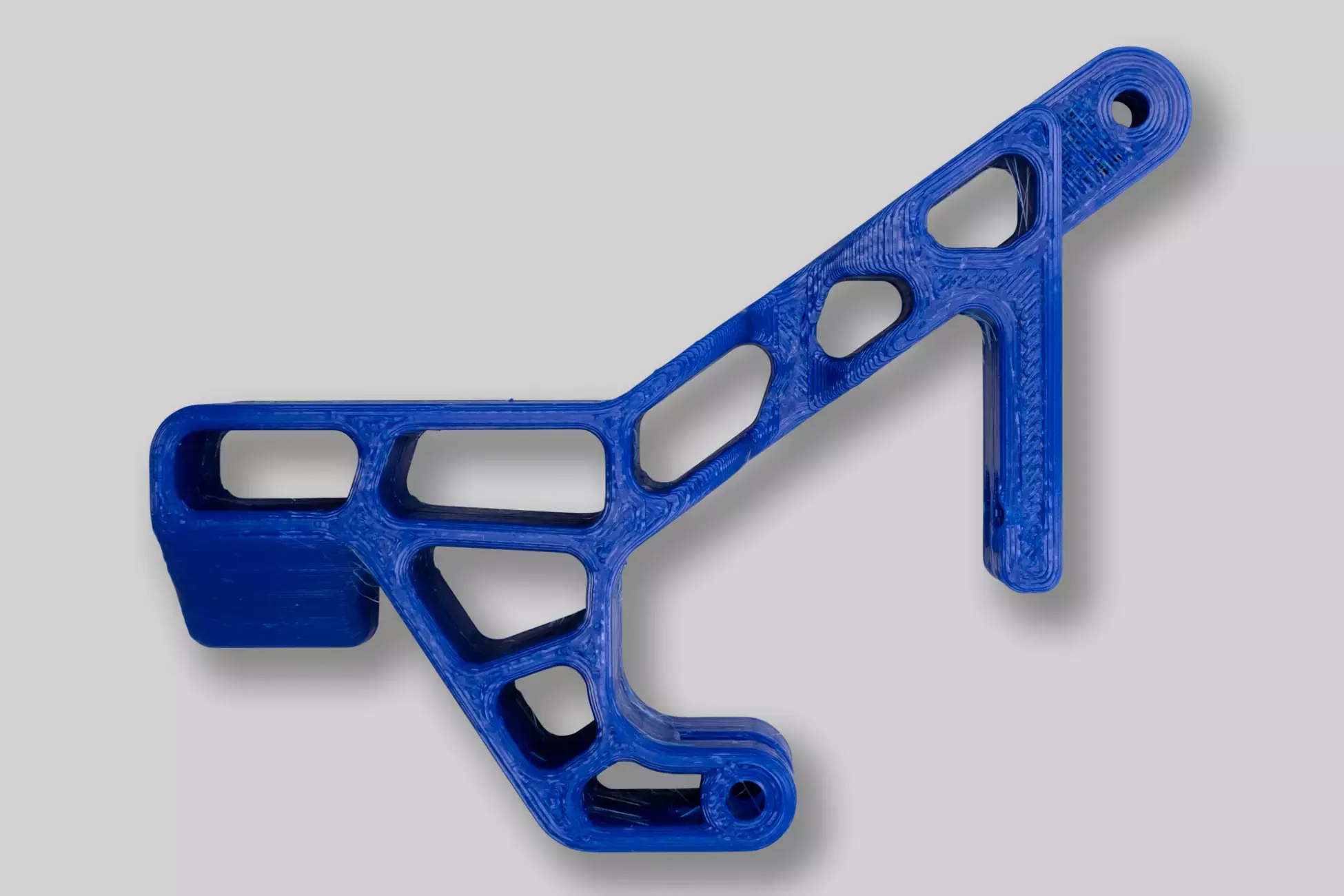
Very frequently used 3D printing material, made from renewable raw materials, biodegradable.
Features
- Density [g/cm3] 1.24
- Tensile strength [MPa] 45
- E-modul [Gpa] 3.6
- Flexural strength [MPa] 84
- Flexural modulus [Gpa] 2.93
- Impact resistance (Izod notched) [J/m] 27
- Heat deflection temp @0.45MPa [°C] 53
- Heat deflection temp @1.81MPa [°C] 51
- Elongation at break [%] 2.5
Advantages
- Biocompatible
- High stiffness
- Inexpensive material option
- From renewable raw materials
Polylactide (PLA), which is mainly known from home 3D printing, is a biocompatible plastic of high stiffness. At the same time, PLA is an inexpensive material option made from renewable raw materials.
PLA-CF
Features
- Density [g/cm3] 1.29
- Tensile strength [MPa] 48
- E-modul [Gpa] 4.8
- Impact resistance (Izod notched) [J/m] 10.7
- Heat deflection temp @0.45MPa [°C] 56
- Elongation at break [%] 2Shore hardness 95D
PP (FDM)
Features
- Density [g/cm3] 1.15
- Tensile strength [MPa] 30
- E-Modul [Gpa] 1.2
- Flexural strength [MPa] 40
- Flexural modulus [Gpa] 1.6
- Impact resistance (Izod notched) [J/m] 50
- Heat deflection temp @0.45MPA [°C] 37
- Heat deflection temp @1.81MPA [°C] [°C] 32
- Elongation at break [%] 50
- Shore Hardness 74D
PP-GF30
Features
- Density [g/cm3] 1.12
- Tensile strength [MPa] 65
- E-modul [Gpa] 6.75
- Flexural strength [MPa] 78
- Flexural modulus [Gpa] 5.32
- Heat deflection temp @0.45MPa [°C] 139
- Elongation at break [%] 1.7
PPSF/PPSU
Features
- Density [g/cm3] 1.29
- Tensile strength [MPa] 55
- E-modul [Gpa] 2.1
- Flexural strength [MPa] 110
- Flexural modulus [Gpa] 2.2
- Impact resistance (Izod notched) [J/m] 58
- Heat deflection temp @1.81MPa [°C] 189
Advantages
- High temperature and chemical resistance
- Sterilizable
- Strong mechanical performance
PPSU combines strong mechanical performance with high temperature and chemical resistance for demanding applications such as low volume injection moulds, automotive parts in the engine compartment and heat, chemical, plasma and radiation sterilisation.
TPU thermoplastic polyurethane (FDM)
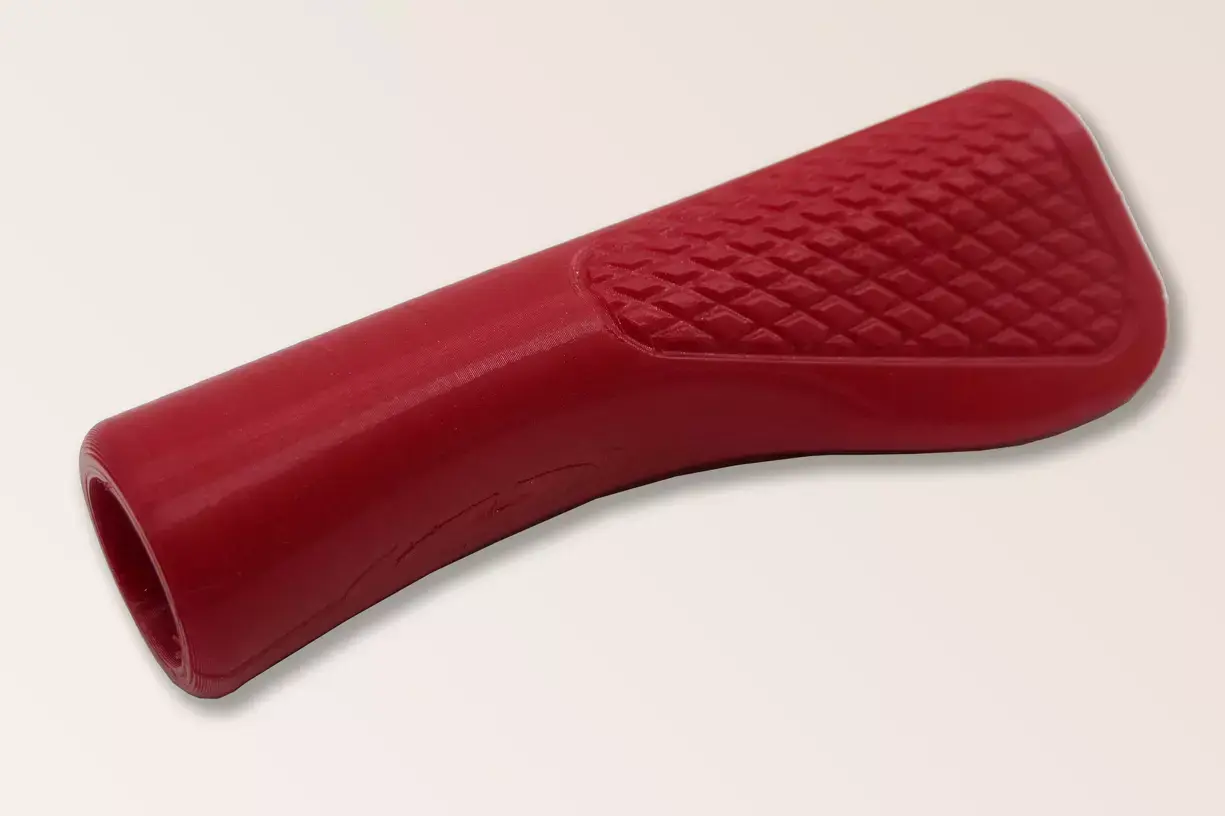
TPU is a lightweight polyurethane-based plastic with rubber-like properties.
Features
- Dichte [g/cm3] 1.13
- Zugfestigkeit [MPa] 17
- E-Modul [Gpa] 0.02
- Biegefestigkeit [MPa] 2.5
- Biegemodul [Gpa] 0.036
- Wärmeformbeständigkeit @0.45MPa [°C] 38
- Dehnung bis Bruch [%] 552
- Härte in Shore 92A
Applications
Advantages
- Lightweight plastic
- Rubber-like properties
- High elasticity and flexibility
- High impact strength, even in cold conditions
- Good chemical resistance
- High wear resistance and aging resistance
TPU is a lightweight polyurethane-based plastic with rubber-like properties. This makes TPU particularly suitable for the production of flexible objects. At the same time, TPU impresses with its high impact strength in combination with good chemical resistance. Areas of application include textiles or flexible prototypes.
Note: for parts with complex geometries or with lattice structures and the like, the TPU from SLS is more suitable, as this, in contrast to FDM 3D printing, does not require any support structures during processing. Read more about the material TPU SLS
ULTEM 1010
High performance thermoplastic with good chemical resistance
Features
- Density [g/cm3] 1.29
- Tensile strength [MPa] 45
- E-modul [Gpa] 3
- Flexural strength [MPa] 81
- Flexural modulus [Gpa] 2.91
- Impact resistance (Izod notched) [J/m] 22
- Heat deflection temp @0.45MPa [°C] 214
- Heat deflection temp @1.81MPa [°C] 212
- Elongation at break [%] 4
Advantages
- Good chemical resistance
- Food contact certified according to NSF 51
- Biocompatible according to ISO 10993/USP
- Flame retardant according to UL94-V0
ULTEM 1010 is a high performance thermoplastic with good chemical resistance. ULTEM 1010 complies with the food contact certification NSF 51, the biocompatibility standard ISO 10993/USP Class VI, as well as the flame retardancy standard UL94-V0. ULTEM 1010 is heat resistant up to 216°C.
ULTEM 9085 thermoplastic 3D printing high-performance plastic
Plastic with good chemical resistance, flame retardant
Features
- Density [g/cm3] 1.27
- Tensile strength [MPa] 70
- E-modul [Gpa] 2.51
- Flexural strength [MPa] 100
- Flexural modulus [Gpa] 2.4
- Impact resistance (Izod notched) [J/m] 88
- Heat deflection temp @1.81MPa [°C] 173
- Elongation at break [%] 5.7
Applications
Advantages
- Good chemical resistance
- Permanently flame retardant
ULTEM 9085 is a high performance thermoplastic with good chemical resistance. At the same time ULTEM 9085 is permanently flame retardant (according to UL94-V0) and heat resistant up to 153°C. In addition, this material meets the FST safety standards and is particularly suitable for lightweight construction.