
<img height="1" width="1" src="https://www.facebook.com/tr?id=3900557156680409&amp;ev=PageView &amp;noscript=1">
Skip to content
HoG_Additive_Manufacturing_RGB_box-1
Technology

Binder Jetting Verfahren (BJ)

Binder jetting is a 3D printing process in which the material, e.g. quartz sand, PMMA materials or metals, are bonded layer by layer by means of a binder.

Installation space

  • Quartz sand: 1000 x 1800 x 700 mm

  • PMMA materials (acrylic glass): 850 x 450 x 480 mm

Applications

Quartz sand:

  • Toolmaking
  • Illustrative models
  • Mould making, e.g. injection moulds for metals etc.
  • Design and decoration

PMMA materials:

  • For large components
  • Mould and fixture construction
  • Prototyping
  • For thin wall thicknesses for applications with light sources (the materials are translucent)

Advantages

  • Economic production
  • For large components

The Binder Jetting process

Binder jetting is a 3D printing process in which the material, e.g. quartz sand, PMMA materials or metals, is bonded in layers by a binder. In the additive manufacturing process, the printer applies a thin layer of the material powder, which is then bonded in the desired places by a liquid - a binder. After that another layer of material is applied. The components will be created layer by layer. After the printing process, the construction space will be hardened and cooled down. 

When Binder Jetting is used for metals, the components are sintered after the printing process.

Design of 3D printed parts for binder jetting

The following points must be taken into account when designing a part for Binder Jetting: 

  • Minimum wall thickness: 5mm
  • Lettering and surface details: min. 1 mm
  • Minimum diameter of holes: 3 mm
  • Tolerances: ISO 2768-m (but strongly depending on geometry and material).
  • In the case of very small bores, long channels and small cavities, complete powder removal cannot be guaranteed.
  • In closed cavities, the powder remains in the component. If powder is to be removed, drill a 30 mm hole.
  • Components are aligned to optimise installation space
  • For special requirements, please make an "individual enquiry".

Applications and finishing, quartz sand:

The finished product of quartz sand can be used in an untreated state for (metal) casting moulds or for design objects used indoors. A transparent coating makes the objects water-repellent. Coloured coatings (spray painting) in various colours are also available on request.

Applications and finishing, PMMA materials:

The materials can be coloured, lacquered or chemically smoothed. With thin wall thicknesses, these are tran

Suitable materials

PMMA Pro 3D printing material (polymethyl methacrylate, acrylic glass)

The material is suitable for large components because it is processed using binder jetting technology. It is also cheaper than comparable materials from other technologies.
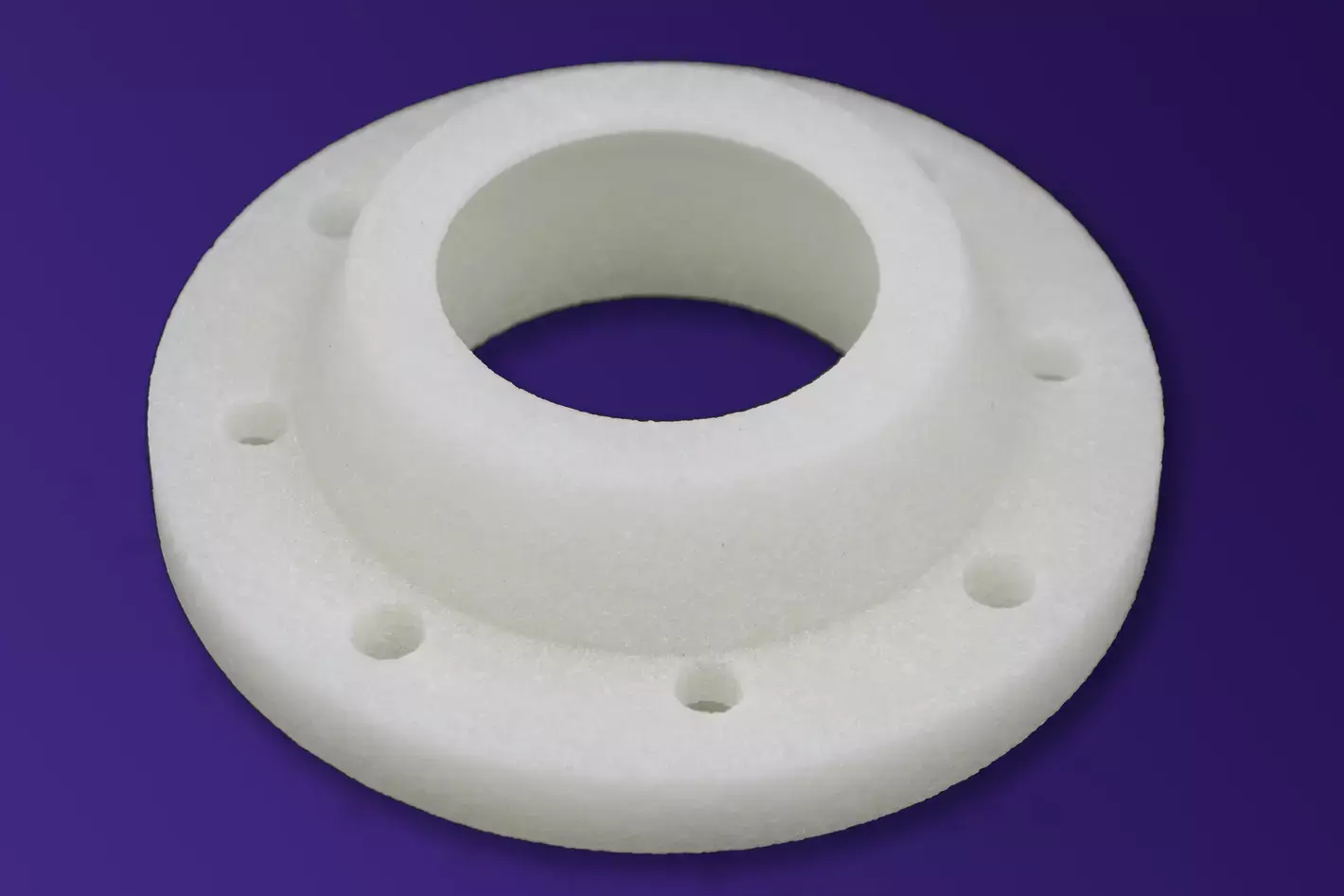
Plexiglas-3D-Druck-Bauteil-Binder-Jetting-PMMA-AE21-rund-Web

Features:

  • Tensile strength (DIN EN ISO 527-1): 38 MPa
  • Modulus of elasticity (DIN EN ISO 527-1): 2460 MPa
  • Tensile elongation (DIN EN ISO 527-1): 1.9%
  • Flexural strength (DIN EN ISO 178): 52 MPa
  • Flexural elongation (DIN EN ISO 178): 3%
  • Heat deflection temperature (DIN EN ISO 75-2 method A 1.80MPa): 56 °C

Postprocessing:

  • Glass bead blasted (included in standard)
  • Chemically smoothed for a smoother surface (select finishing when ordering)
  • Lacquered upon request

Material color:

  • Color: slightly greenish
  • Translucent (thin wall thickness)
  • Dyed in div. colors

Surface:

  • Directly from the printer
  • Glass bead blasted
  • Chemically smoothed: very smooth surface

Installation space:

  • 850 x 450 x 480 mm

Applications:

For large components (installation space 850 x 450 x 470 mm)
High geometrical freedom, as no support structures are required
Prototype construction
Test gauge and precoating construction
Special machine construction
For mechanical components and housings
Components are translucent with low wall thickness and suitable for applications with illuminants

Advantages:

  • Less expensive than comparable materials from SLS, SAF or MJF, especially for large components (price also depends on geometry / number of pieces)
  • No support structures are required for binder jetting
  • Sustainable: the powder that is not needed can be reused 100%.

Polymethyl methacrylate (acrylic glass, Plexiglas) processed with the 3D printing technology Binder J etting is a good complement to comparable plastics from the SLS, MJF or SAF. Very large components can be printed; the maximum installation space for binder jetting for plastics is 850 x 450 x 480 mm. In addition, no support structures are required during printing.


PMMA+ 3D Printing Material (Polymethyl Methacrylate, Acrylic)

The material is suitable for large components because it is processed using binder jetting technology. It is also cheaper than comparable materials from other technologies.
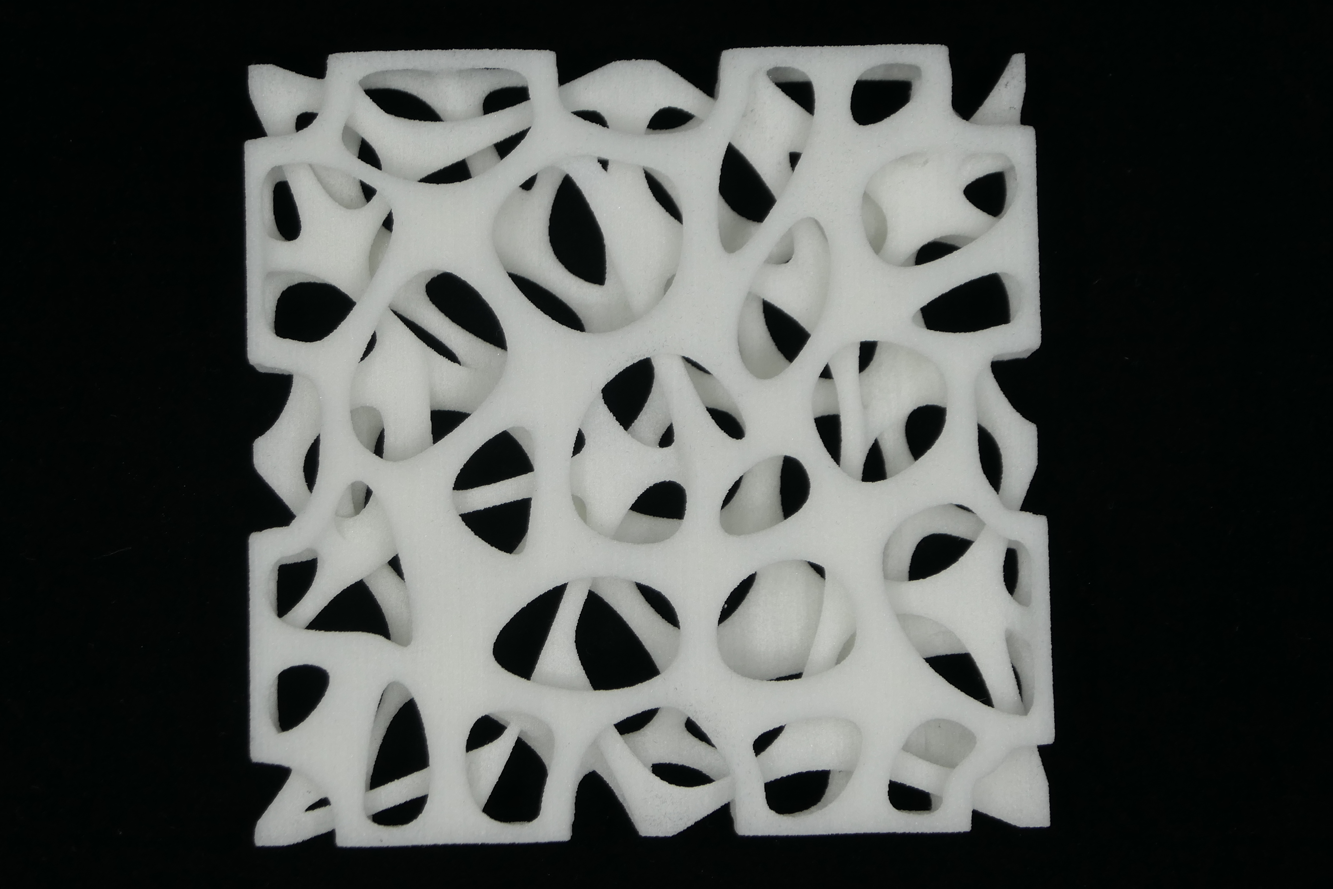
Bionische-Struktur-3D-Druck-Plexiglas-Binder-Jetting-PMMA-AE12-Web

Features:

  • Color: matt white
  • Tensile strength (DIN EN ISO 527-1): 20 MPa
  • E-modulus (DIN EN ISO 527-1): 1200 MPa
  • Tensile elongation (DIN EN ISO 527-1): 3%
  • Flexural strength: 25 MPa
  • Heat deflection temperature (DIN EN ISO 75-2 method A 1.80MPa): 56 °C

Postprocessing:

  • Glass bead blasted (included in standard)
  • Chemically smoothed for a smoother surface (select finishing when ordering)
  • Lacquered upon request

Material color:

  • Color: matte white
  • Dyed in div. colors

Surface:

  • Directly from the printer
  • Glass bead blasted
  • Chemically smoothed: very smooth surface

Installation space:

  • 850 x 450 x 480 mm

Applications:

For large components (installation space 850 x 450 x 470 mm)
High geometrical freedom, as no support structures are required
Architectural and trade show models (high level of detail)

Advantages:

  • Less expensive than comparable materials from SLS, SAF or MJF, especially for large components (price also depends on geometry / number of pieces)
  • No support structures are required for binder jetting
  • Sustainable: the powder that is not needed can be reused 100%.

Polymethyl methacrylate (acrylic glass, Plexiglas) processed with the 3D printing technology Binder J etting is a good complement to comparable plastics from the SLS, MJF or SAF. Very large components can be printed; the maximum installation space for binder jetting for plastics is 850 x 450 x 480 mm. In addition, no support structures are required during printing.


Silica sand SH-F01, matt black
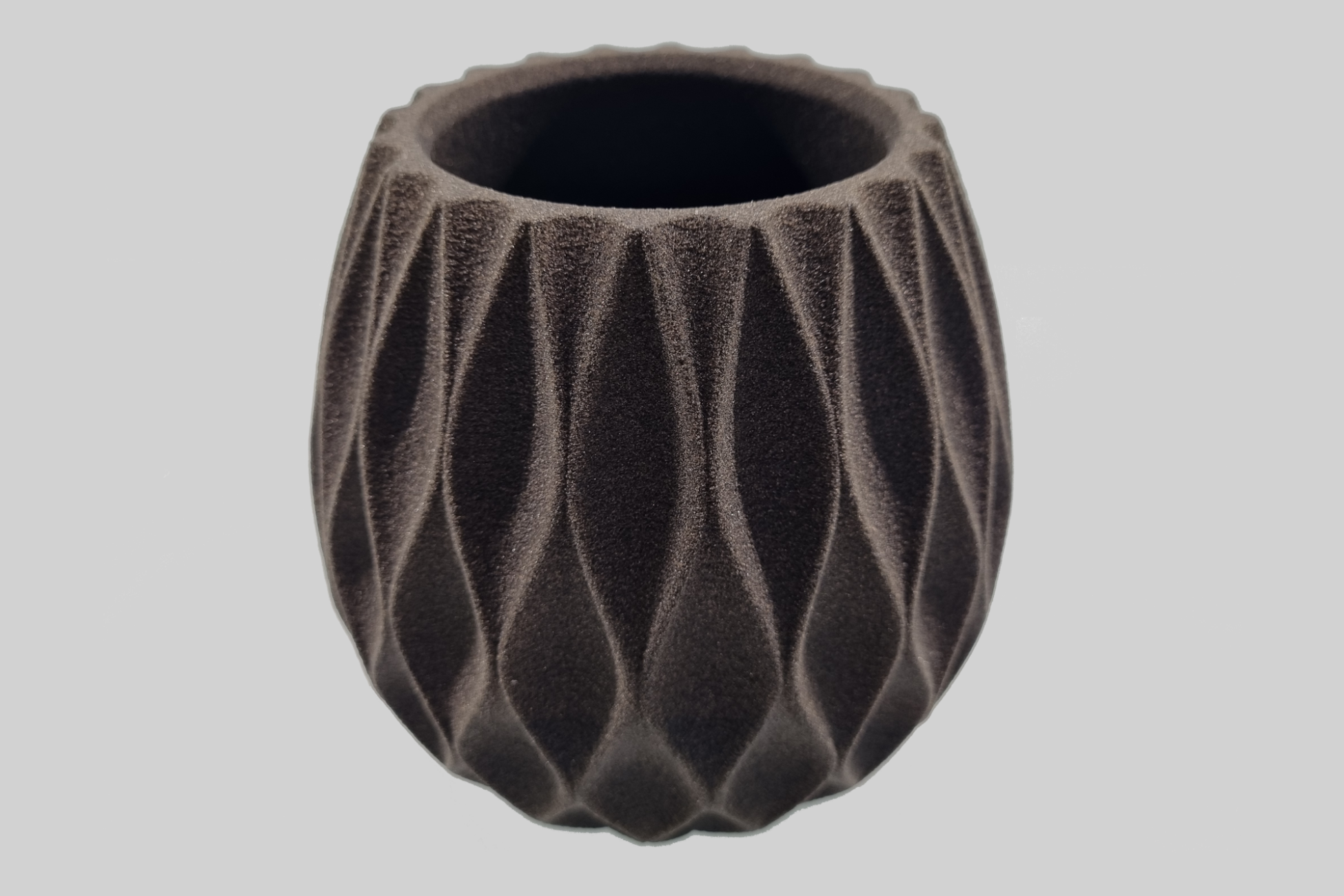
In 3D printing, quartz sand allows for economical production. This material combines high thermal resistance with high strength.


3D-Druck-Material-Quarzsand-Technologie-Binder-Jetting-Vase

Features:

  • Density [g/cm3] 2.65
  • Average grain size: 140 μm
  • Flexural strength: 250 - 500 N/cm2 (depending on sand/binder content)
  • Total loss on ignition: 2.0 - 2.6 wt.%.
  • Accuracy: ±0.1 %
  • Maximum installation space: 1'000 x 600 x 500 mm

Applications:

Toolmaking
Illustrative models
Mould making, e.g. injection moulds for metals etc.
Design and decoration

Advantages:

  • Economic production
  • High thermal resistance  
  • High strength
  • Optimally suited for sand casting

Quartz sand is a raw material that is available in almost unlimited quantities worldwide. In 3D printing, quartz sand allows for economical production. This material combines high thermal resistance with high strength. Quartz sand is particularly suitable for sand casting.

Note about material properties

Note: Please note that the listed values of the properties (e.g. tensile strength) refer to the properties of the material in an unprocessed state. Hoffmann AM can not guarantee the information below. In the printed state, the values may deviate from the specifications.

If a material in practice is pushed to the limits of the stated values, the component itself should be tested. If you have any questions, please do not hesitate to contact us.